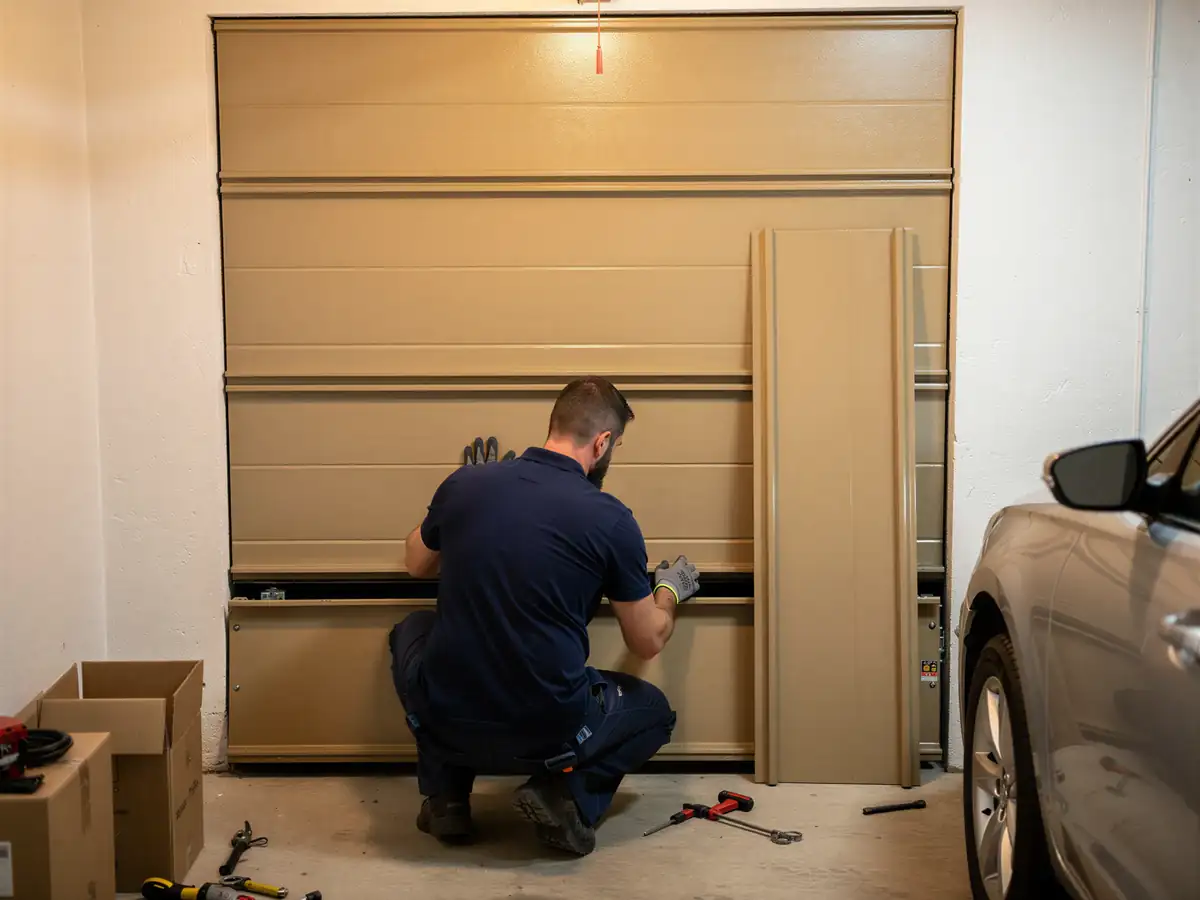
Where This Job Goes Sideways
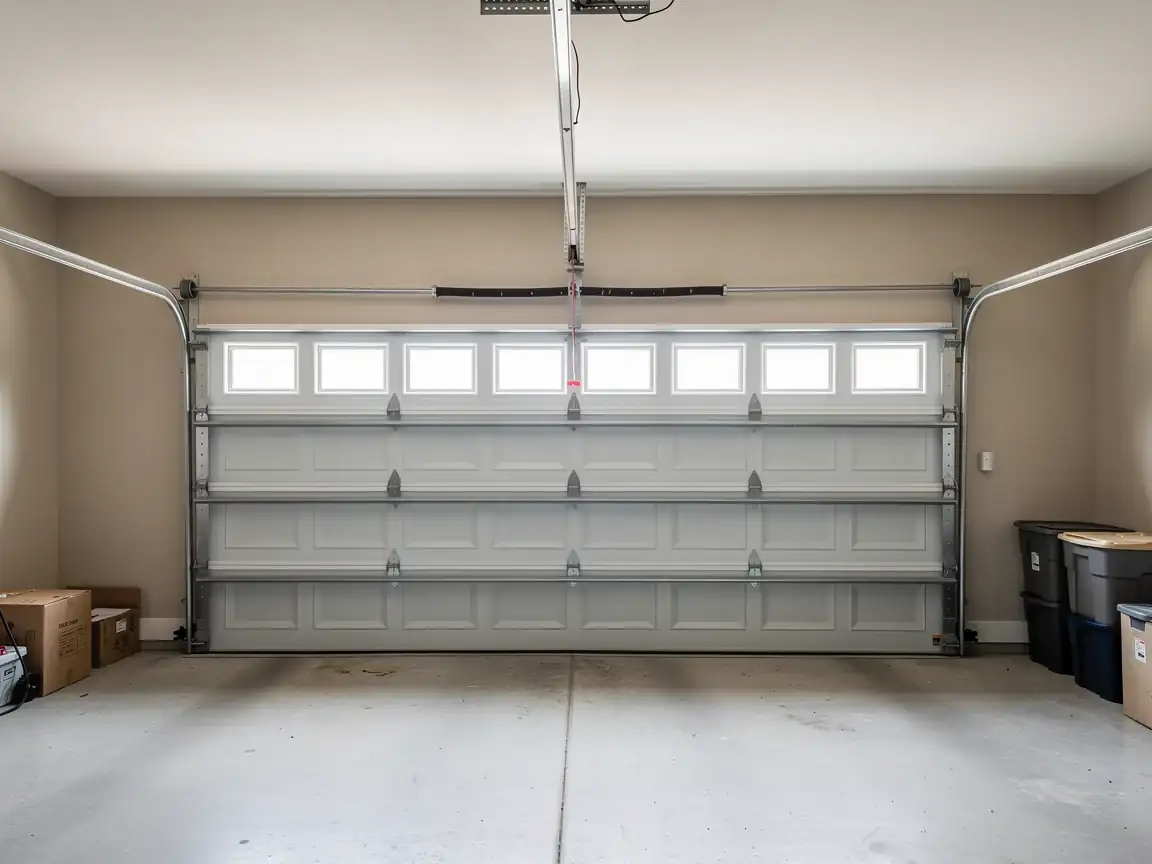
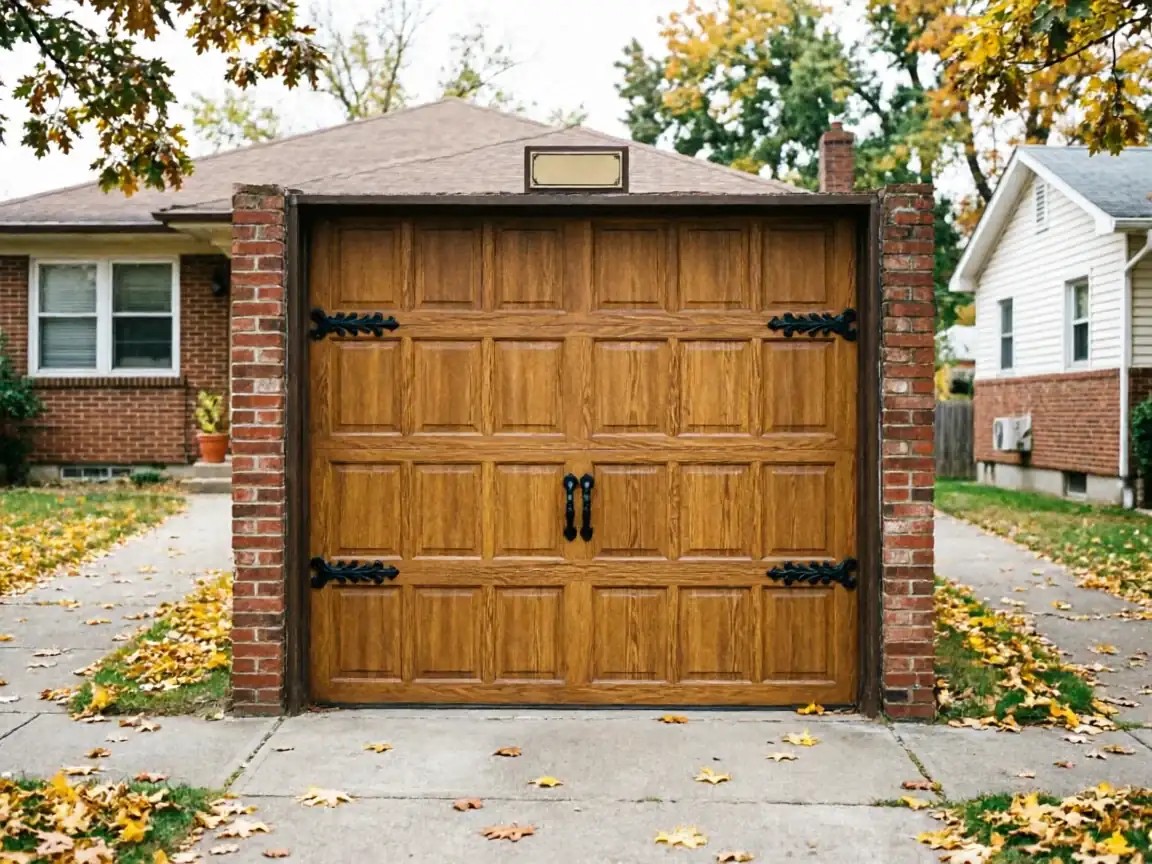
Sterling's houses cluster around a 1955 build year, close to a decade earlier than the 1964 median across the rest of the service area we cover. That gap matters on a panel job. A door installed when the house went up has had seventy years to sit there, and on a lot of these homes nobody has ever touched the hardware. The panel sections are original steel, the track is the narrow gauge that era used, and the rollers and hinges are whatever came with the door - not a later upgrade.
The trouble starts when a single panel gets dented or rots at the bottom and the owner wants just that section swapped instead of the whole door. On a door this old, the manufacturer that made it is often gone, the panel profile doesn't match anything current, and the steel gauge is thinner than what's sold today. We can sometimes match close enough that a repainted section blends in. Other times the honest answer is that one new section next to six faded original ones will always look like a patch, and the owner is better off replacing the full door instead of chasing a cosmetic match that won't quite land.
What Is on the Truck
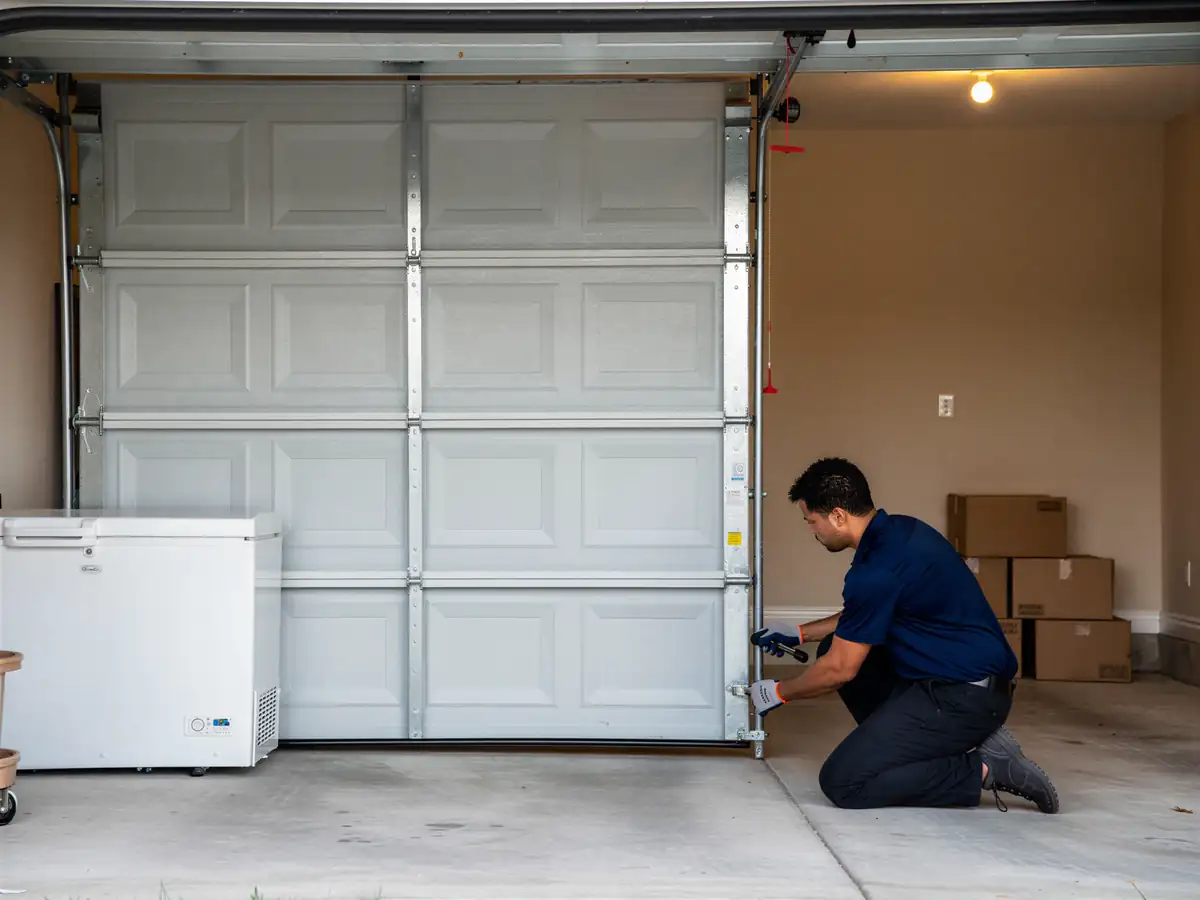
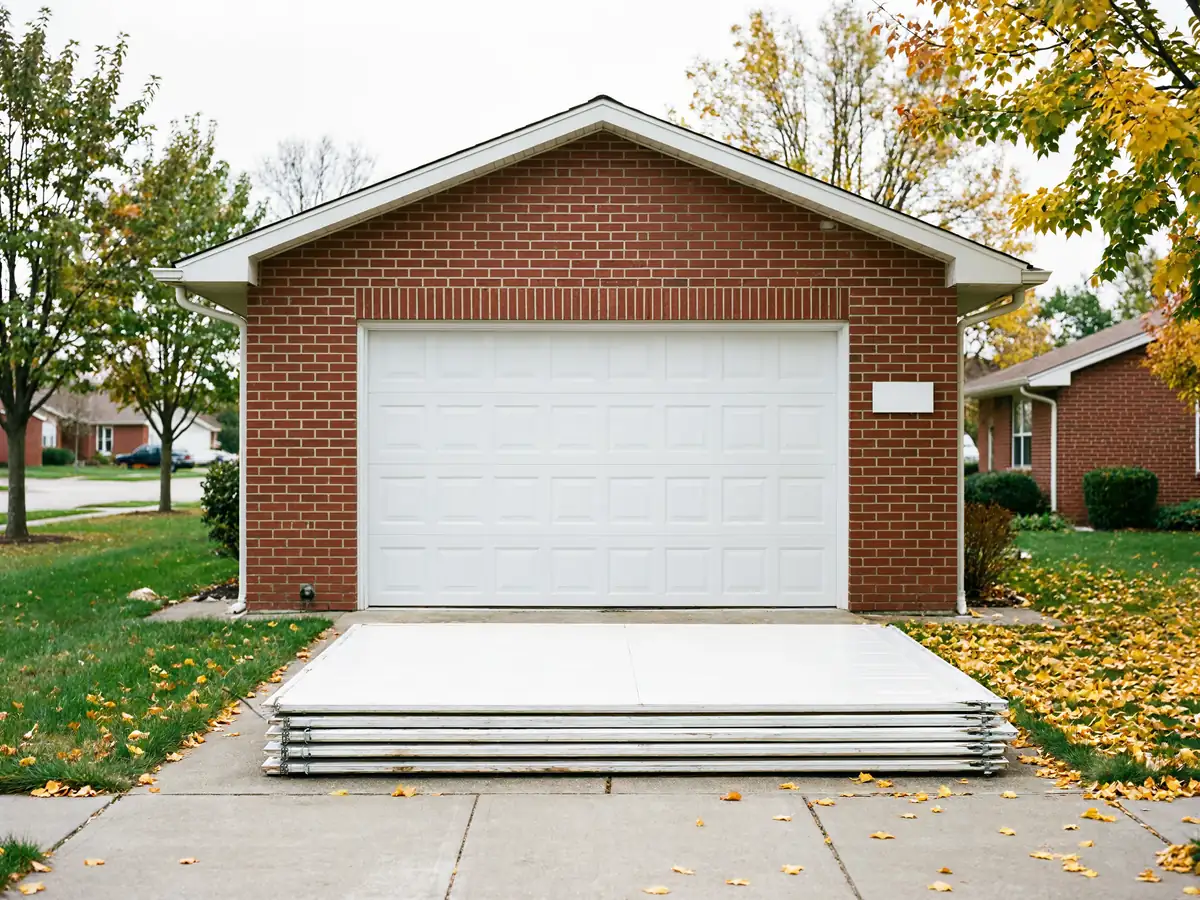
We carry common panel sections in the sizes that fit most doors built from the 1960s forward, along with torsion springs, cable, and standard roller stock
What we don't carry is a shelf of 1955-specific panel profiles - that hardware stopped being made decades ago, and a lot of what's still on Sterling garages today is the last of its kind on the door it came with.
When we get out to a job and the panel is a discontinued profile, there are two honest paths
We source the closest match we can find and set expectations on color and seam fit before we touch it, or we price a full door replacement using current stock sections that we do carry on the truck. We won't pretend a mismatched panel will disappear into an old door - it won't, and we'd rather tell you that on the driveway than let you find out after we've driven back to Hutchinson.
The Symptom
On a house from the 1955 era, panel failure usually shows up as a dent low on the door where a mower or a bumper caught it, rust blooming through the paint at the bottom seam, or a section that's started to bow because the steel has thinned with age. Sometimes it's not damage at all - the seams between sections have separated enough that daylight shows through, or the panel no longer sits flush against the one next to it when the door closes.
If the gap is only at the bottom panel, that's usually a straightforward swap once we've sourced the section. If it's running the full height of the door, or more than one panel shows the same wear, that's a sign the whole door is near the end of its run rather than just the one section - and replacing one more panel on a door that's otherwise failing is money better spent on new door instead.
What You Pay
We don't have a flat number to quote here, because panel cost depends entirely on whether we can match stock sections or have to source something closer to original. What we can say is that Sterling's median household income sits around $51,304, noticeably below the roughly $63,119 average across the rest of the area we serve, and that's part of why we always give both options - patch the one panel or replace the full door - rather than defaulting to the more expensive job.
A single matched section, where one's available, costs less than replacing the whole door outright. But if the match isn't close, or if more than one panel is already showing wear, spending on a patch that won't look right and won't outlast the rest of the door isn't a good use of anyone's money. We'll tell you straight which side of that line your door falls on before we write anything up.
How Long You Are Without the Door
Sterling sits about 19 miles out from our shop in Hutchinson
Which is factored into when we can get a truck there, same as any job on this end of the route. The bigger variable on a panel job isn't the drive - it's whether the section is one we carry or one we have to track down.
- 19 miles
If it's a common panel size, we can usually turn the job around in a single visit once it's scheduled
If the panel is a discontinued profile that needs sourcing, the door may sit as-is for a few days while we locate stock, unless the damage is bad enough that boarding it over makes sense in the meantime. We'll tell you up front which situation you're in rather than guess at a timeline we can't back up.