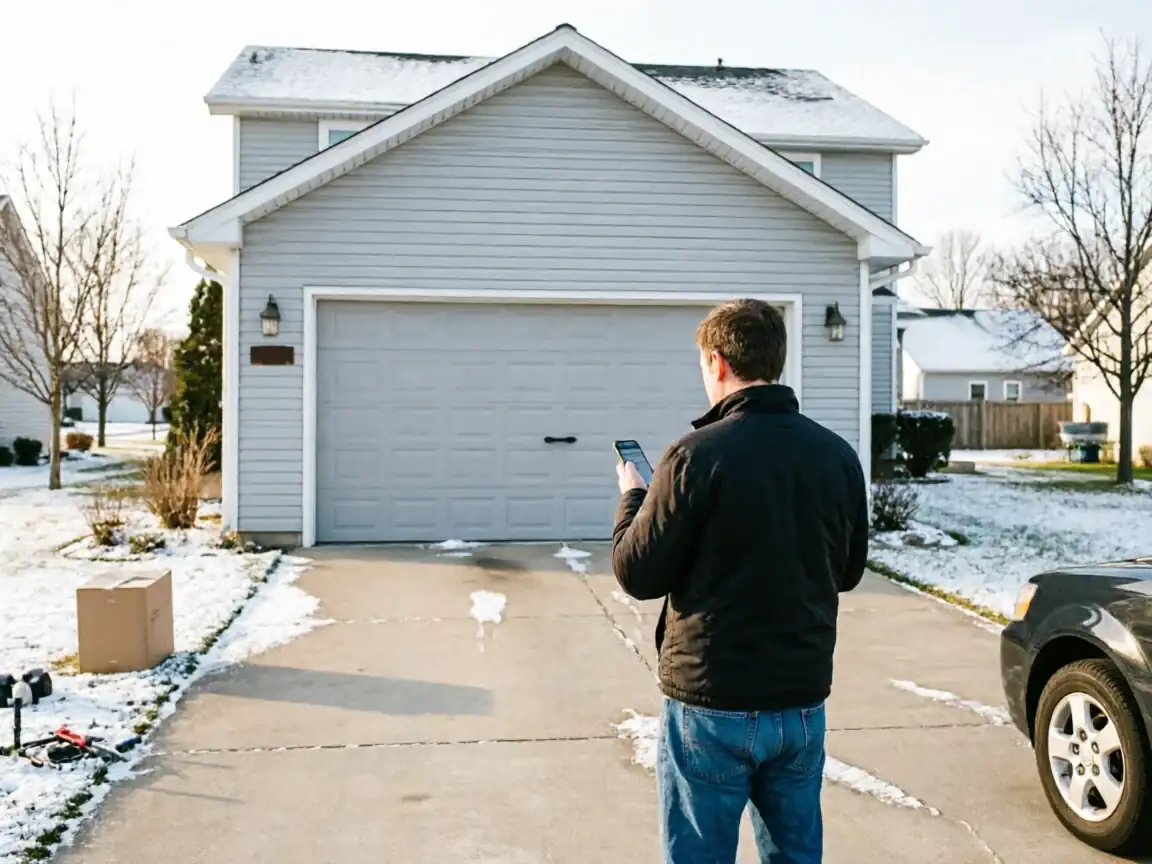
What Is Going On
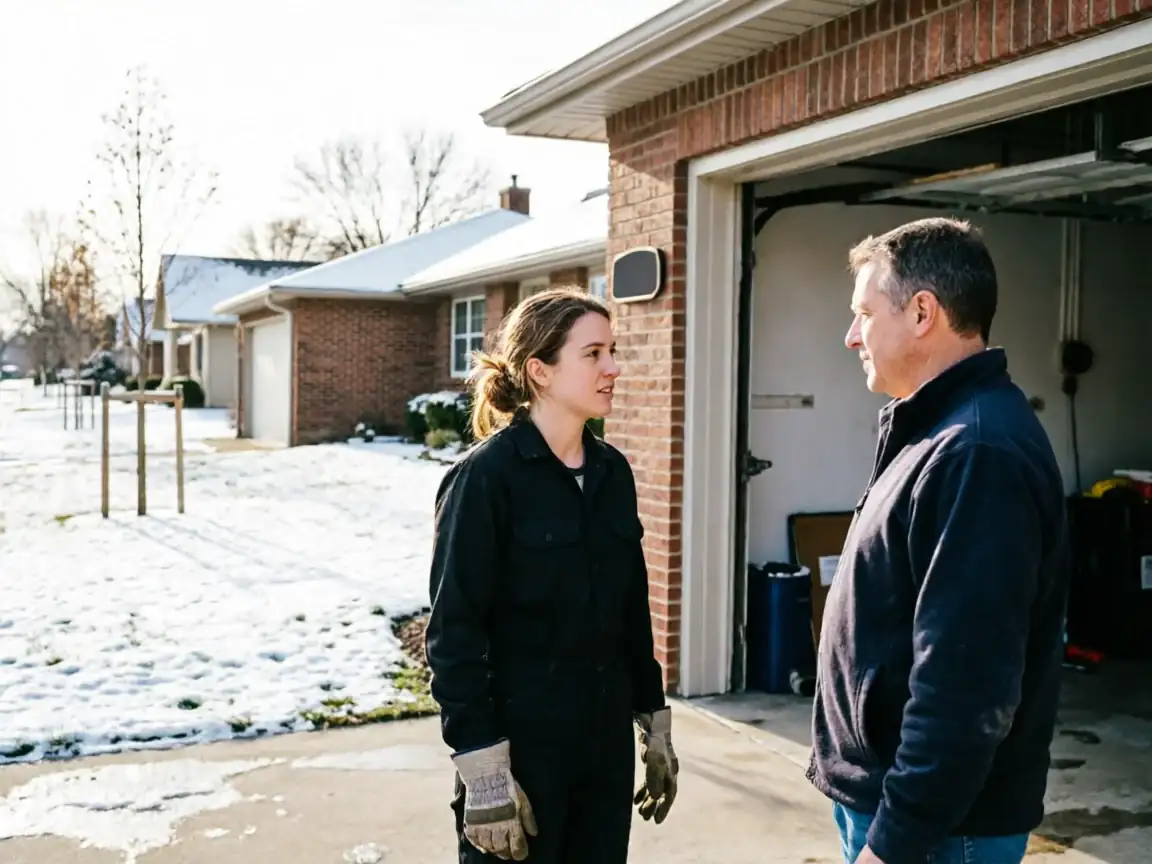
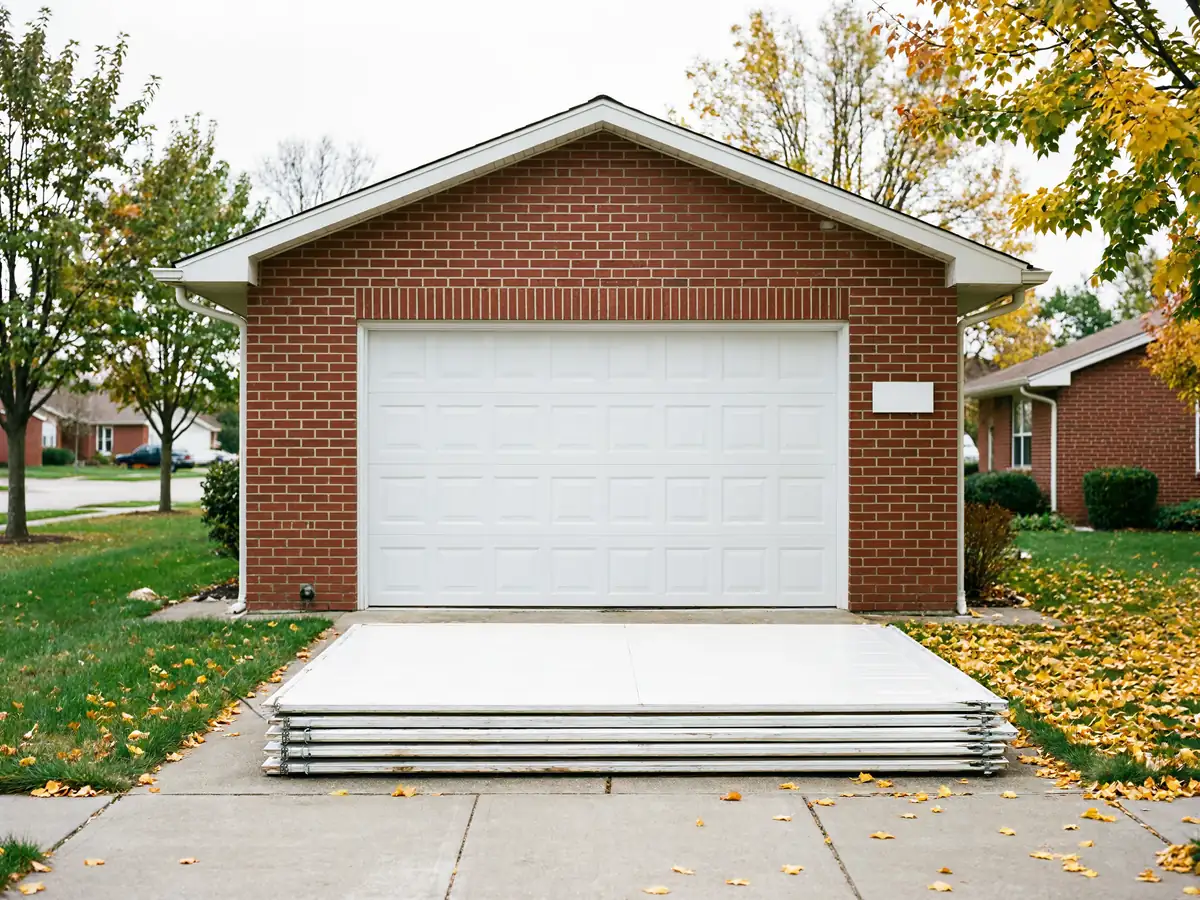
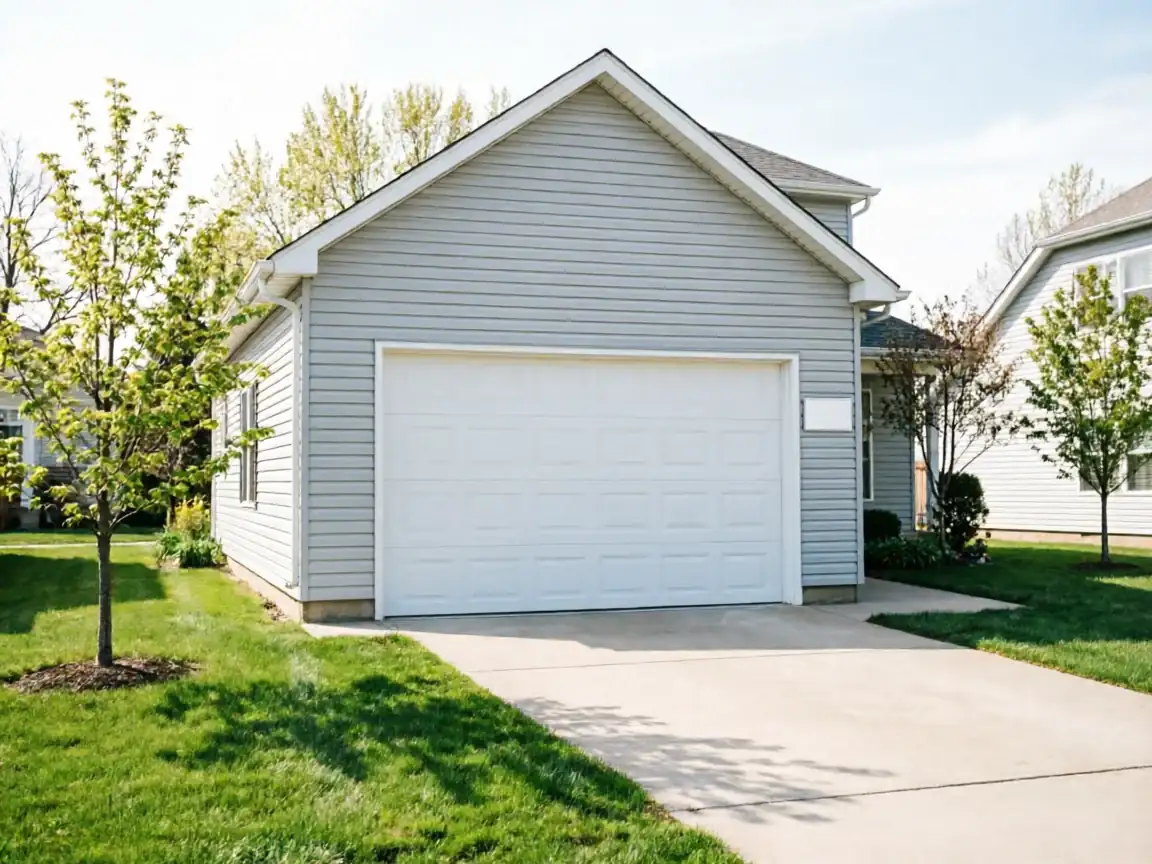
When a call comes in, the first job is figuring out what's actually failing versus what's just old. Most houses in this service area went up between 1943 and 1975, with the bulk of the stock dating to the 1960s and '70s across the eight named areas we cover. That means a lot of original torsion springs, steel tracks, and openers that have been swapped once or twice since but still sit on hardware sized for a door built before current standards existed.
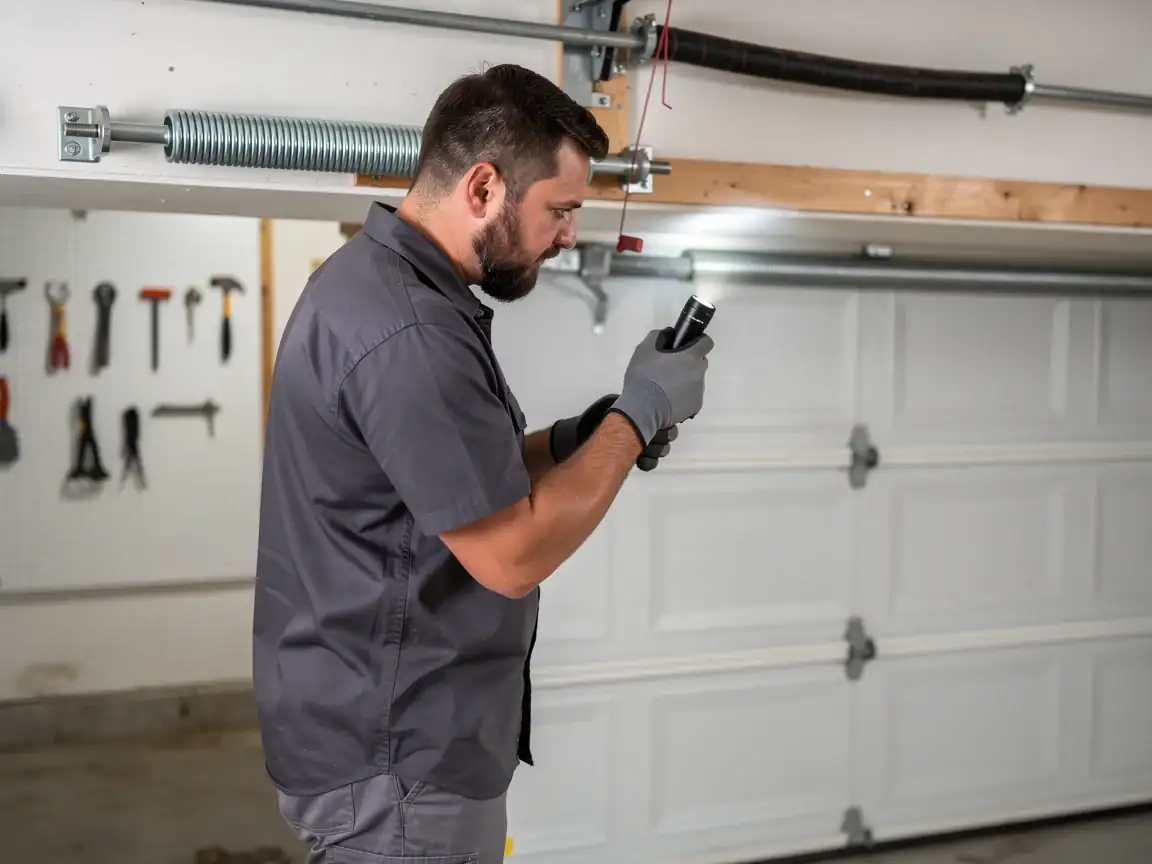
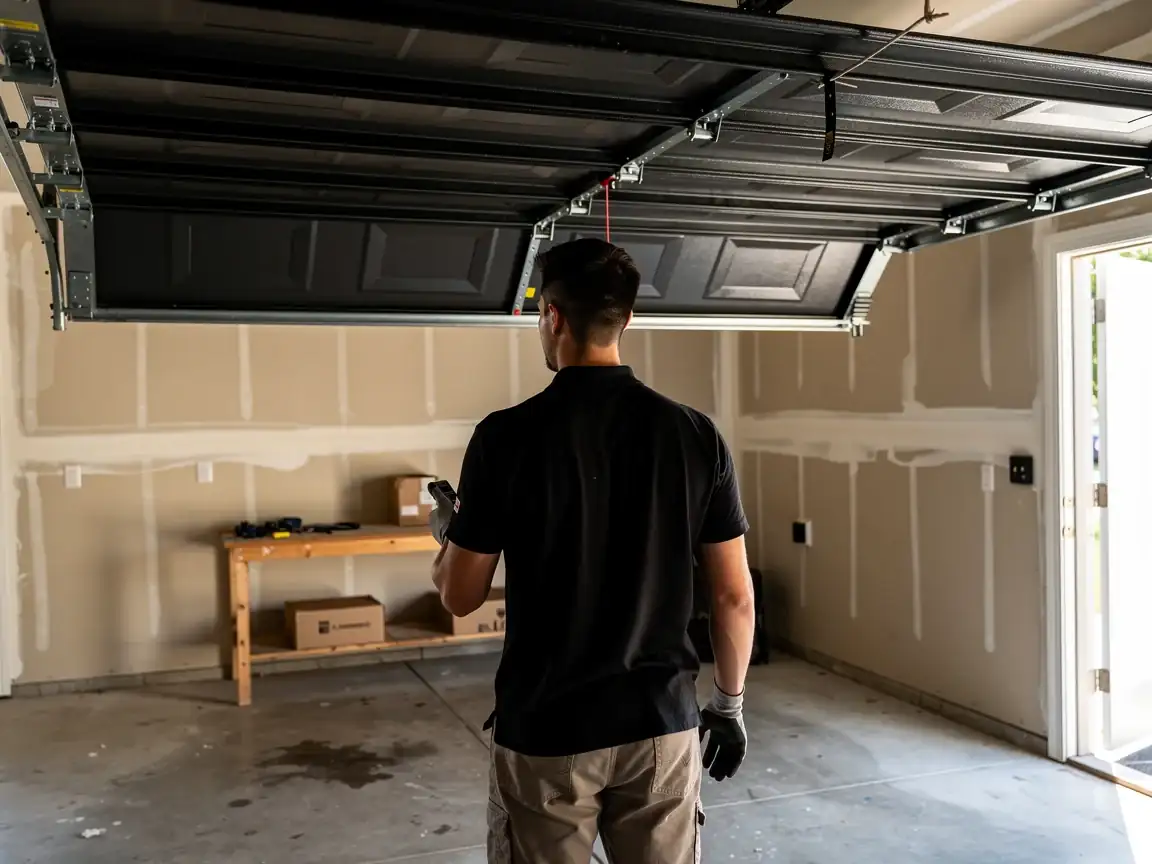
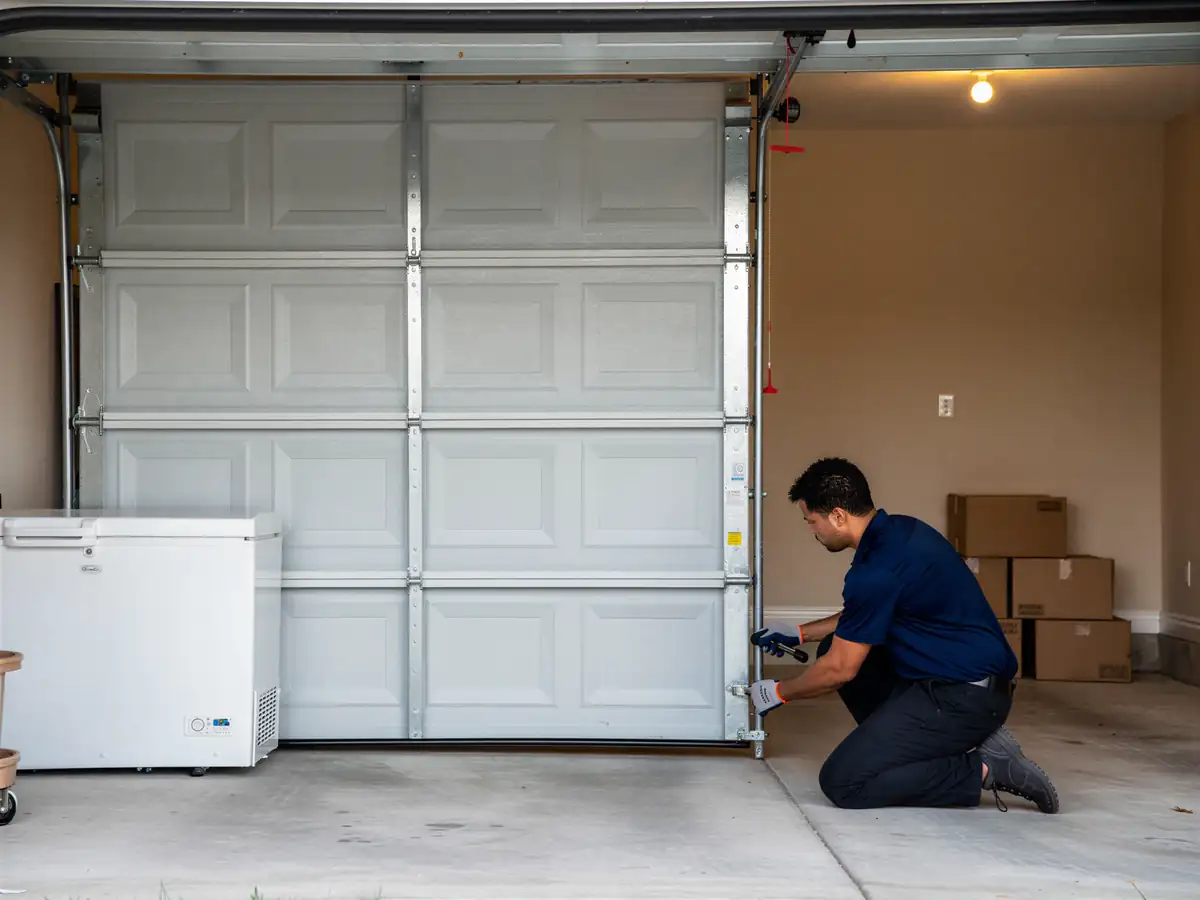
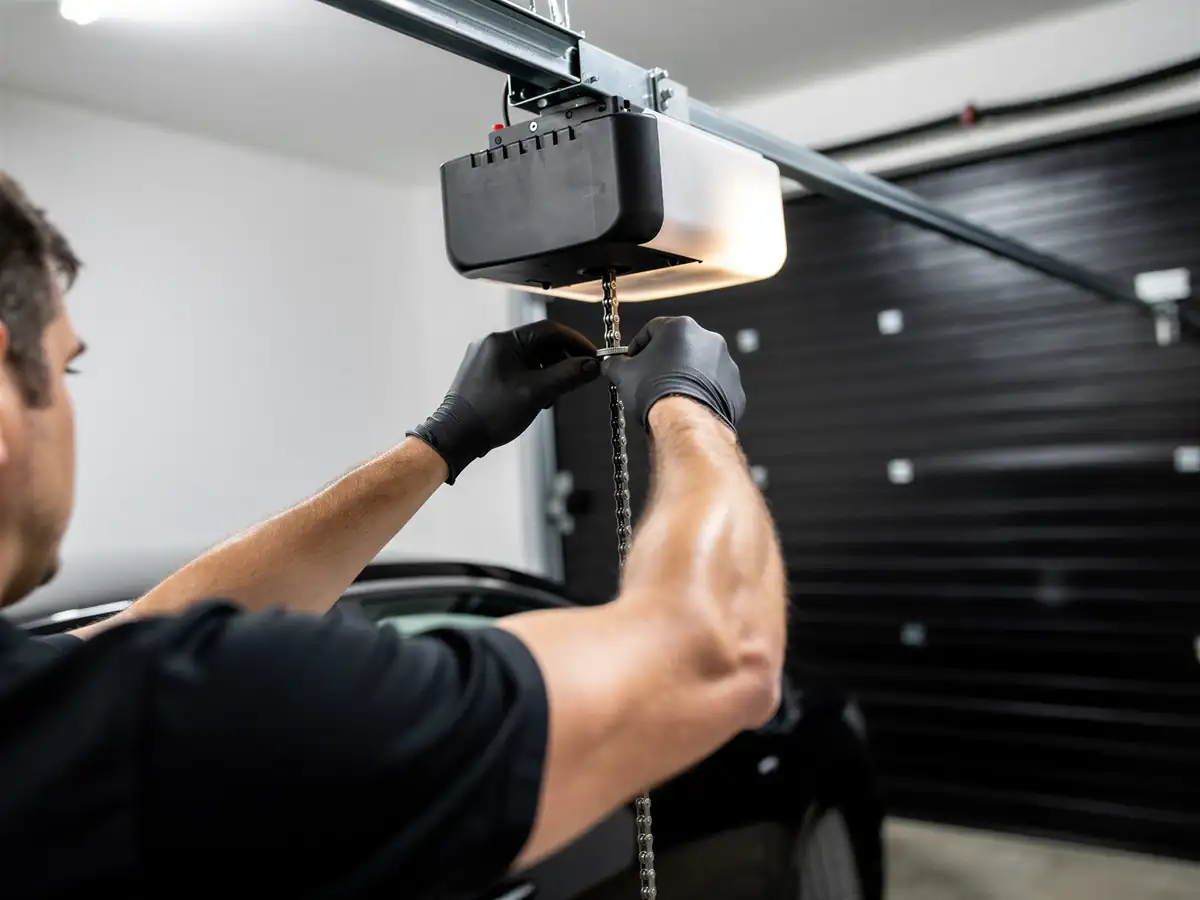
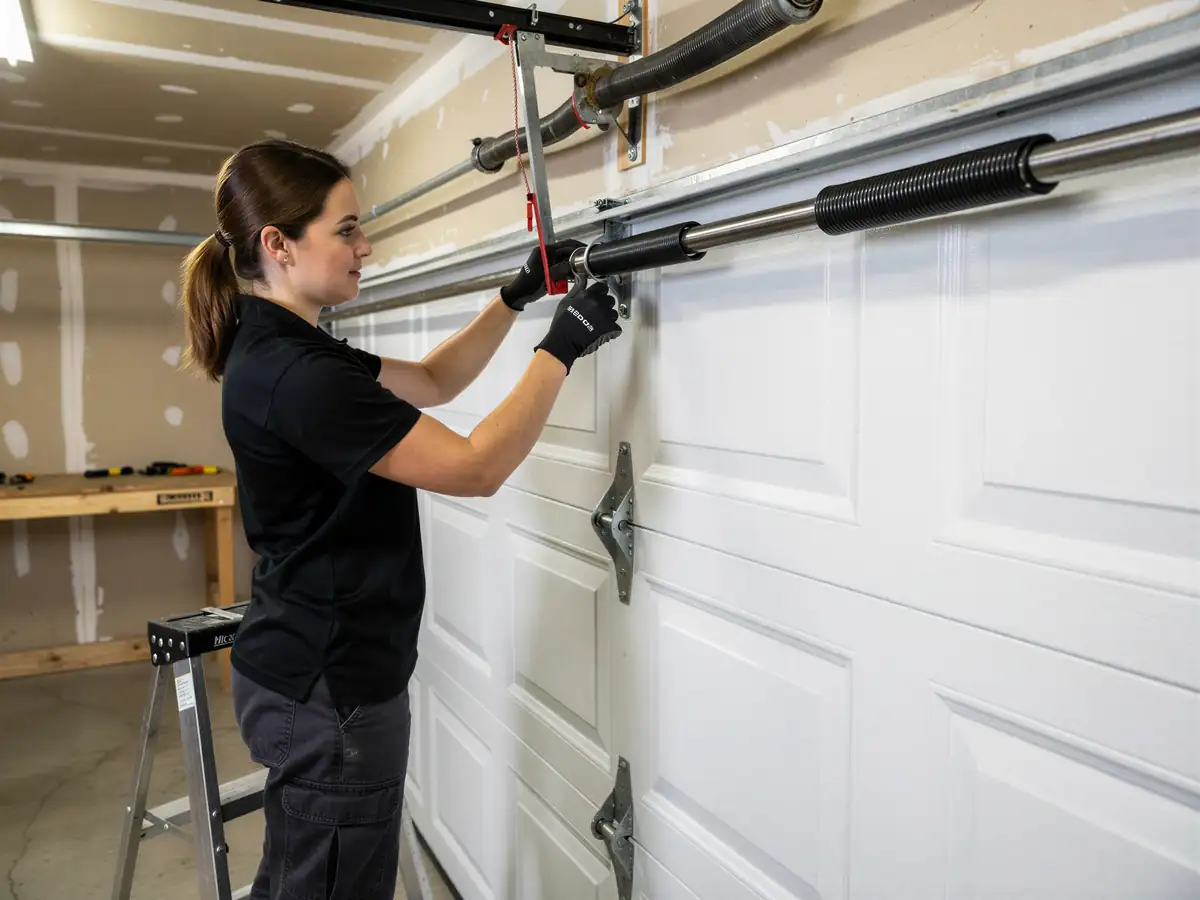
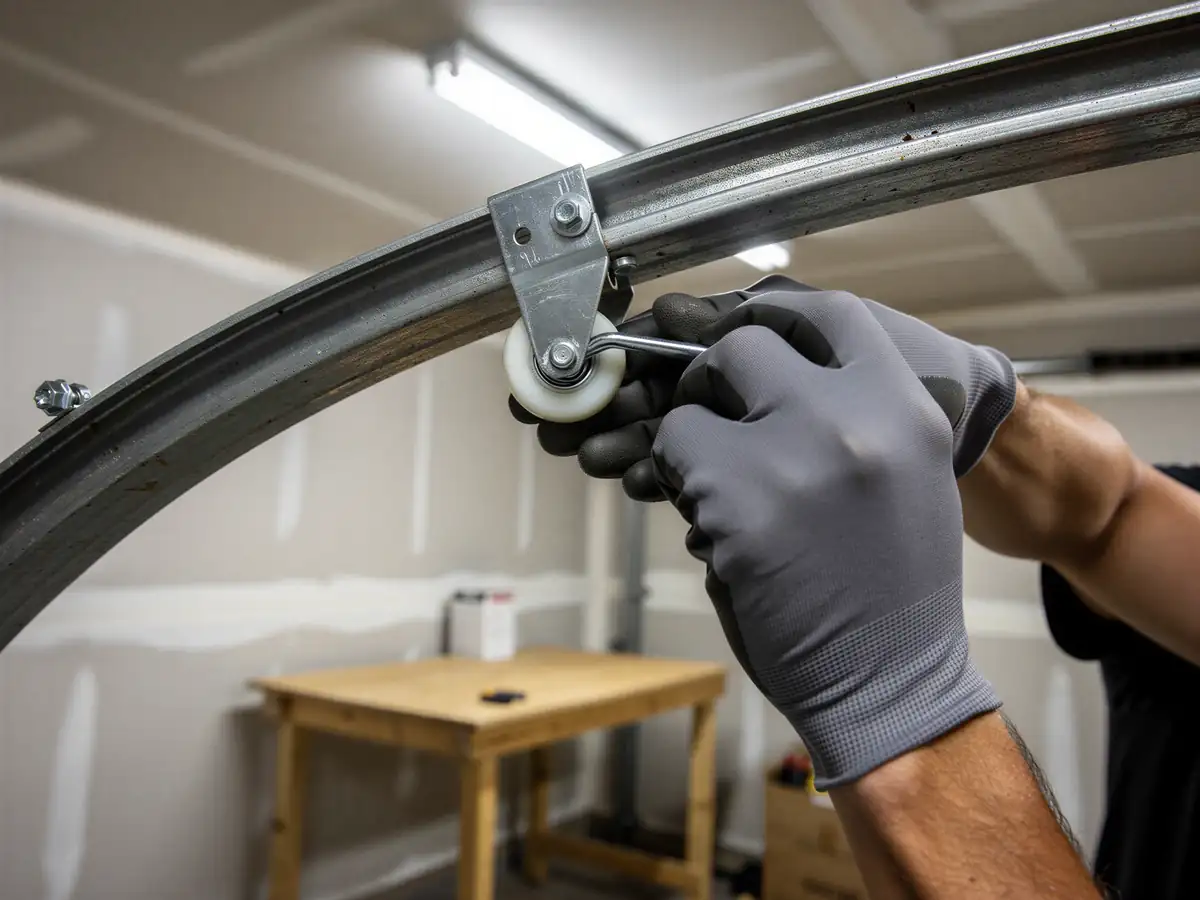
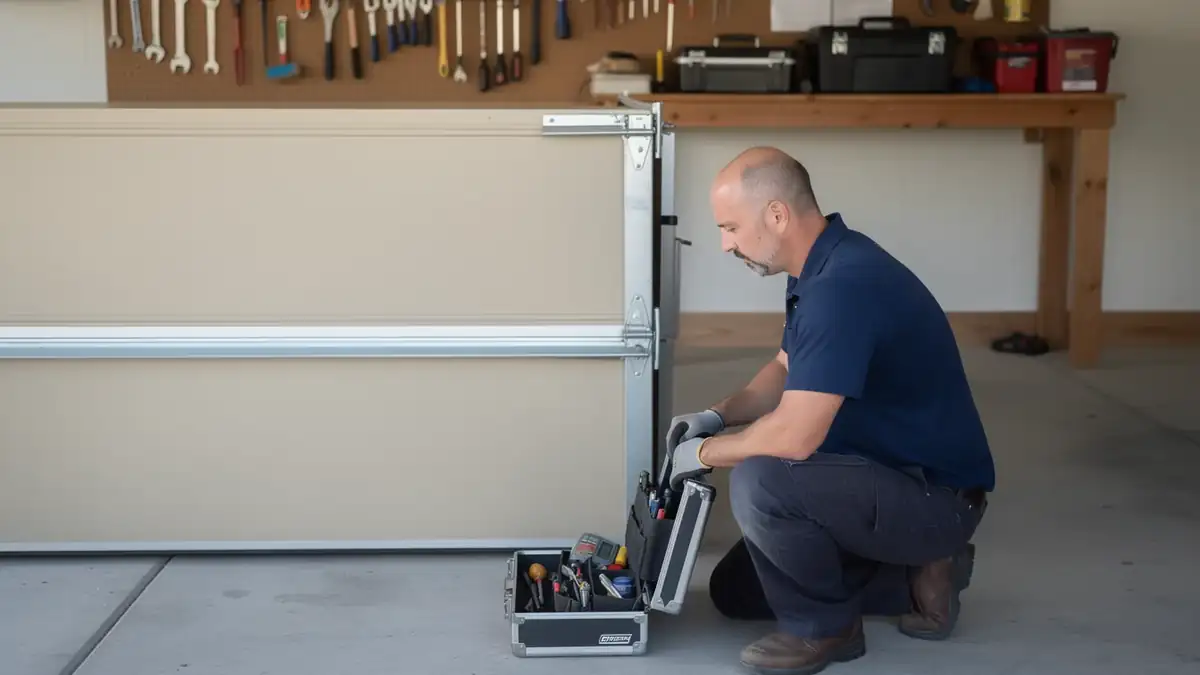
A service call starts with a look at the spring - is it the original wind, or a later replacement that doesn't match the door weight? Then the track and rollers, because 50-to-60-year-old track brackets loosen at the lag bolts over decades of use. Then the opener, if there is one, since a lot of these houses had openers added long after the house was built, often with mismatched horsepower for the door size. None of this is guesswork specific to any one house - it's what the age bracket predicts, and it's why we check it every time rather than assuming the newest-looking part is the one that's actually wrong.
When It Stops Being a DIY Job
A loose roller or a noisy hinge, most owners can handle
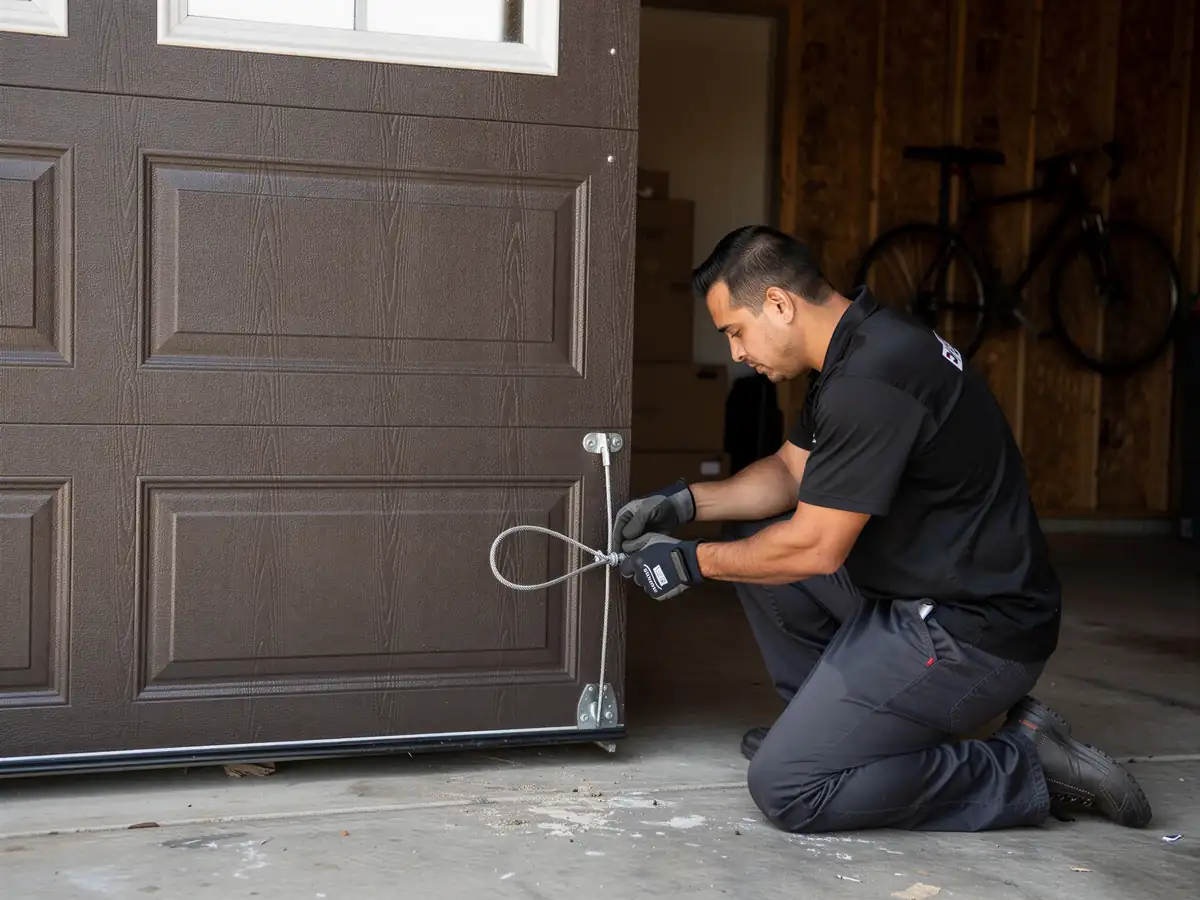
A torsion spring is not that job - it's wound under enough tension to break a bone or worse, and on the older, single-spring setups common in this housing stock, there's no second spring to carry the door while you work. If the door won't move, or moves but drops fast when you let go of it, that's a spring or cable problem and it's a call, not a weekend project.
The other line is the track
On houses from the 1960s stock, track brackets were often fastened directly into jamb framing that's seen decades of seasonal movement. If a bracket has pulled loose, re-securing it into wood that's dried and shifted over fifty-plus years isn't a straightforward reattachment - it needs new fastening points, sometimes a different bracket style than what's there now. That's a judgment call best made in person.
How Local Conditions Play In
This area sits in a cold-moderate climate band, which means winter cold tightens steel cable and stiffens lubricant on tracks and hinges, and that shows up as doors that bind or stick on cold mornings. It's not damage so much as the system telling you it's due for lubrication and a tension check before the cold sets in rather than after a cable snaps from the extra load.
On the older doors in this stock, insulation (or the lack of it) also plays into how the door handles temperature swings - a non-insulated panel from the original build flexes more in cold than a later insulated replacement, which puts more stress on hinges and the opener's drive over time. A service call in this climate band isn't just fixing what broke, it's checking whether the cold exposed a weak point that was already there.
When Waiting Is Fine
Not every noise is a call. A single squeak on one hinge, especially after a stretch of cold weather, is usually just dry metal and a shot of lubricant fixes it. If the door opens and closes evenly, closes flush to the floor, and the opener reverses properly when it meets resistance, there's no reason to push for a same-week visit.
We'll say plainly: if your door is still on original 1960s-era hardware and running fine, replacing it before something actually fails usually isn't worth the cost. We'd rather look at it, tell you it's good for another season, and let you spend that money elsewhere. That's the honest version of this job - not every call needs a truck out.