Serving Hutchinson, KS & nearby
(620) 205-4981
Hutchinson, KS

What Houses Built Between 1943 and 1975 Mean for Your Garage Door

Hutchinson homes built between 1943 and 1975 often have garage doors with no insulation and worn hardware. Here's what that means for repairs and replacement.

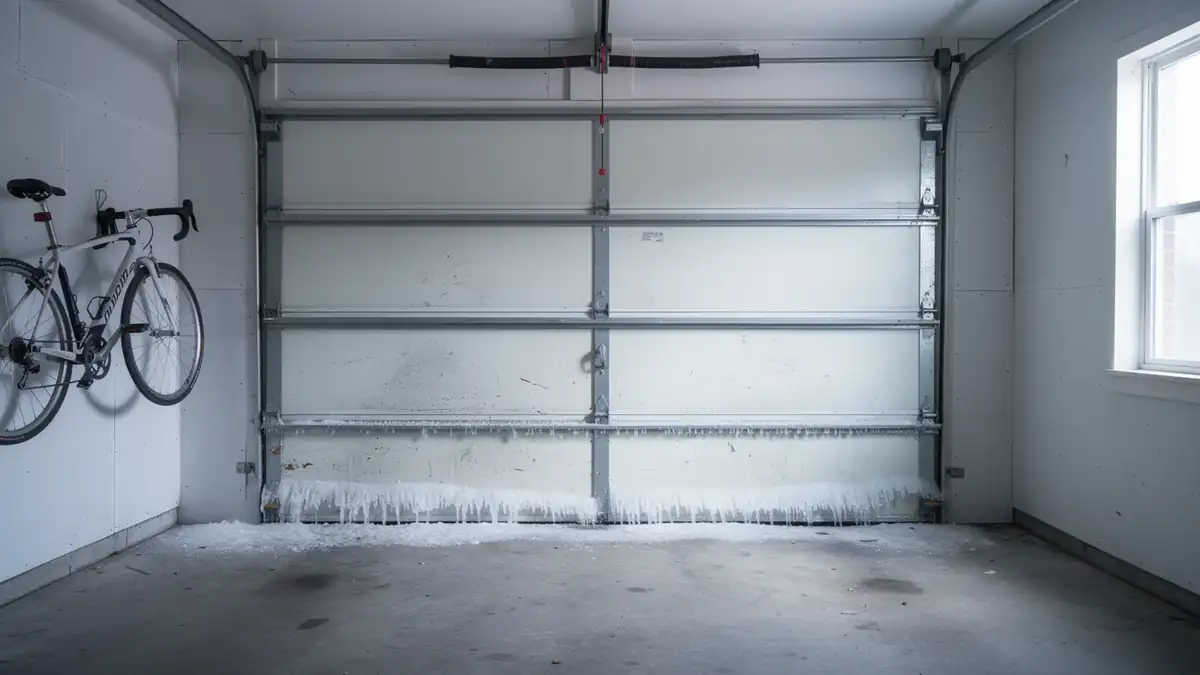
A white garage door with ice and icicles at the bottom.

What Is Going On

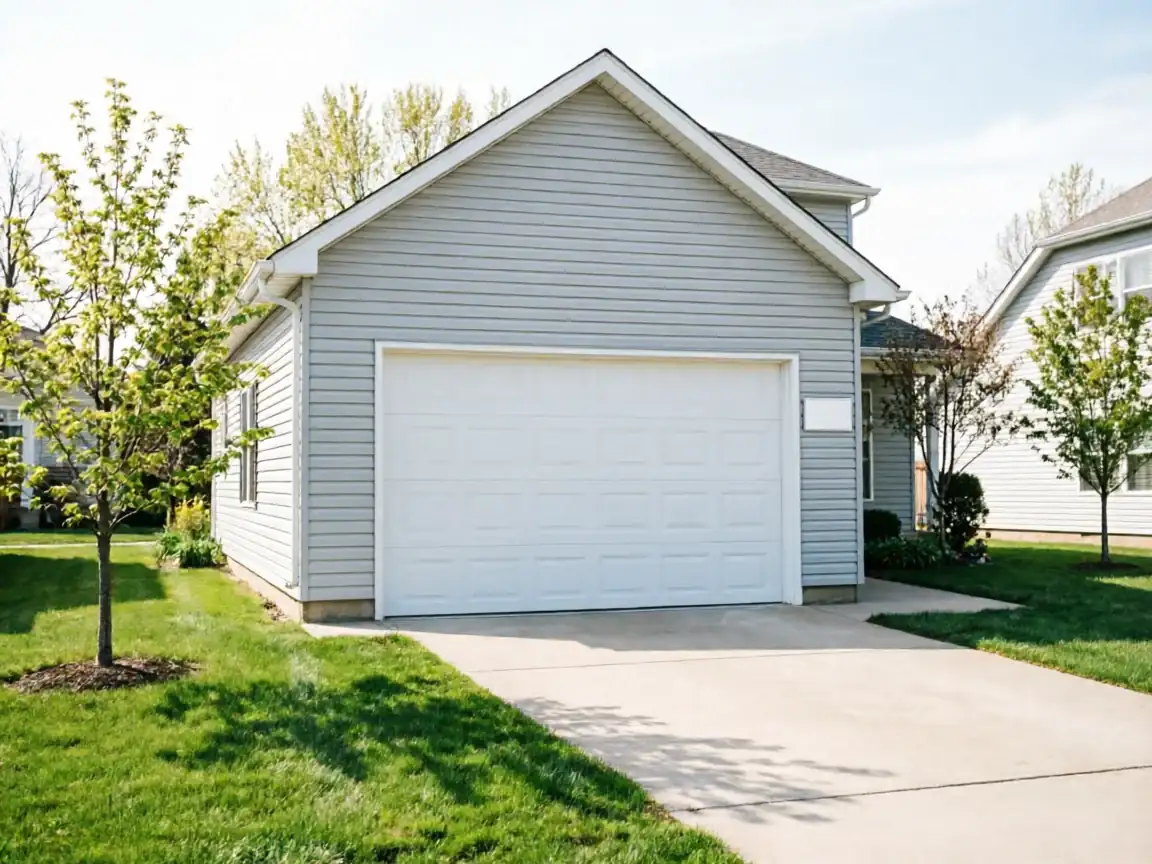
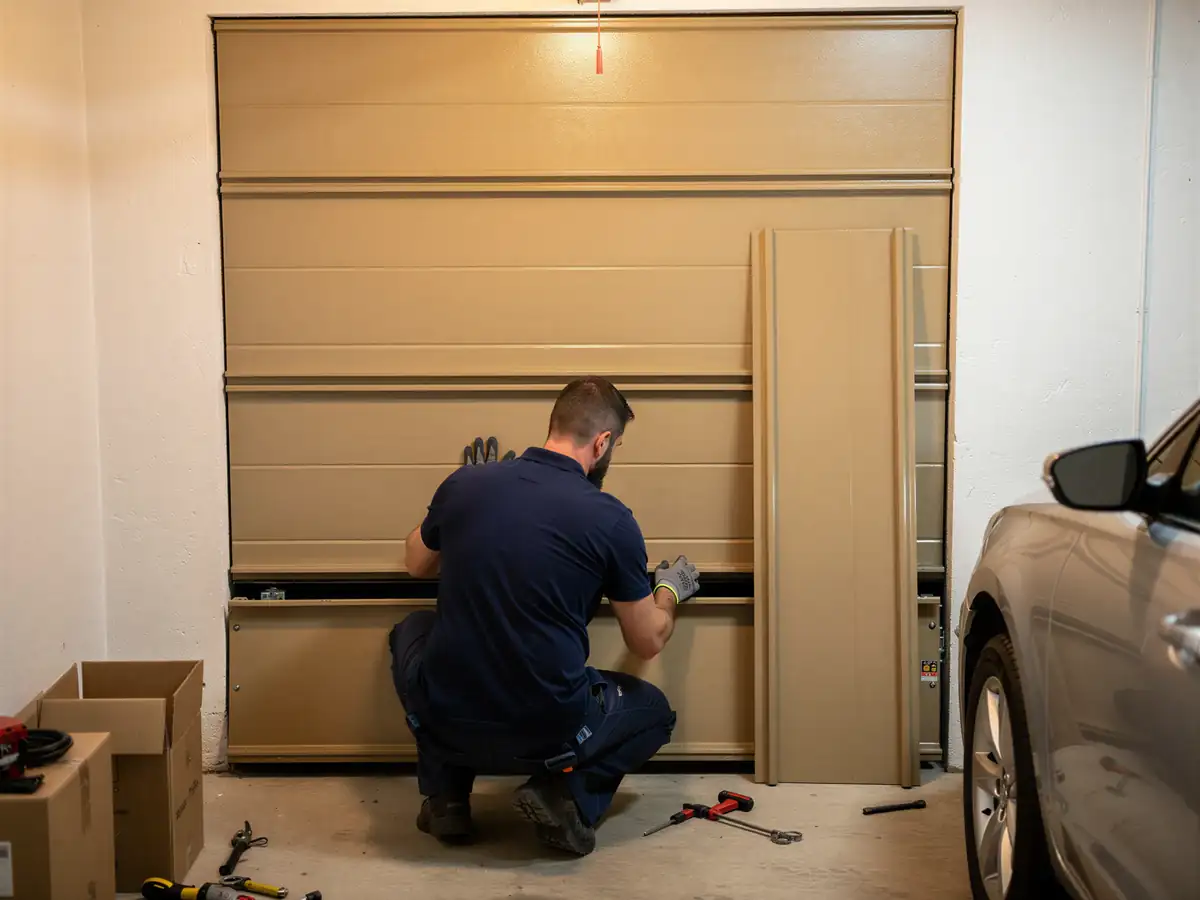
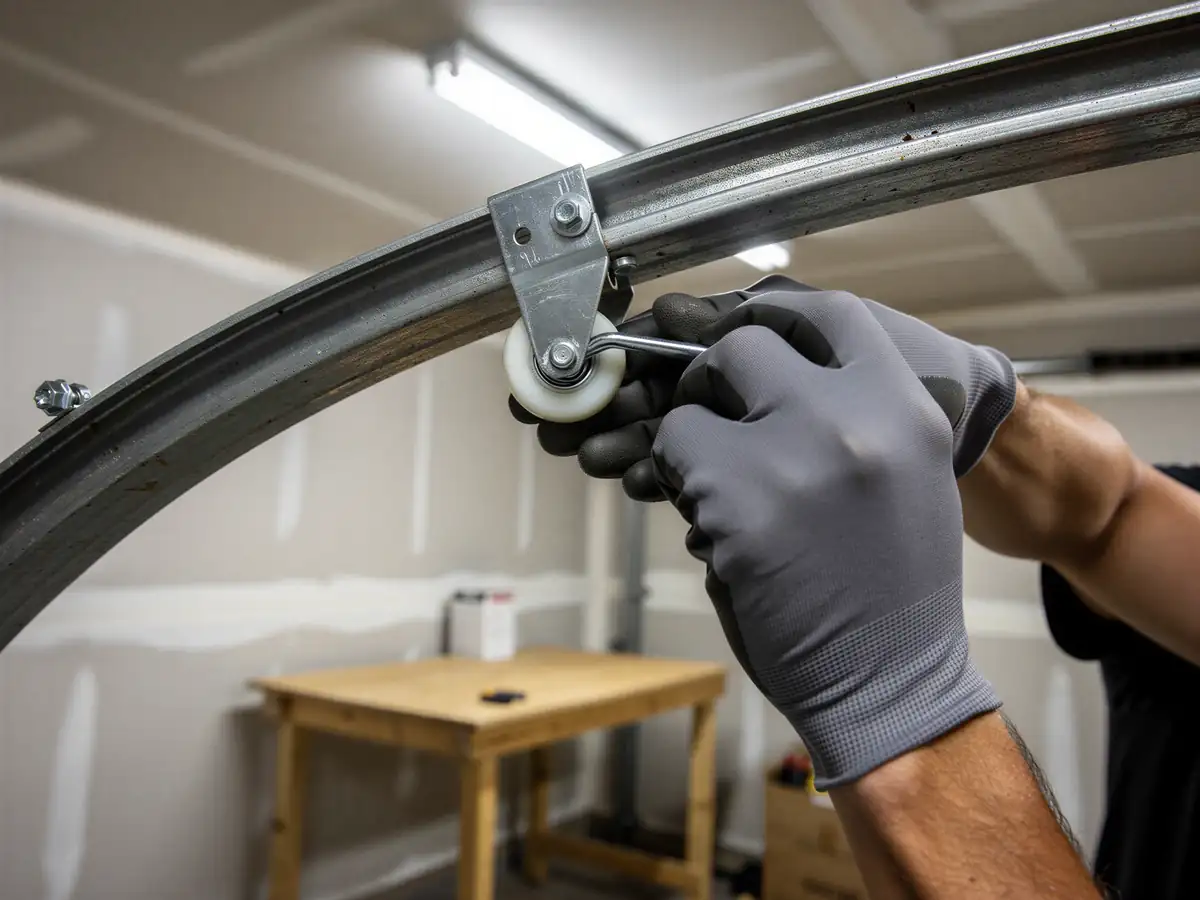
A lot of the garage doors we get called to here went in when the house did. Housing in this area runs mostly 1943 to 1975, with the median build year sitting around 1964, and across the eight areas we work in that 1960s-and-70s wave of construction is what dominates the stock. These are doors on houses built before insulation rules existed, so what's hanging on the track is often a single layer of steel or wood with nothing behind it - no foam core, no thermal break. The hinges and rollers are usually original too, and if there's an opener bolted on, it may predate anything with a safety reversal sensor. None of that means the door is bad. It means the parts are old, the clearances were set for hardware nobody makes anymore, and a quick fix sometimes turns into a hunt for a bracket that doesn't match current stock sizes. When we show up to a job in this area, the first thing we're doing is figuring out which era of door we're actually looking at before we touch anything.

When It Stops Being a DIY Job

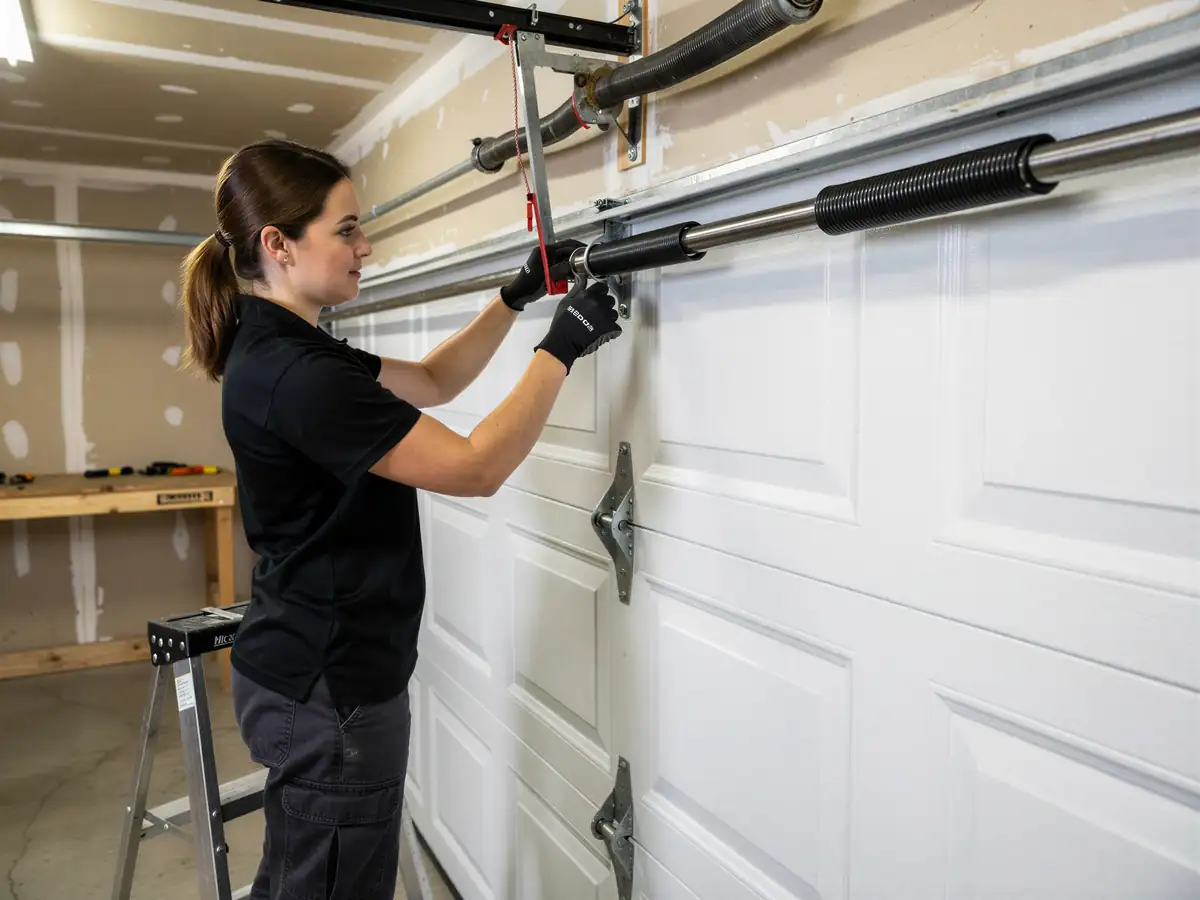
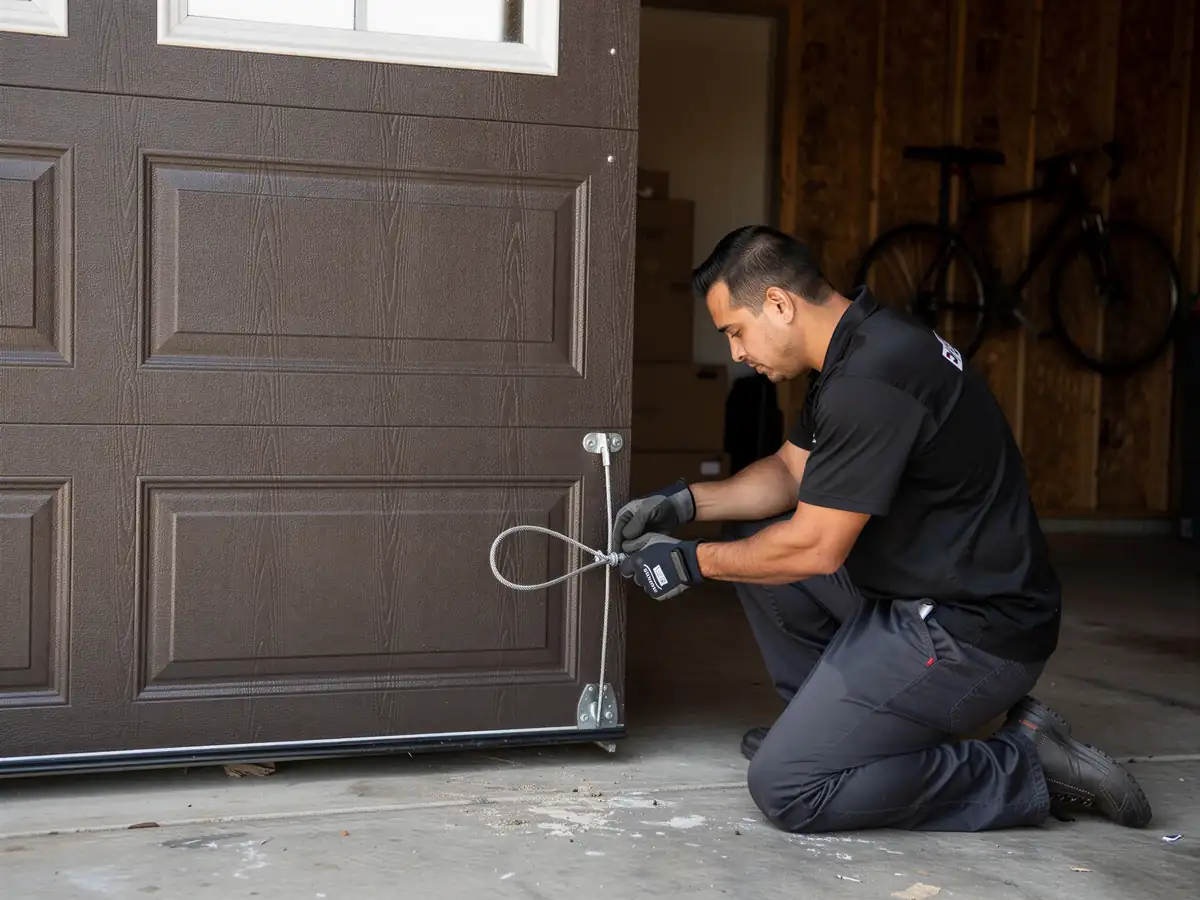
A torsion spring holding up a door that's been in place since the 1960s is under decades of cycling, and on a lot of these original setups the winding cones and shaft are the same ones that came with the house. That's not a part to guess at. If a spring's broken, if the door is off-track, or if a cable has frayed at the drum, that's a stop-and-call situation, not a YouTube afternoon - the stored tension in an old torsion spring can do real damage to a hand or a face. Where DIY still makes sense: tightening loose hardware, lubricating hinges and rollers, swapping a worn weatherstrip at the bottom of the door. Those are maintenance jobs, not safety jobs. The line we draw is tension and alignment. If it involves the spring, the cables, or the track pulling away from the jamb, that's a call, especially on hardware this age where one wrong adjustment can put the whole panel out of square.

How Local Conditions Play In

This area sits in a cold, moderate climate band, which means real swings between a hot afternoon and a cold morning across the same week. Steel contracts in the cold, and on an uninsulated door from the 1960s-70s stock that's common here, that contraction shows up as a door that binds in the track on a cold start and runs loose again once it warms up. Torsion springs also lose a little lifting power in cold weather, so a door that closes fine in July can feel heavier to the opener in January. On doors with no insulation - which is most of what's original to this housing stock - condensation on the inside face is common too, since there's nothing stopping the temperature difference between the garage and the outside air from meeting right at the steel. None of this is damage by itself. It's just what cold-climate swings do to single-layer steel doors that have been doing this same job since before insulation was part of the build code.

When Waiting Is Fine

Not every issue on an old door needs a truck out this week. A dented panel that still tracks straight, surface rust on hardware that hasn't started pitting, a slightly noisy roller - those can wait for a scheduled visit rather than an emergency call. With a median household income of $63,119 across the service area, we'd rather tell a homeowner a repair can hold until next month than push a job that isn't urgent. The honest limitation here: once a door from this 1943-1975 stock needs a replacement panel, finding an exact match is sometimes not possible, since a lot of these sizes and profiles aren't made anymore. In that case the real choice is between a mismatched panel or a full replacement, and we'll say so rather than quote a patch job that won't look right. If the door still opens, closes, and seals, cosmetic wear on an old panel is a fine thing to live with for a while.
How it works

From “it’s stuck” to “it’s fixed”

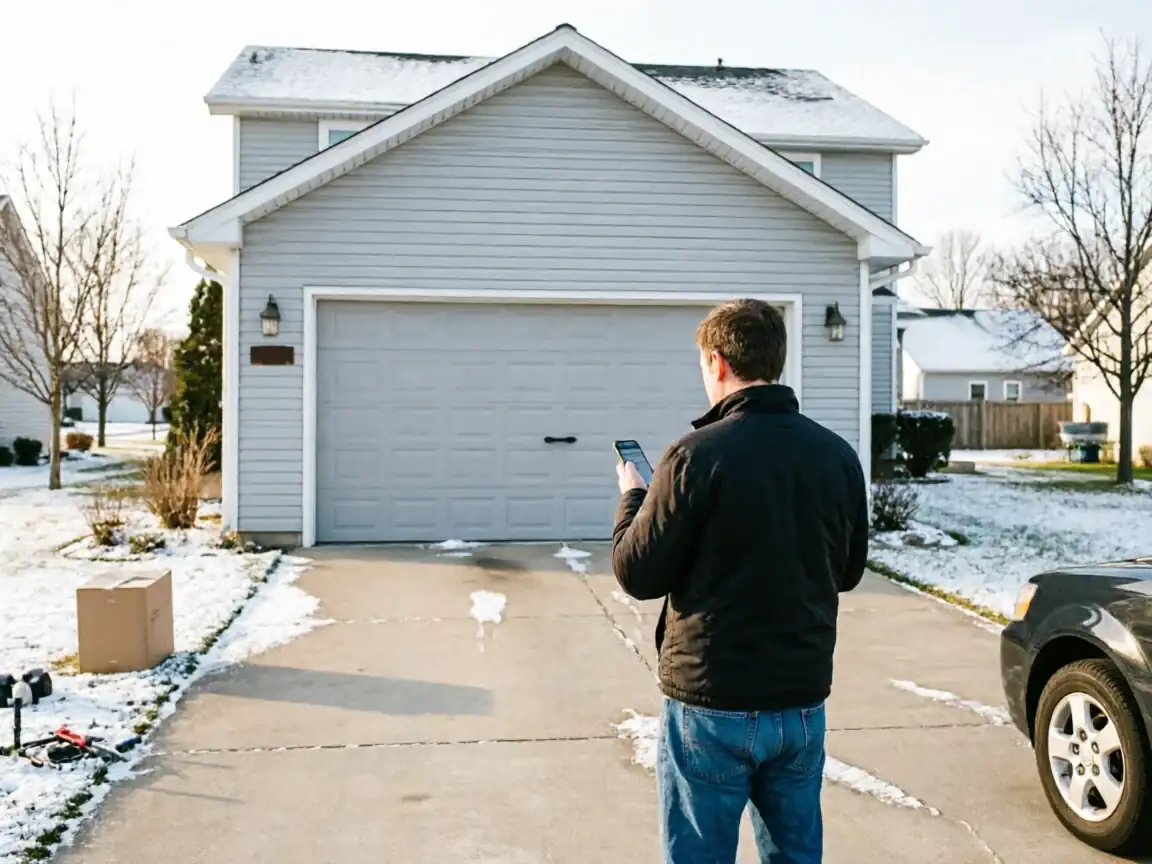
A man stands in a snowy driveway, looking at his phone in front of a garage.

Tell us what’s wrong

Describe the symptom - won’t open, loud bang, opener runs but the door won’t move.

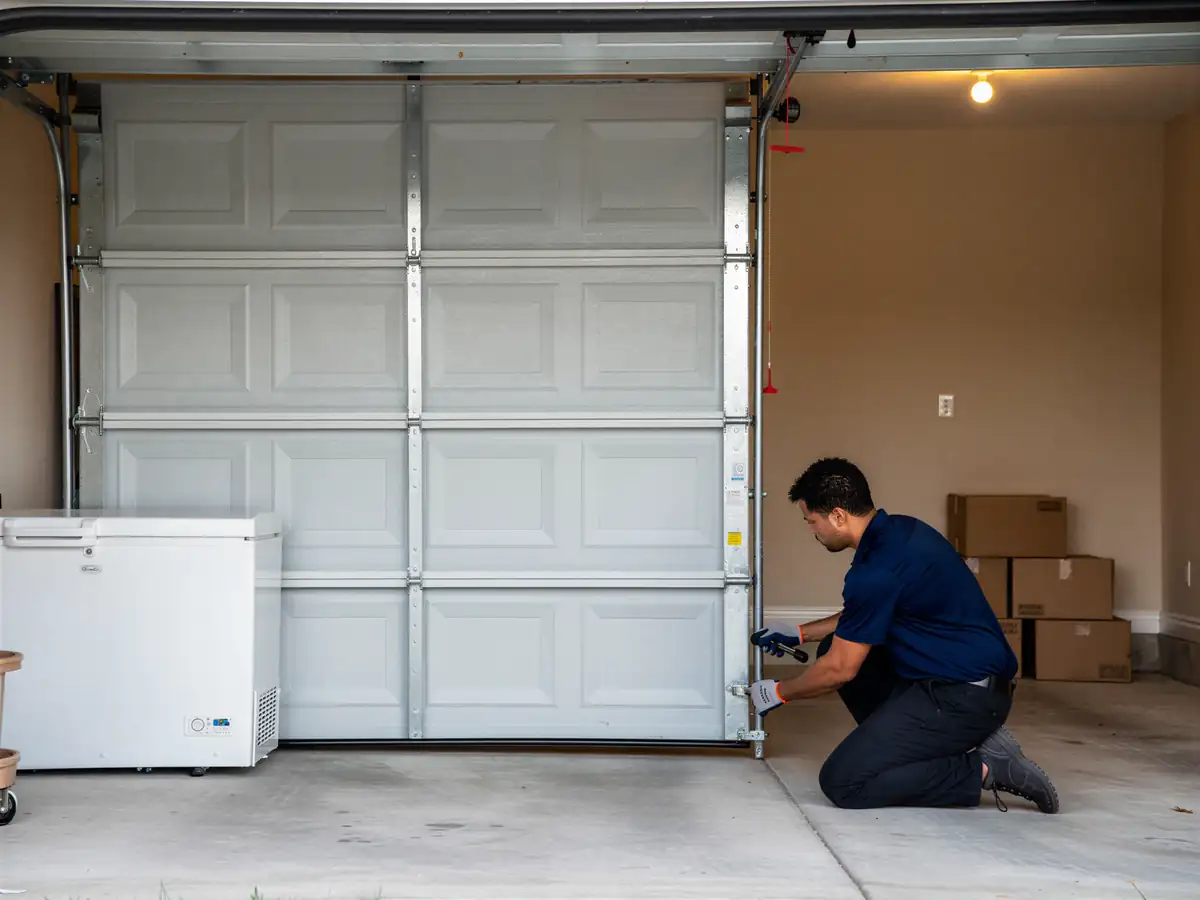
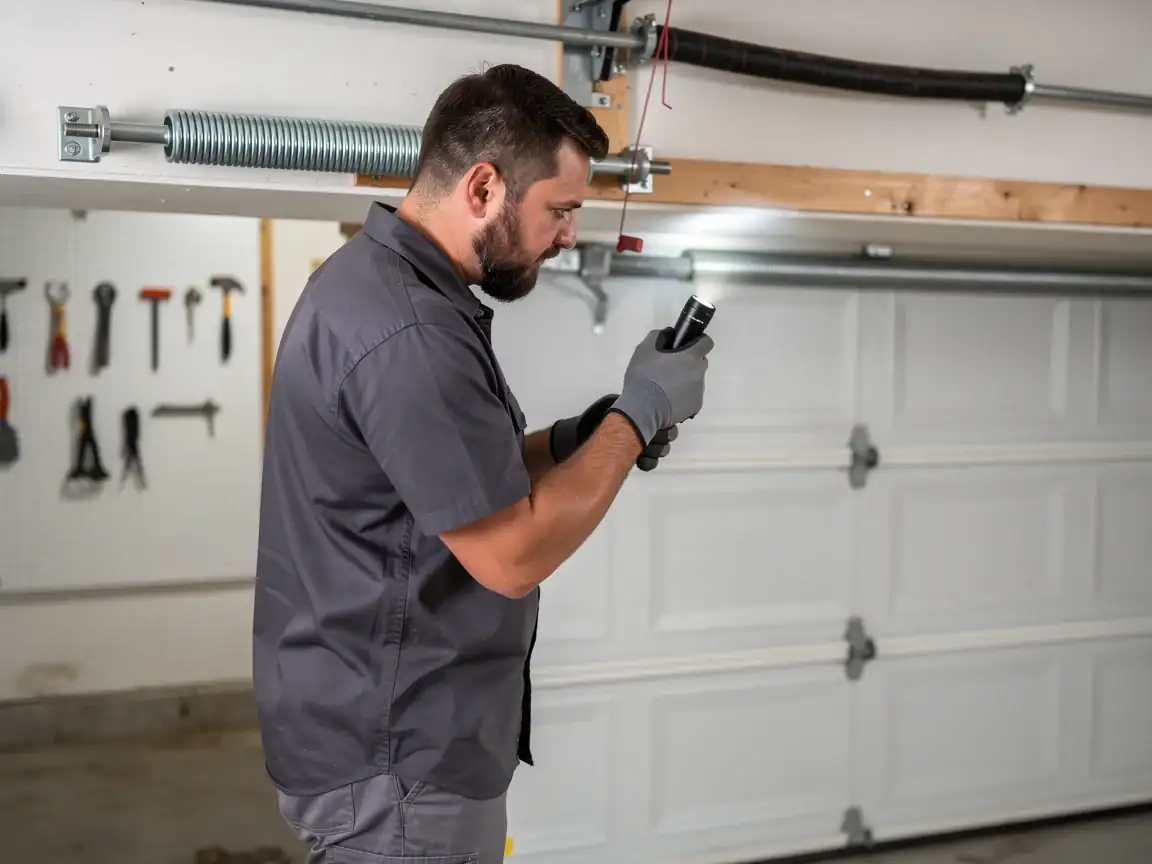
A technician shines a flashlight on a white garage door and springs.

On-site diagnosis

A technician tests the door under power and by hand and finds what actually failed.

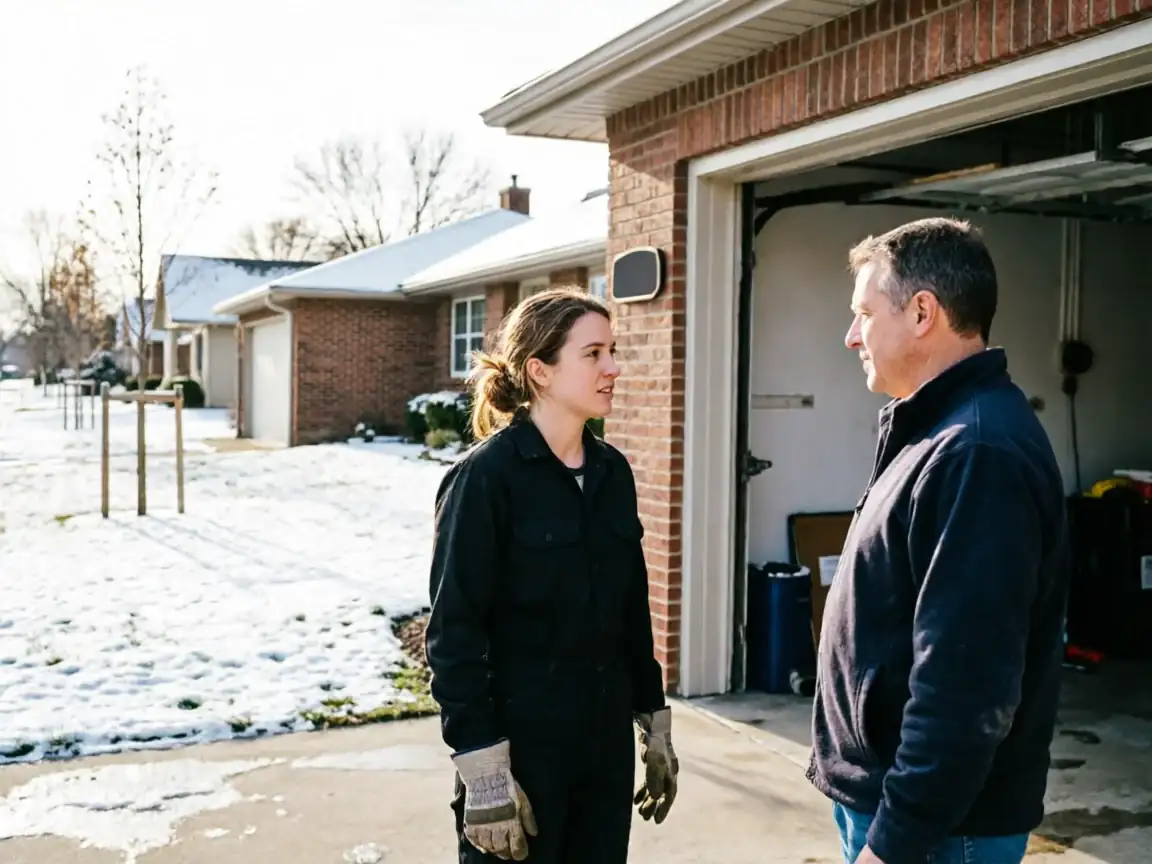
A technician talks to a man in front of an open garage door in winter.

Clear, up-front plan

You get the fix that’s needed and what drives the cost - before any work starts.

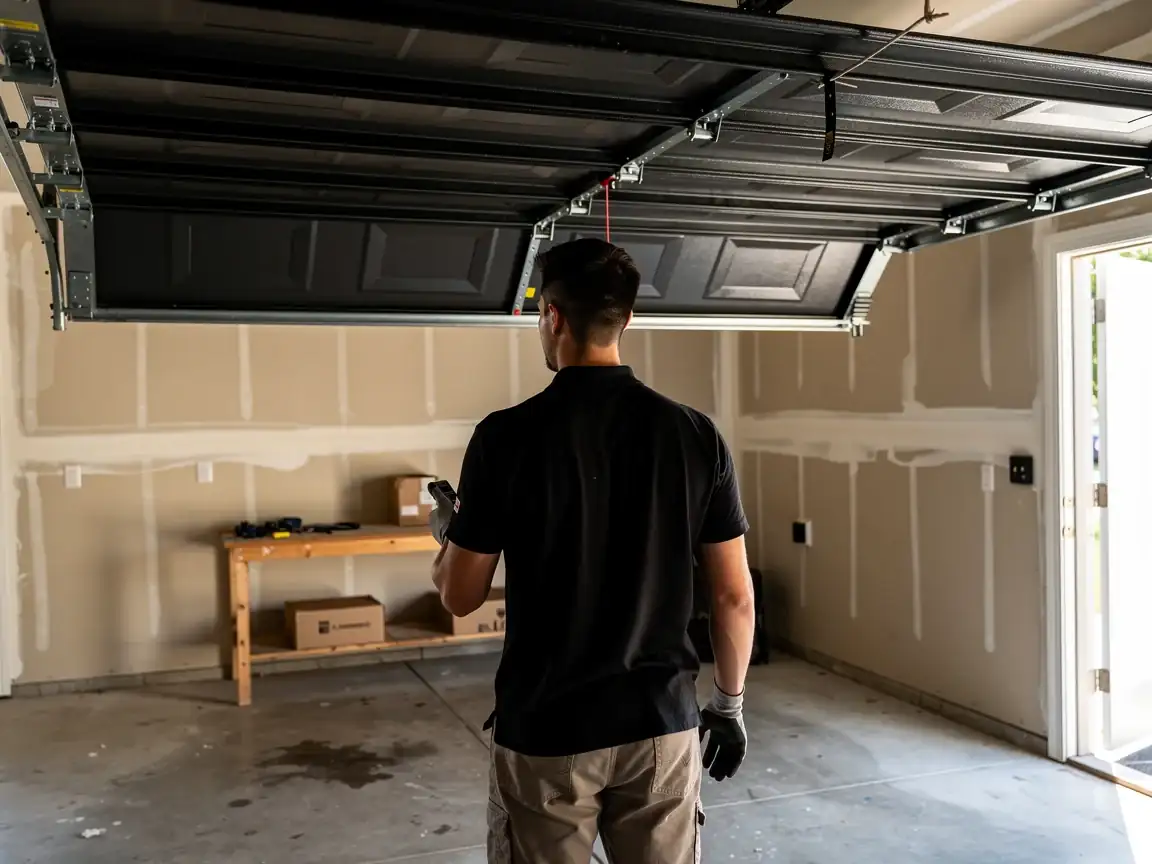
A technician stands in a garage looking at an open black garage door.

Repaired & tested

The repair is done, the door is set true and tested, and the work area left clean.

Not sure which repair your door needs in Hutchinson, KS? Describe what it’s doing - every job starts with a diagnosis.

How we work

What to expect

Diagnosis firstEvery visit starts by finding what actually failed - not a pre-written parts list.
The right part for the doorSprings and openers matched to the door’s weight and age, so the fix holds up.
Straight answersWhen a repair makes more sense than a replacement - or the reverse - you hear it plainly.
Clean, careful workTension released safely, hardware set true, the door tested under power before we leave.
What we do

Garage Door Services

Repair and installation work for Hutchinson homes and businesses.

Questions

Frequently asked

Straight answers about garage door repair in Hutchinson. Still unsure? Ask us directly.

Why does my garage door feel heavier in the winter?

Cold weather reduces the lifting power of a torsion spring, and on original hardware from this area's 1960s-70s housing stock, that drop is more noticeable because the springs have had decades of cycling already. If it's dramatically harder to lift by hand in cold weather, that's worth a look before the spring fails outright.

Is it worth insulating an old garage door instead of replacing it?

It depends on the door's condition. A lot of the doors on houses built before insulation rules here are single-layer steel, and retrofitting insulation panels can help with temperature swings, but if the hardware and track are also original, insulation alone won't fix binding or alignment issues that come from decades of use.

How do I know if my opener is too old to trust?

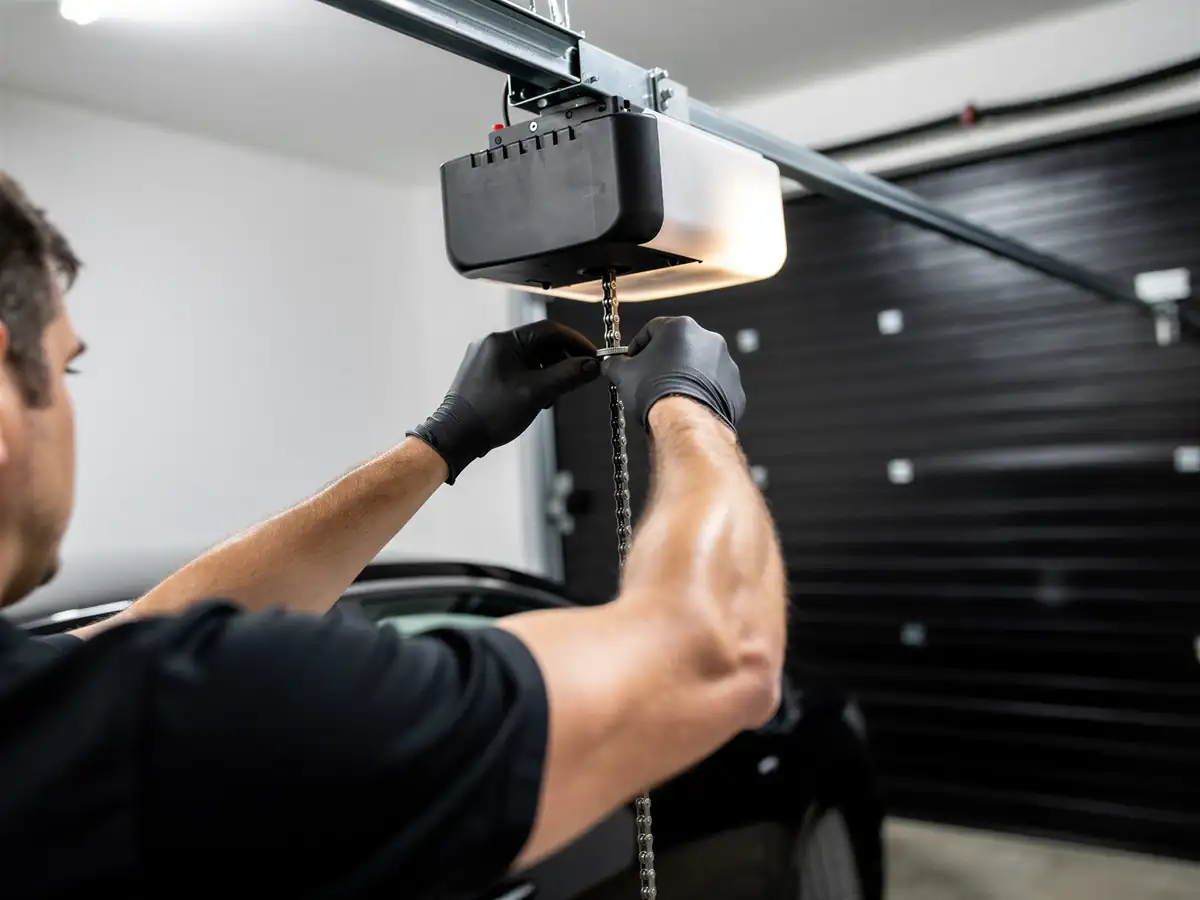
If it doesn't reverse when something blocks the door's path, or the reversal is inconsistent, don't keep using it. Openers from before safety reversal sensors were standard are common on this area's older housing stock, and that's not a feature to skip replacing.

Ready to get your garage door sorted?

Tell us what it’s doing and where you are in Hutchinson - we’ll take it from there.

Request a QuoteCall