What Is Going On
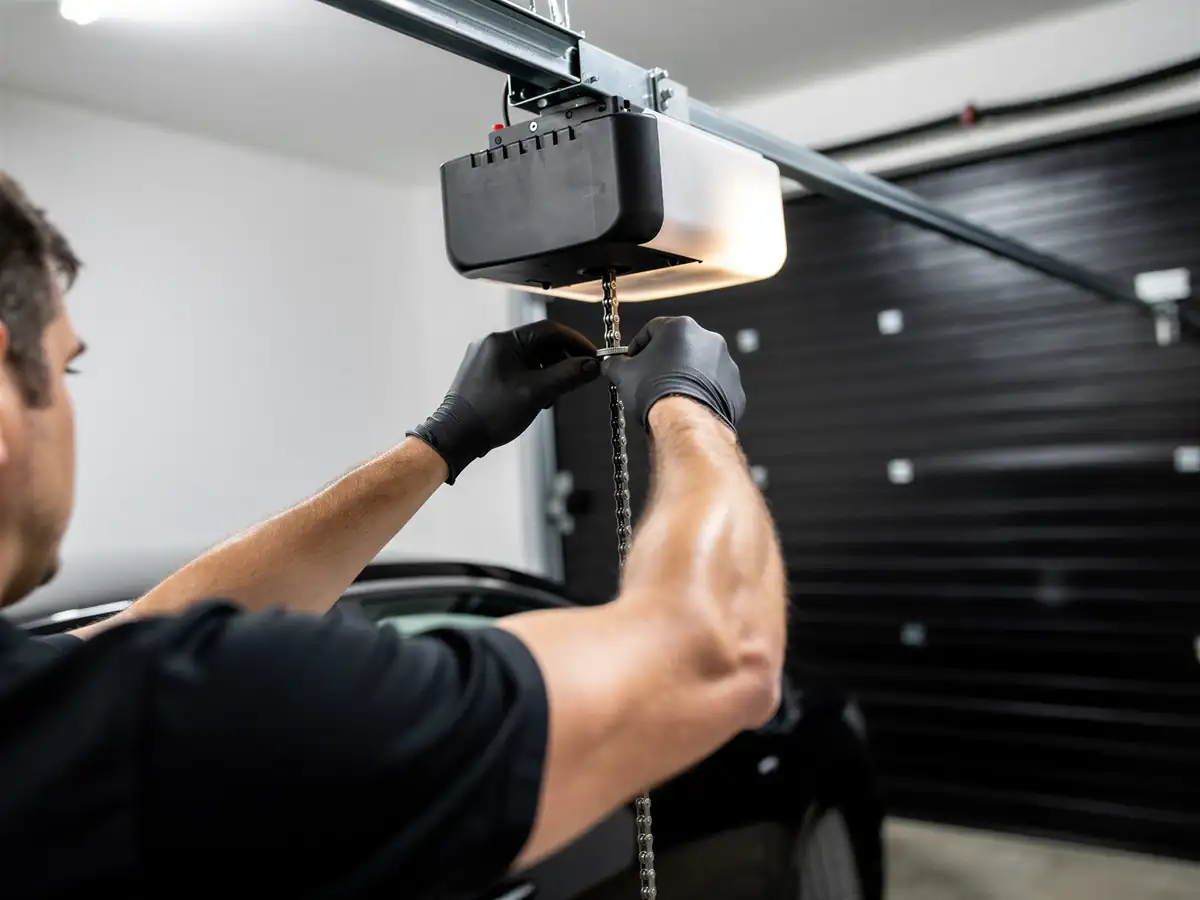
Most of the houses we work on in Hutchinson went up between 1943 and 1975, with the median landing around 1964. That matters for openers and power cuts more than people expect. A house wired in the 1960s wasn't built with a 3/4 HP chain-drive motor and a battery backup unit pulling current through the same garage circuit as a freezer or a shop heater. When the power cuts out in a cold spell, that circuit is already working harder than it was designed to, and the opener is usually the first thing that trips or just stops responding when the power comes back. Across the eight named areas that make up most of this service area, the stock is overwhelmingly 1960s and 70s construction, so the opener you're troubleshooting today is often the second or third unit that's hung on that same bracket since the house was built. The bracket and the header above it haven't changed. The motor driving it has, several times over, and not always to something that matches the original track and spring setup. That mismatch is where a lot of the grinding, reversing, and random shutoff complaints start.
How Local Conditions Play In
Hutchinson sits in a cold-moderate climate band, which doesn't mean brutal, but it means real freeze cycles every winter, and that's enough to stiffen steel torsion springs and thicken the grease in an old motor gearbox. On the coldest mornings, an aging opener draws harder current just to get the door moving, and if a power cut hits right after a cold snap, the restart load on that motor is higher than it would be in mild weather. Battery backup units installed in unheated garages also lose capacity faster in the cold, so a backup that worked fine in October can fail during the exact outage it was bought for. None of this is dramatic weather - it's just enough cold, often enough, to matter over the life of hardware that in a lot of these houses is pushing sixty years old on the structural side even if the opener itself is newer. With a median household income of $63,119 across the service area, most owners here are weighing a smaller relay or capacitor fix against a full opener swap, not defaulting straight to replacement, and the climate is part of what tips that decision either way.
When Waiting Is Fine
Not every opener quirk needs a same-week call. A door that's slightly noisier in January than July is just cold steel and old grease, not a failure. If the opener still closes fully, still reverses when it should, and the power-cut lockouts are rare rather than routine, you can watch it through the season and plan a service visit instead of an emergency one. In a service area with roughly 4,360 households and 2,627 owner-occupied houses, we see plenty of these older openers running fine for years past when someone expected to replace them, simply because the fix was a $20 part instead of a new unit. Where it stops being fine to wait: if the door reverses without warning while someone's underneath it, if the battery backup no longer holds charge through a short outage, or if you smell anything electrical near the unit. Those aren't wait-and-see. Everything short of that, on housing stock this old, is normal wear, not an emergency.