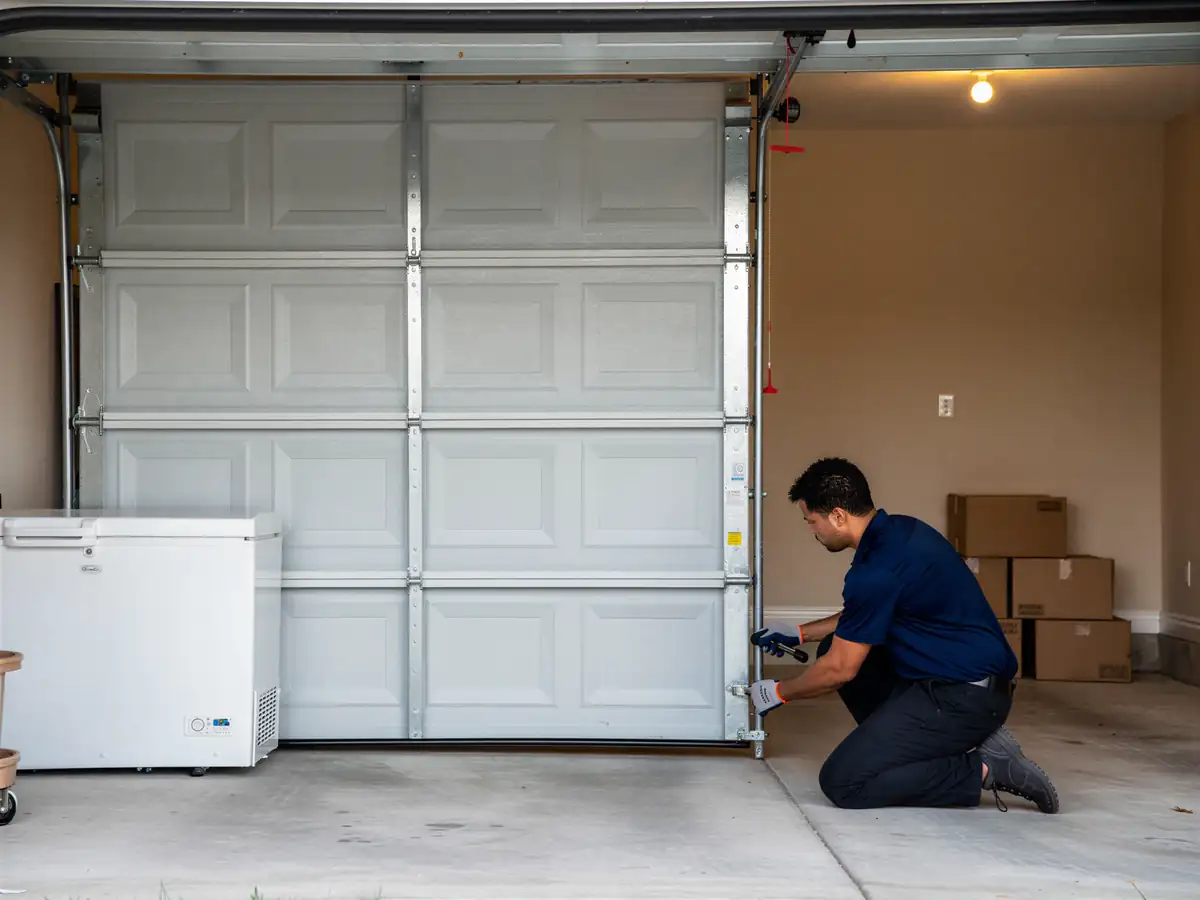
Can You Do This Yourself
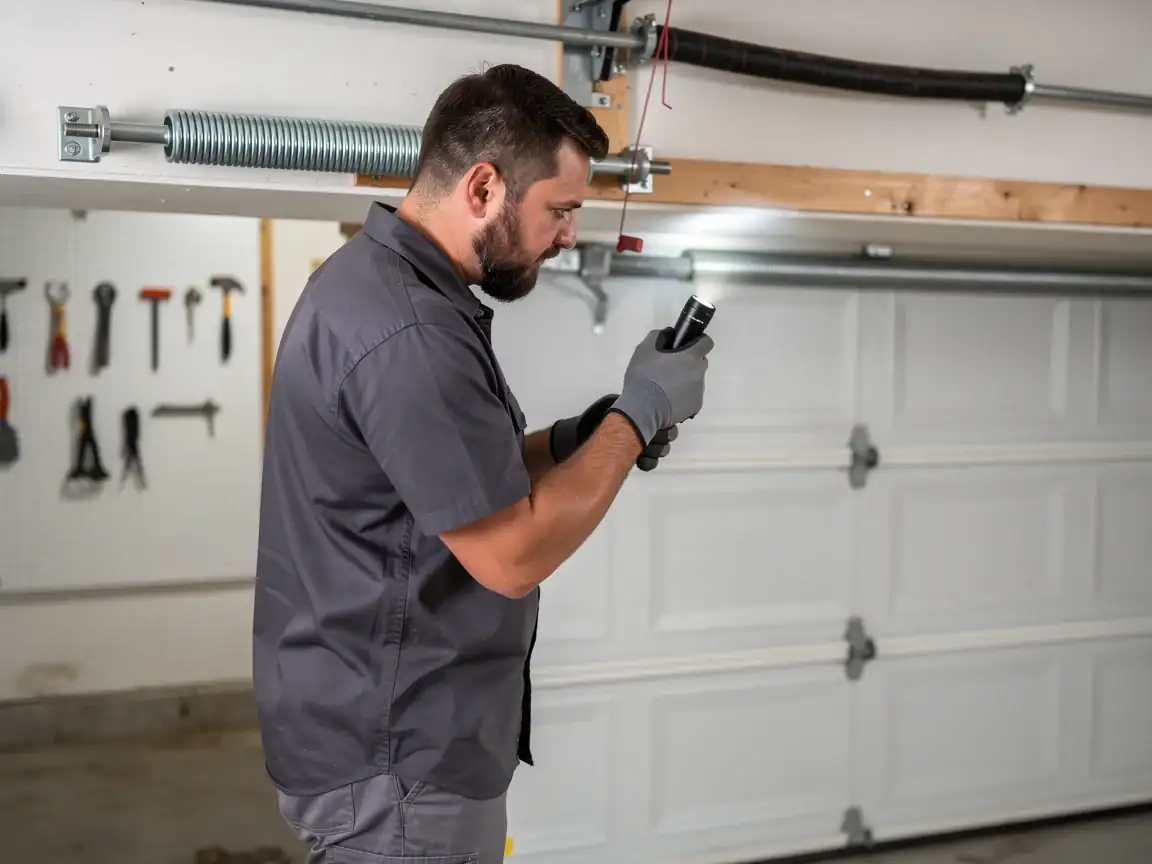
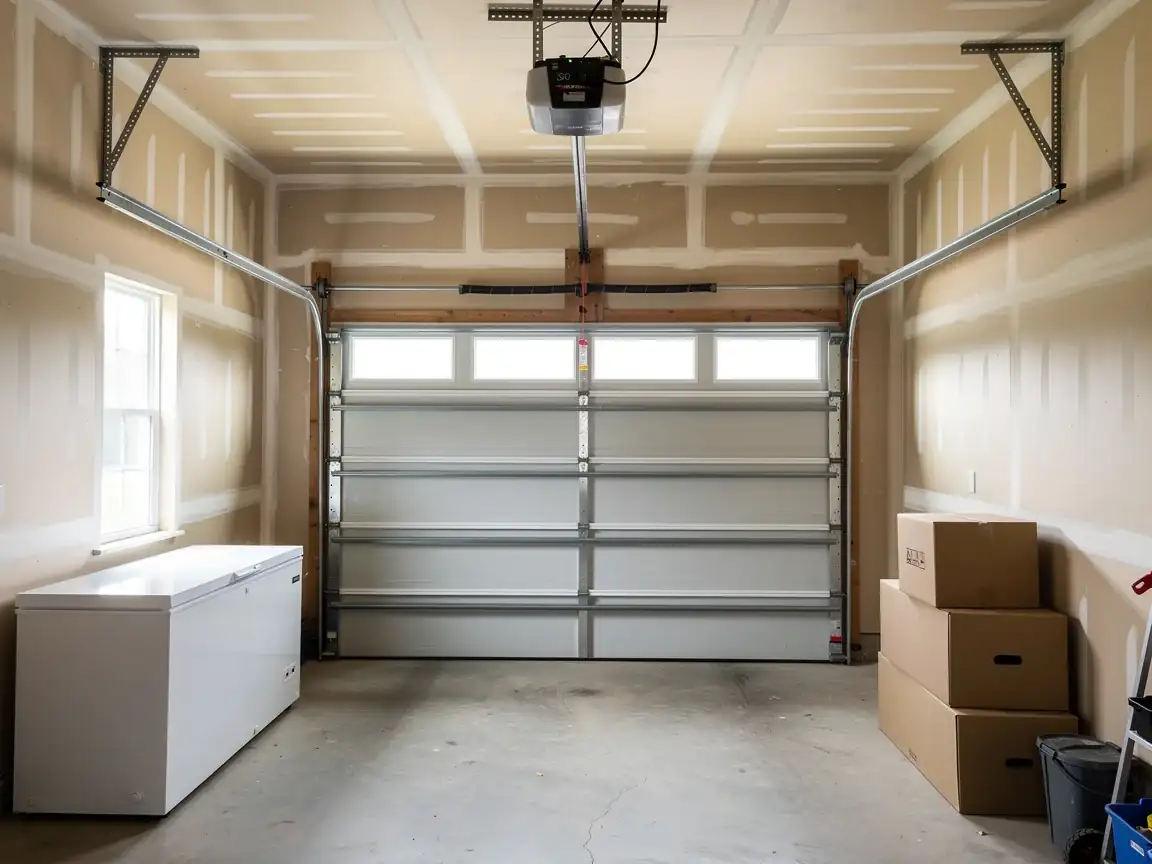
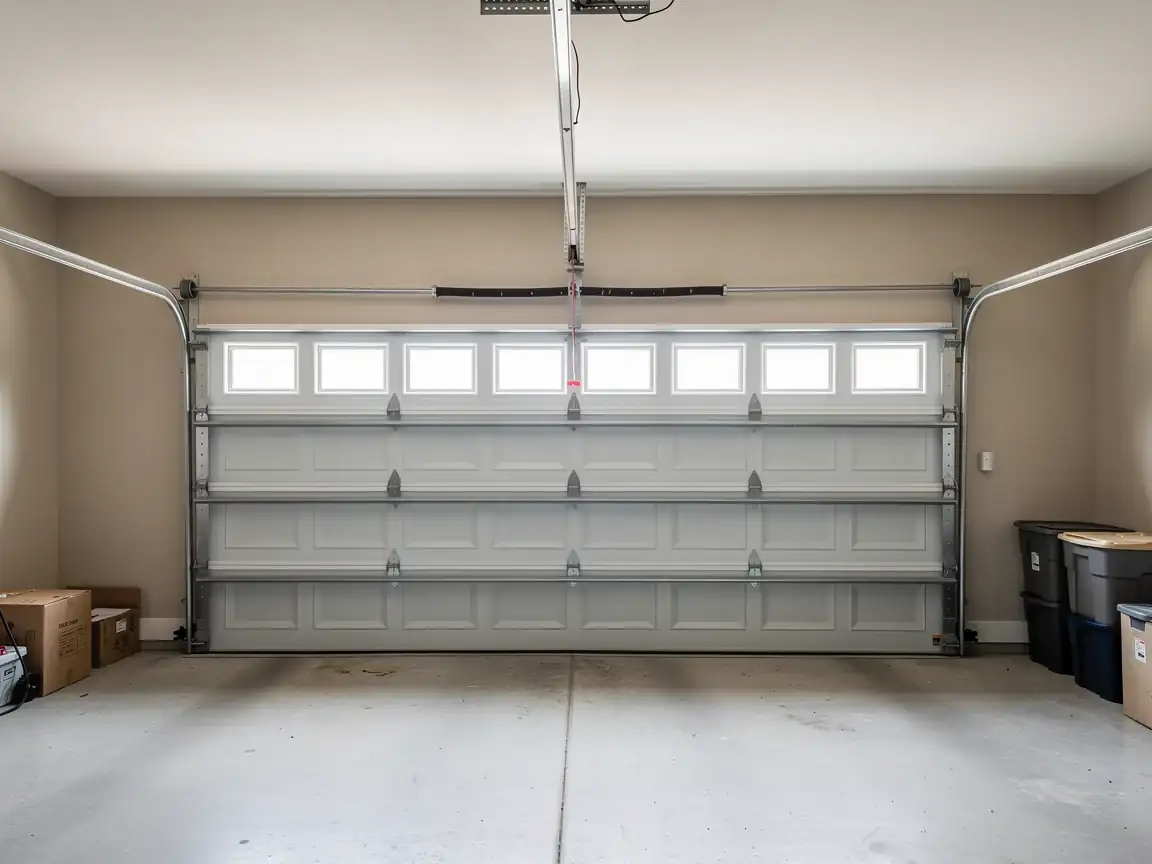
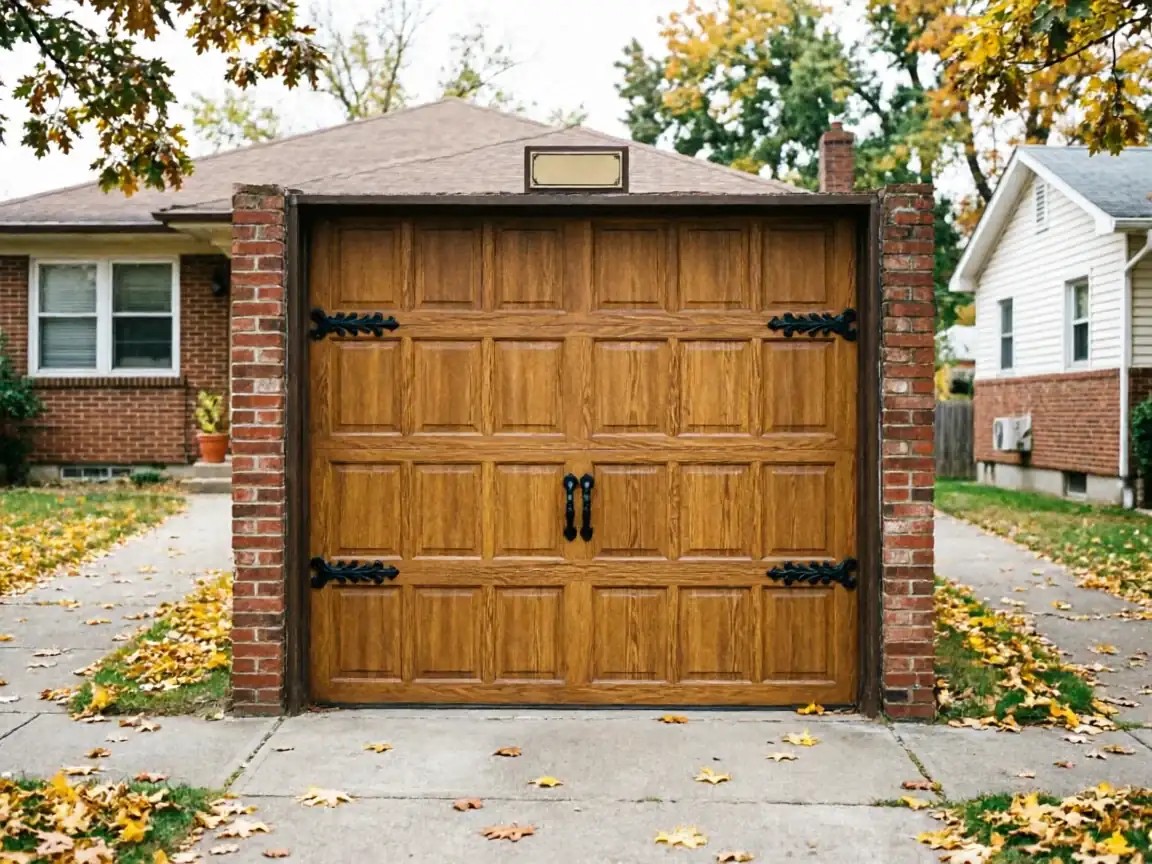
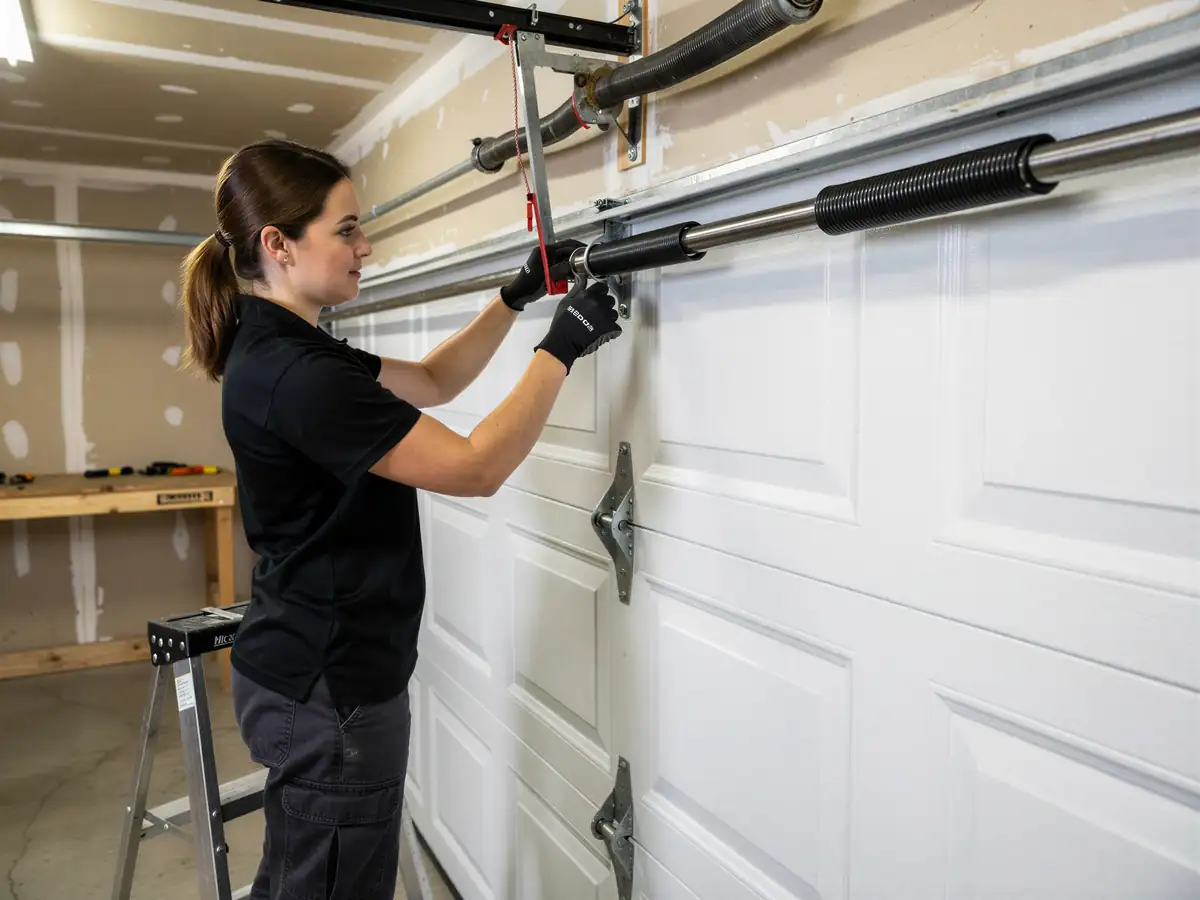
If your garage door in Mount Hope won't open, the first thing to know is what you're dealing with. A lot of houses here went up around 1957, back when builders hung extension springs on steel brackets above the horizontal track instead of the torsion spring and center bracket setup that's standard on anything built in the last twenty-five years. That matters for what you can safely touch.
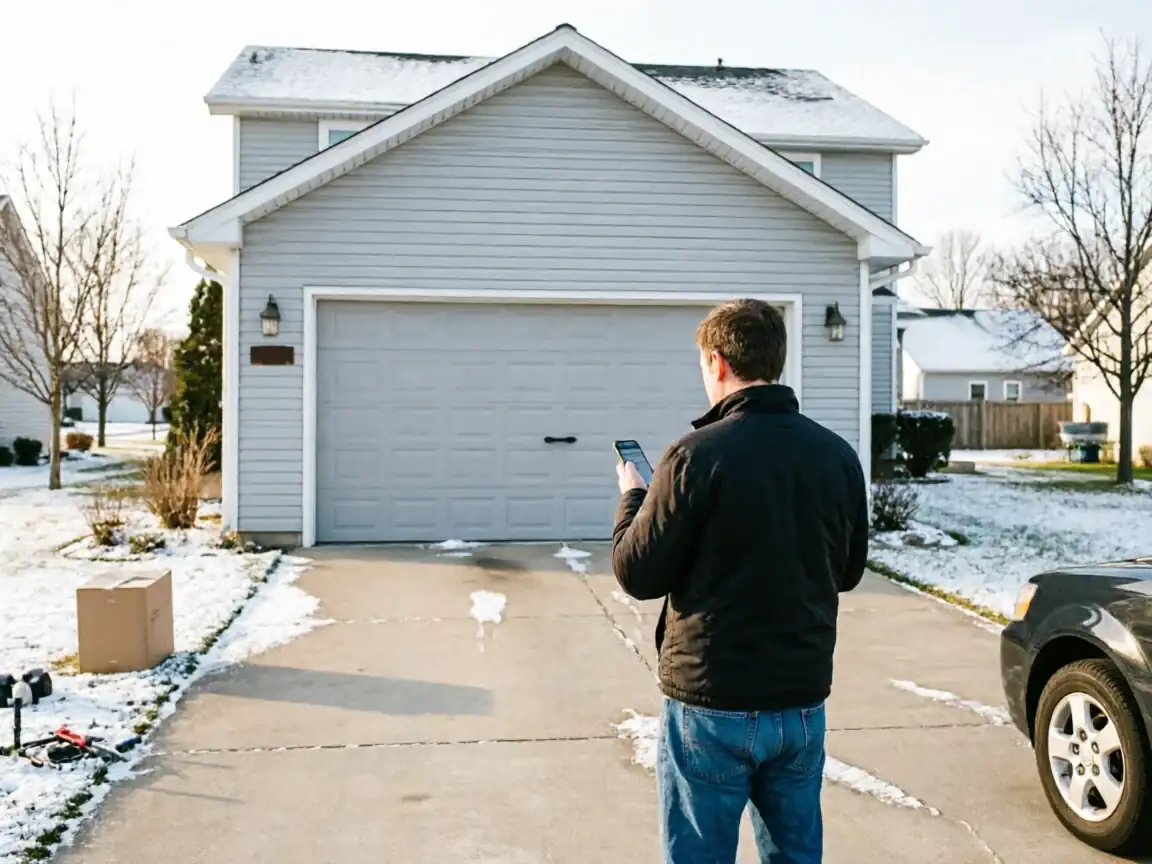
You can check the obvious things yourself: is the opener plugged in, is the wall switch getting power, are the photo-eye sensors clean and lined up, is anything blocking the track. Lubricating hinges and rollers with a garage-door-rated lubricant is fine too.
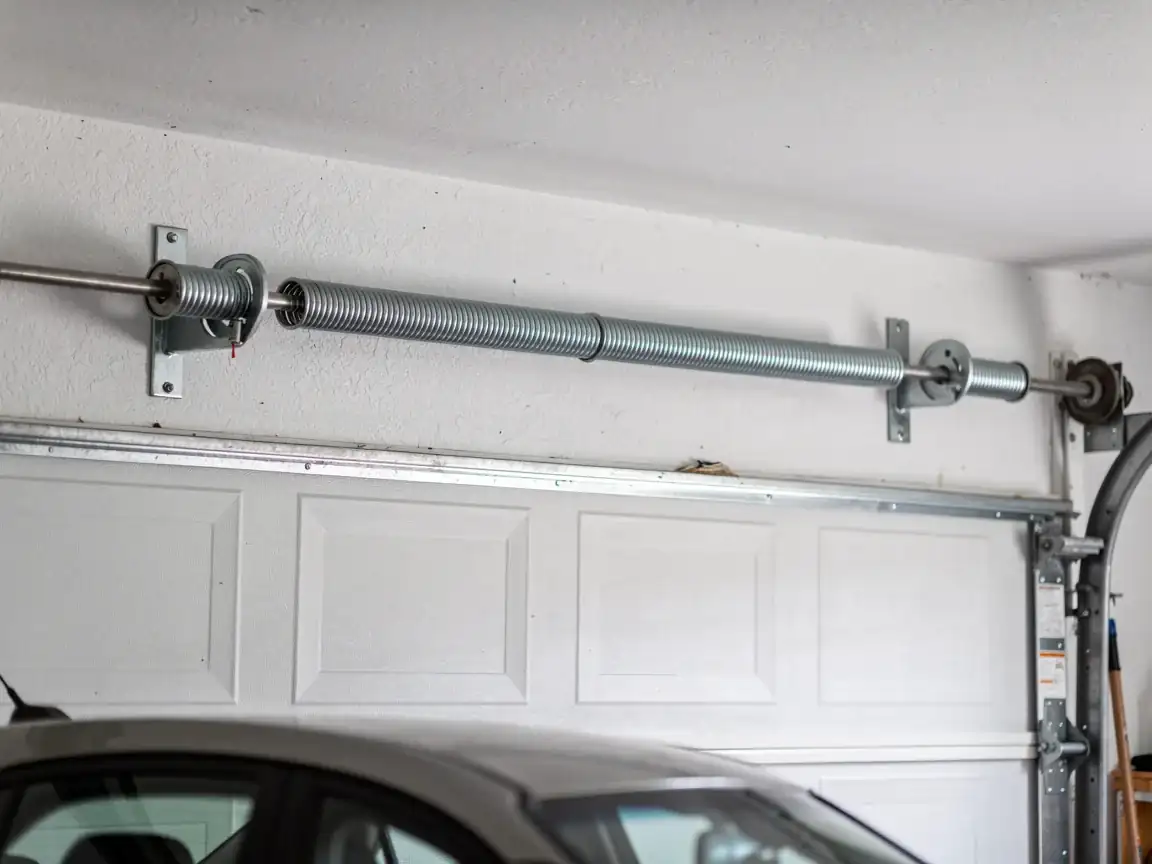
What you shouldn't touch is the spring system itself. Extension springs under tension can whip loose with enough force to break a hand or worse, and the older brackets on a 1957-era door often don't have the safety cable running through the spring that newer code requires. If the door is heavy to lift by hand, sagging on one side, or the spring is visibly stretched or broken, that's a call, not a project. We'd rather tell you that up front than have you find out the hard way.
Where This Job Goes Sideways
The complication with Mount Hope doors isn't usually the door itself
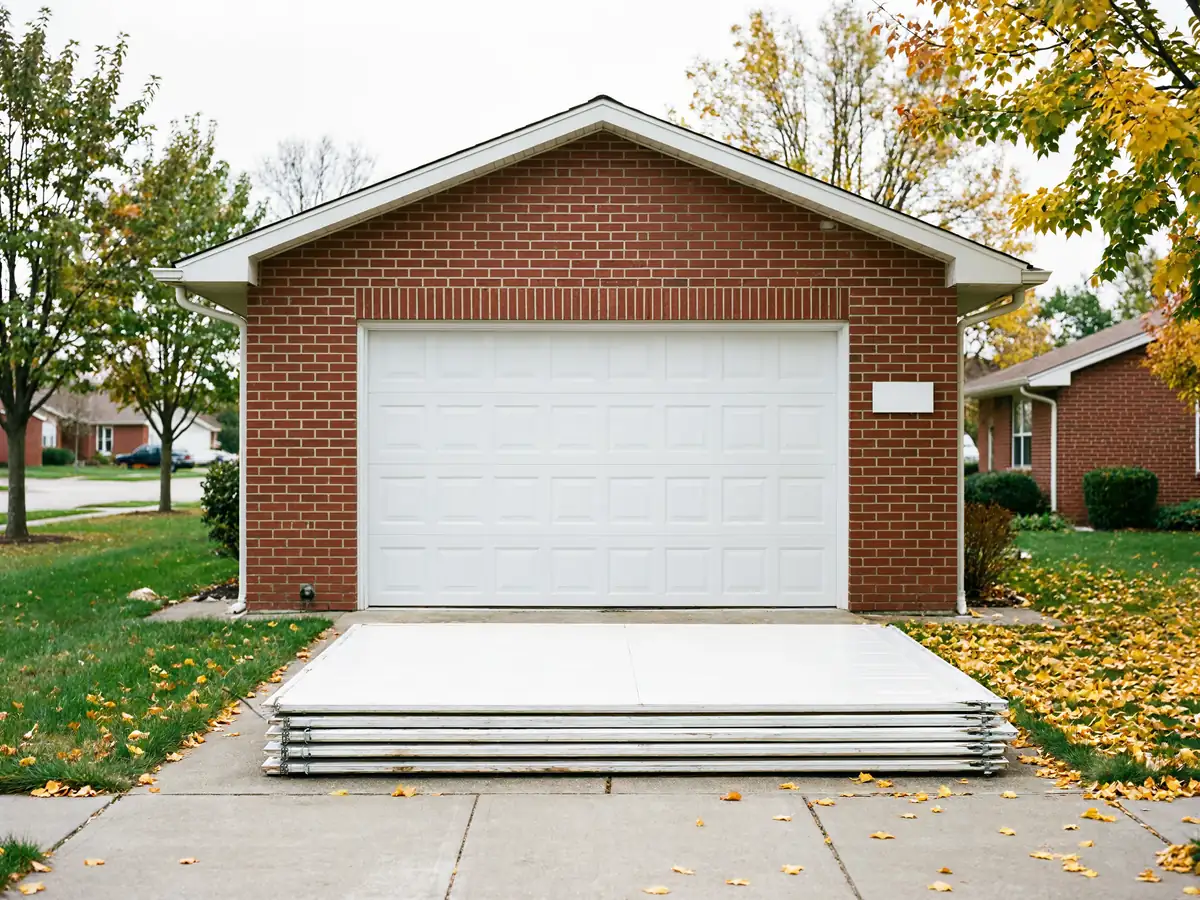
It's the track and bracket hardware underneath it. A door built when the house went up in 1957 was likely matched to hardware that hasn't been manufactured in decades. When a roller or a bracket fails, you can't always bolt a modern part straight onto an original frame without some adapting.
Cold winters add a second layer
Steel brackets and galvanized track from that era weren't coated the way parts are today, and years of freeze-thaw cycling corrode the mounting points before the spring itself ever fails. We've seen jobs where the customer thought they needed a new spring, and the real problem was the bracket it was anchored to had rusted through and was about to let go.
The honest limitation here
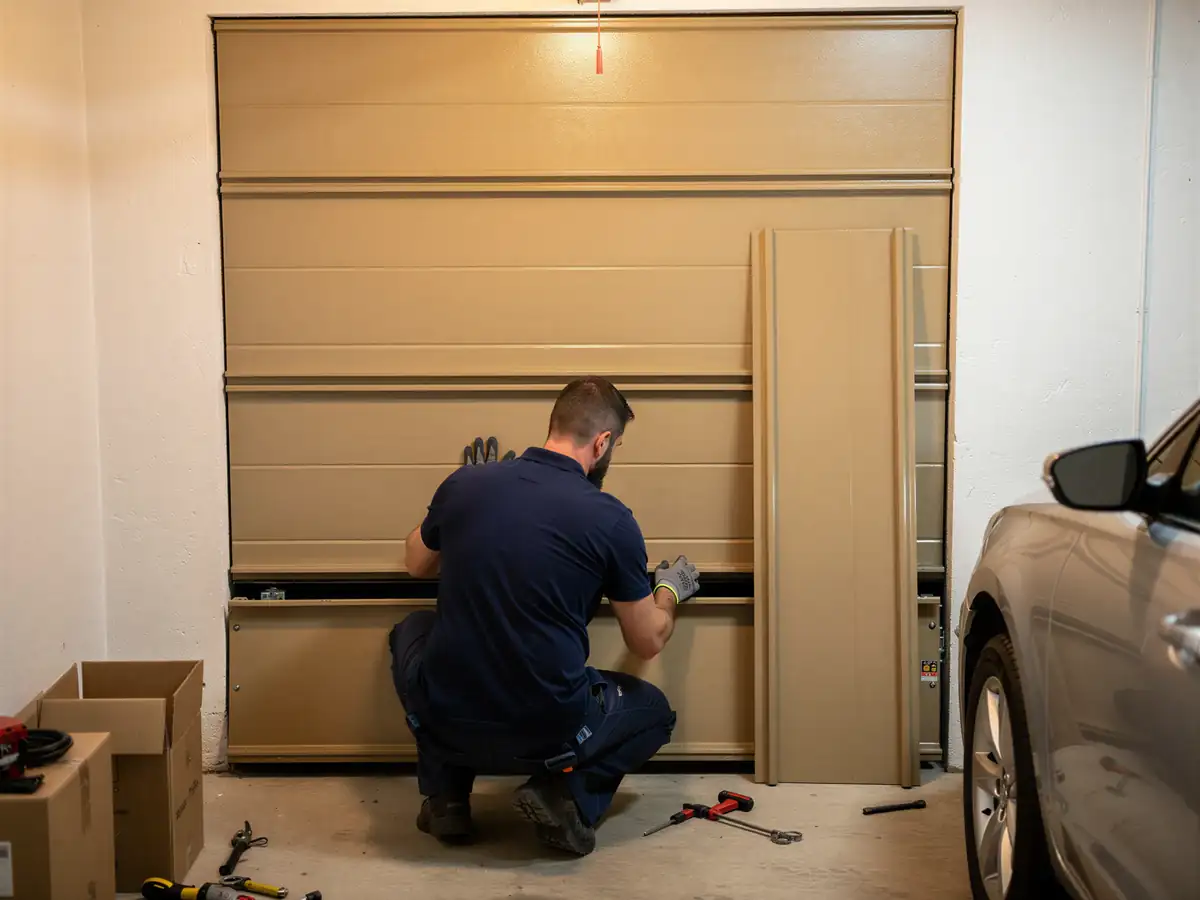
If the frame or jamb has deteriorated enough, patch repairs on 60-plus-year-old hardware stop making sense. At some point replacing the whole assembly costs less in the long run than chasing one worn part after another, and we'll tell you when we think you're at that point instead of billing you for round two.
What Is on the Truck
Because we're driving from Hutchinson, about 19 miles out to Mount Hope, we load for the job before we leave rather than diagnosing on-site and coming back. For a town built mostly in the 1957 era, that means carrying extension springs in multiple sizes, older-style track brackets and the adapters to mate them with current rollers, and both galvanized and zinc-plated hardware since original coatings vary house to house.
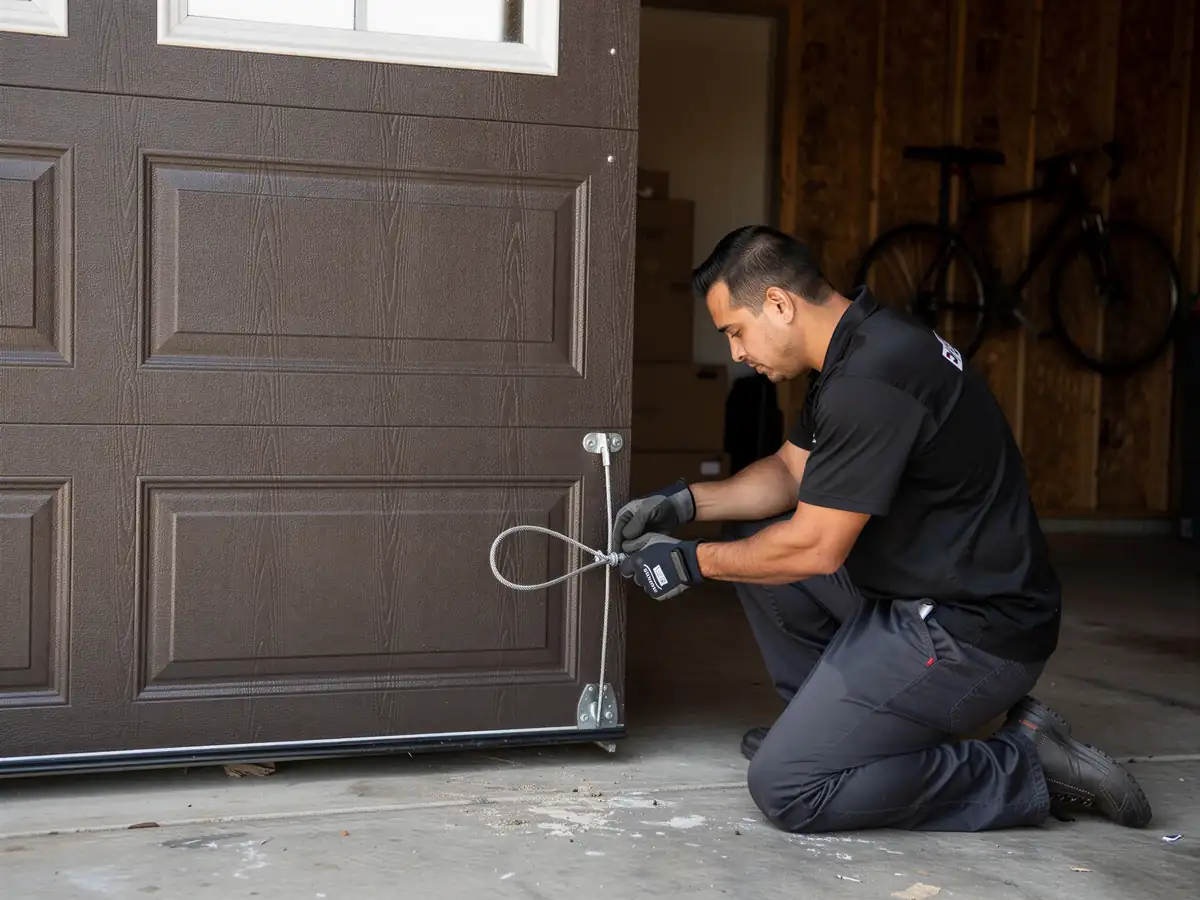
We also bring safety cables to retrofit through extension springs that don't have them - a lot of 1957 installs were done before that was code, and it's a cheap fix that matters if a spring ever does break.
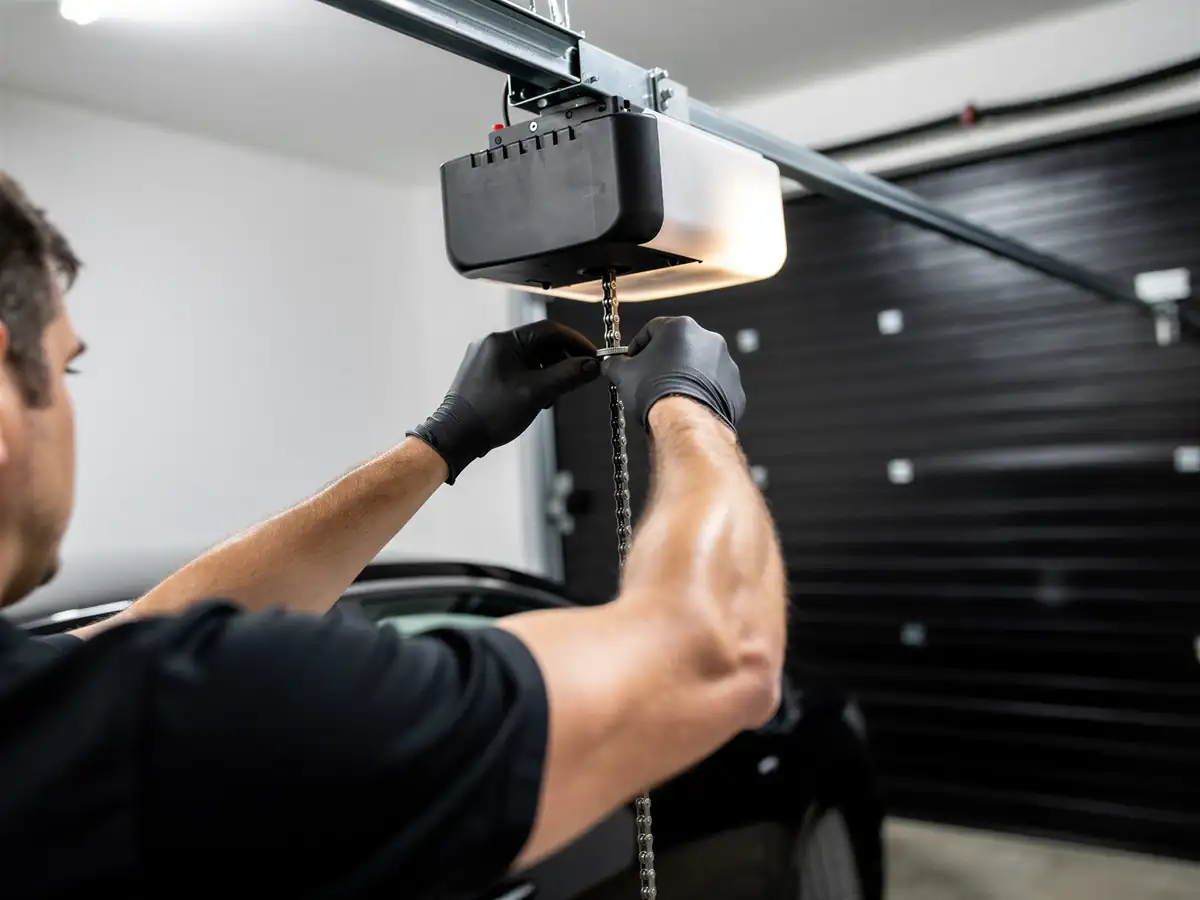
For openers, we carry common replacement units and the wiring and sensor kits to match them to an older door, since many of these garage doors have had the motor swapped out at least once over the decades even if the door and track are original. If a part turns out to be more specialized than what we're carrying - a specific bracket casting, for instance - that's the one thing that can mean a second trip, and we'd rather say that than guess.
The Symptom
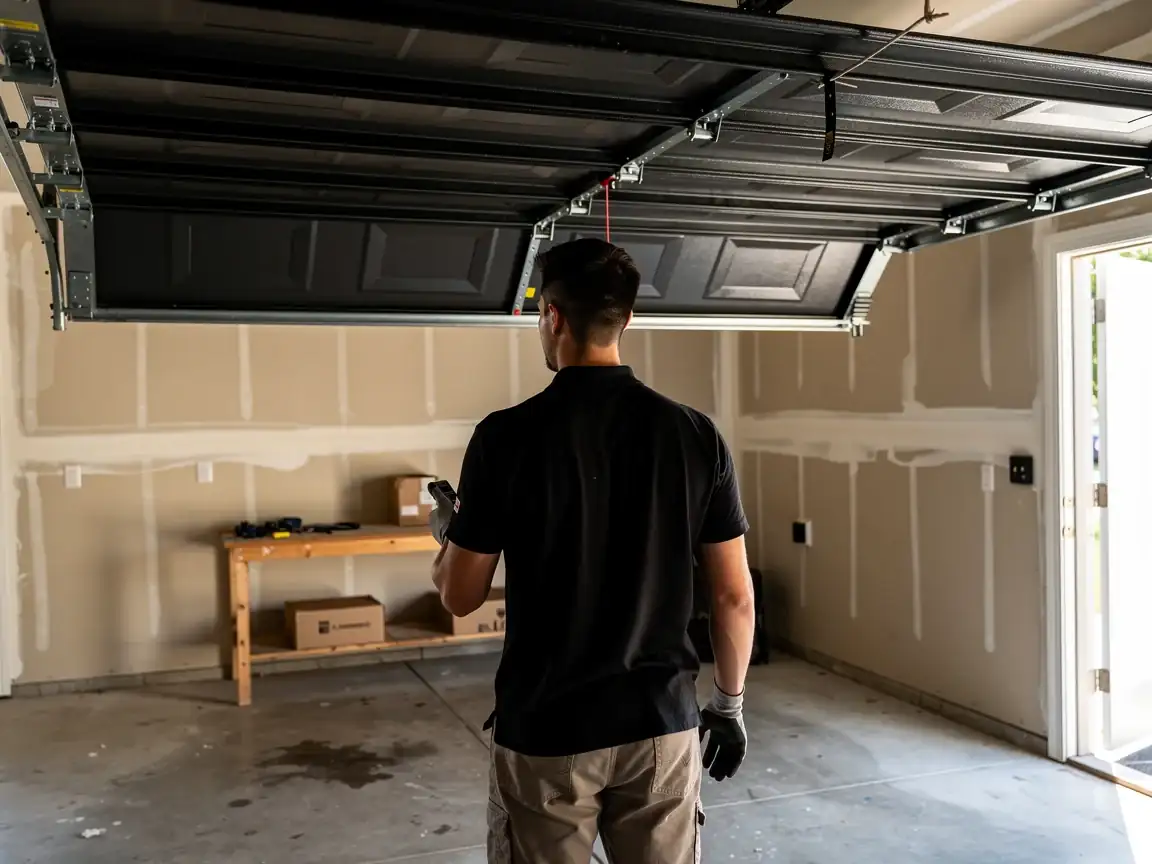
The call we get most from this part of our service area is a door that's suddenly heavy - it used to lift with one hand, and now it takes two, or the opener strains and reverses partway up. On a 1957-era door with extension springs, that's almost always one spring losing tension or breaking outright while the other side keeps holding, which cocks the door and makes it bind in the track.
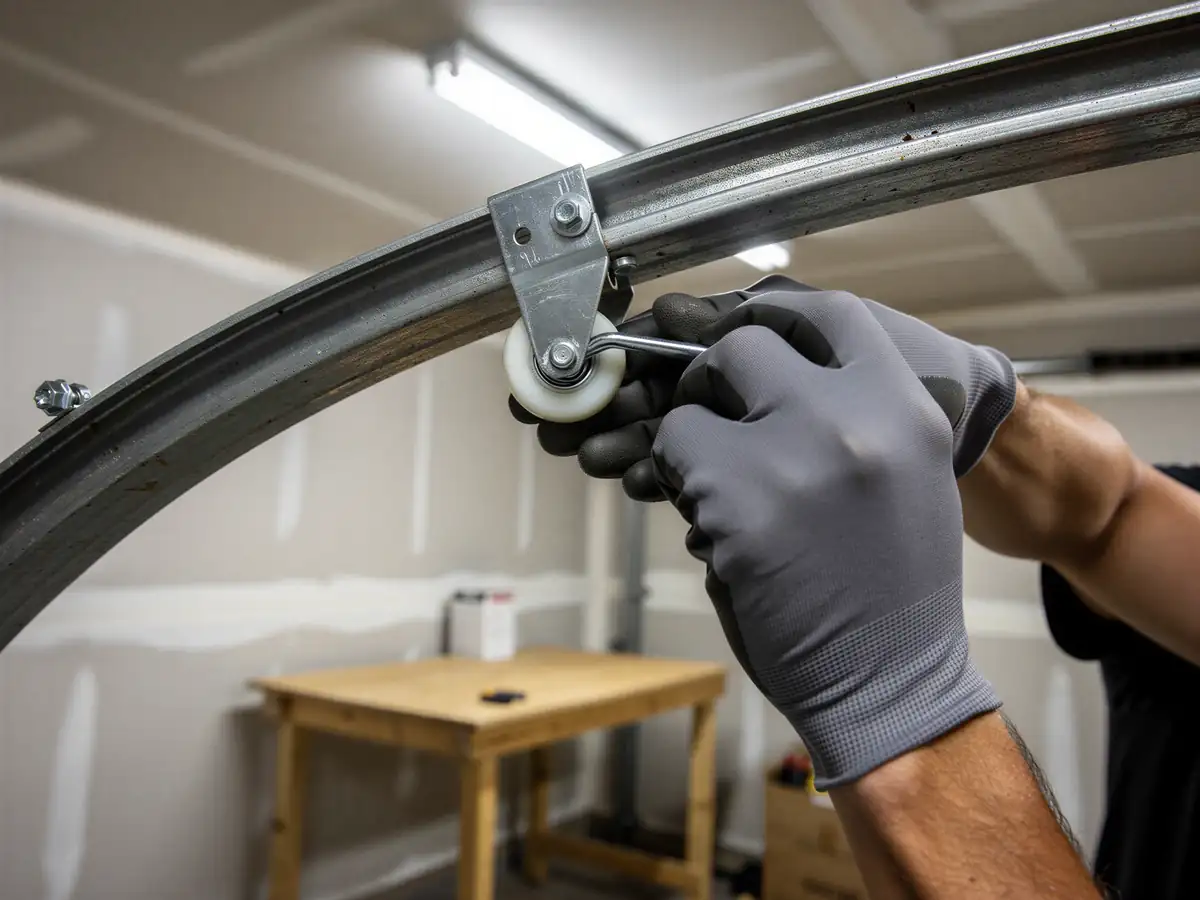
A second common symptom is a door that shudders or jerks partway through its travel. On original track from that period, that's often a roller that's worn down to the pin, riding rough in a track that's narrower or shaped differently than current standard sizing - another reason we carry adapters rather than assuming a straight swap.
If you're hearing a loud bang and then the door won't move at all, that's a spring that's broken clean. Don't force the opener to keep trying - that strains the motor and can snap a cable too.
Getting It Booked In
Since we're covering Mount Hope from Hutchinson rather than running a branch out there
We schedule the drive once we know what the job needs - that's part of why we ask a few questions about the door's age and symptom before we head out, so the truck's loaded right the first time.
If you're not sure whether what you're hearing is a spring, a roller, or an opener issue, describe it when you call and we'll walk through it with you
You can see more on how we handle calls across the wider area, including Mount Hope, on our area coverage page, and the full rundown of repair work we do out of Hutchinson is on our main repair page.