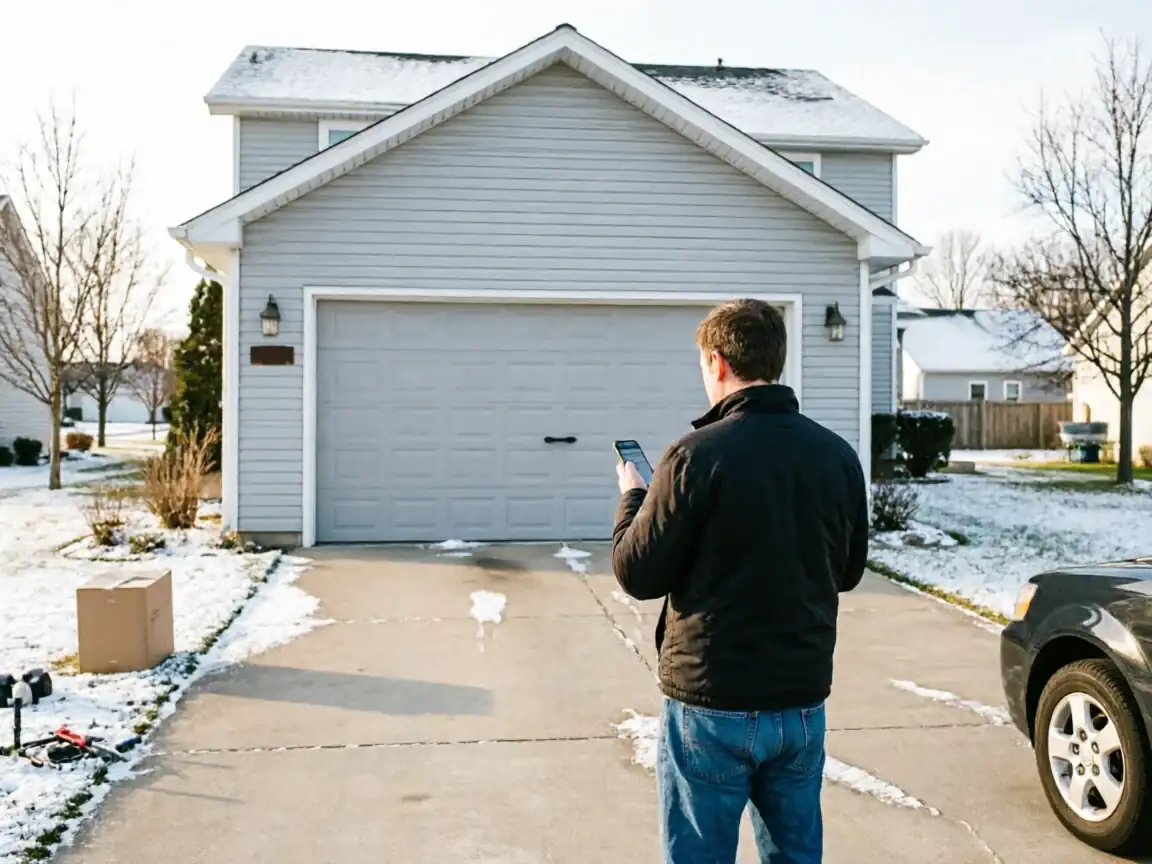
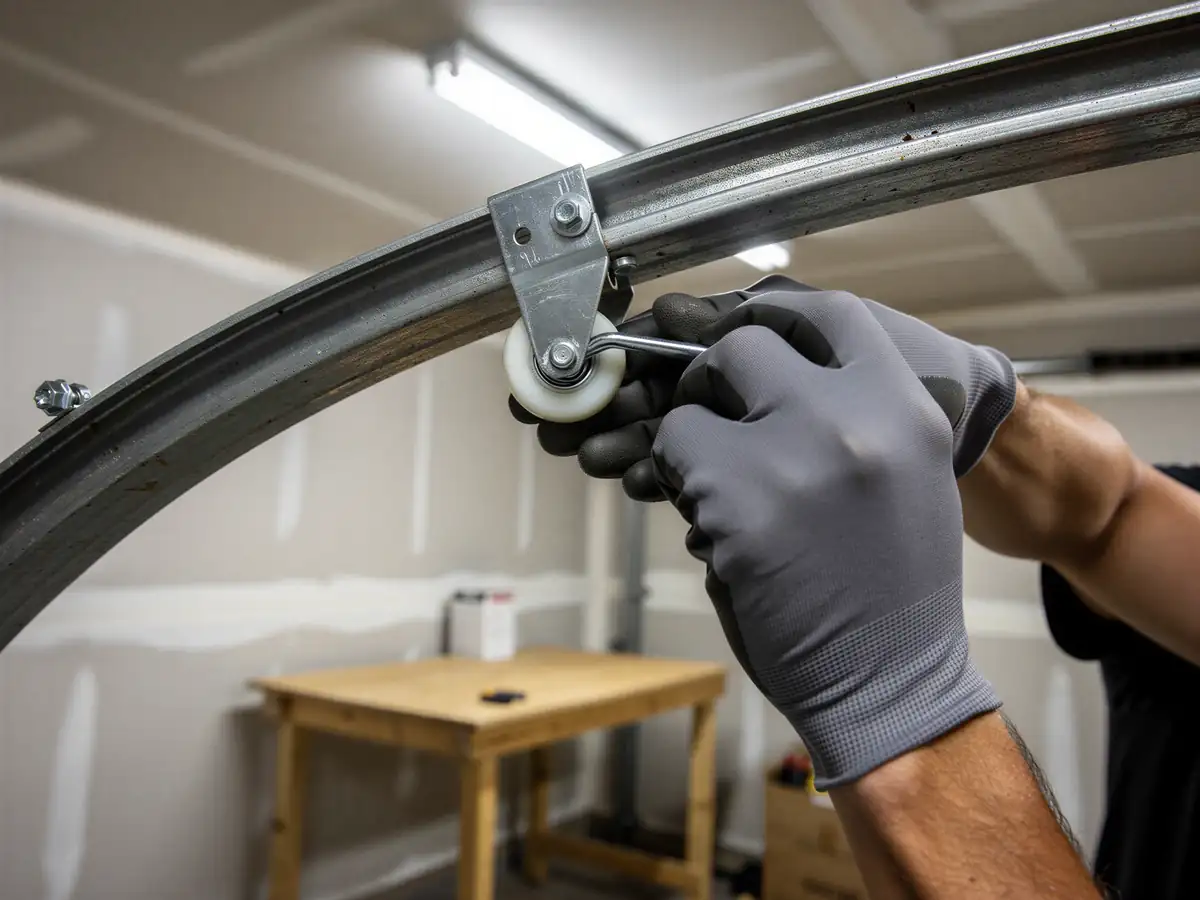
The Symptom
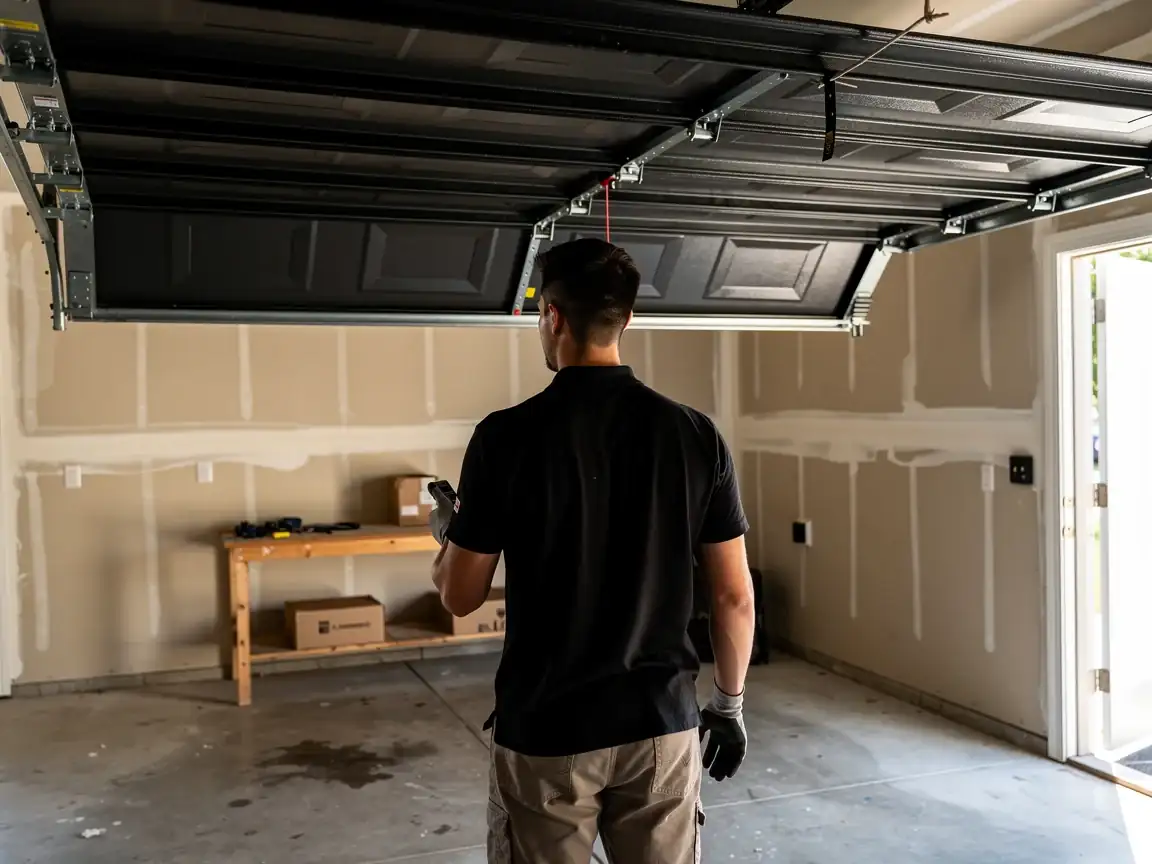
The giveaway is a grinding or popping noise as the door travels, usually worse near the top of the track where the roller takes the sharpest turn into the horizontal rail. Some doors start to hang or jerk at that same spot, and on steel doors you'll sometimes see a stud pulled loose from the hinge where a seized roller stopped turning and started dragging instead.
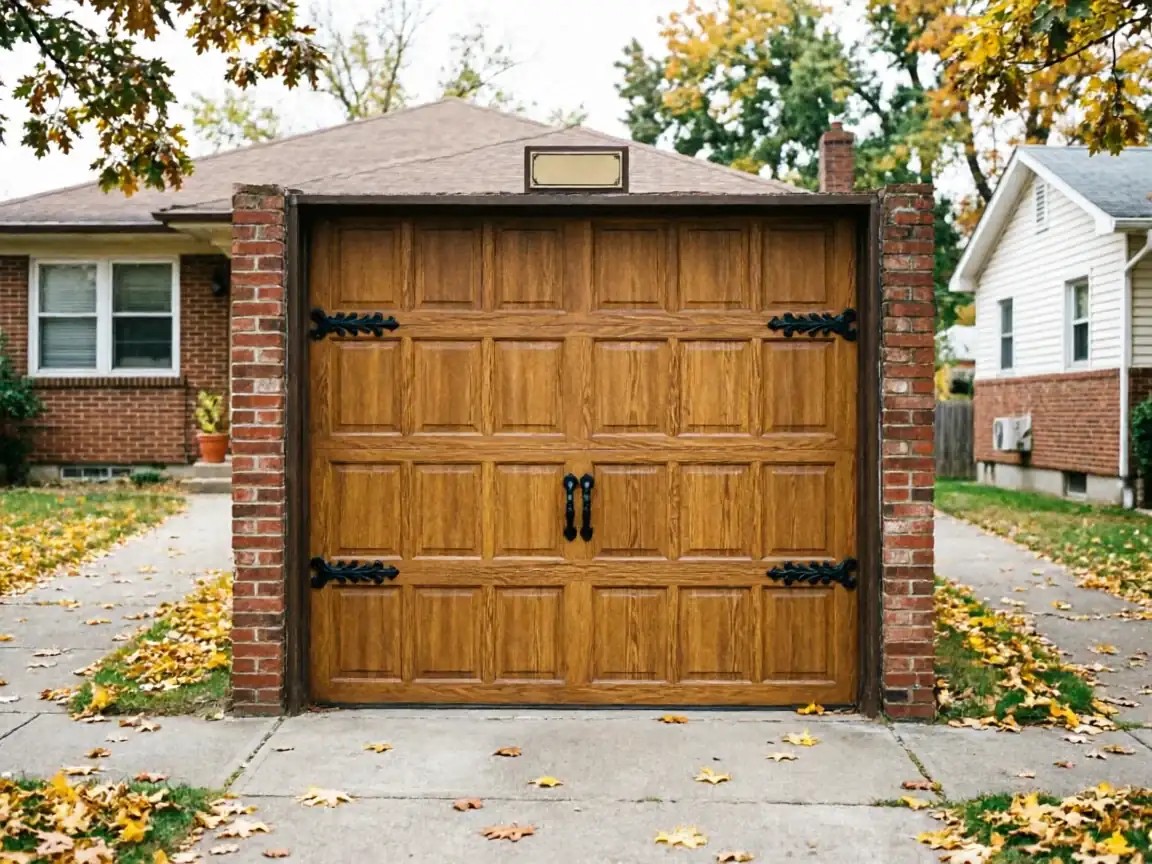
In Inman, the housing stock skews newer than a lot of the rest of this service area - the local median build year runs around 1975, later than the broader area's 1964 median. That later construction window usually means the original rollers are galvanized steel on nylon-sleeved stems rather than the all-steel rollers you'd find on an older door from the 1950s. Steel-stemmed rollers in that era wear differently: the sleeve cracks or flattens before the bearing itself fails, so the noise shows up gradually rather than all at once. By the time it's loud enough to notice, the track edges have usually taken some wear too.
What Is on the Truck
We carry nylon rollers with sealed ball bearings in the common stem lengths and roller diameters
Which is what we put on most residential doors now regardless of what came original - they run quieter and don't develop the flat spots steel rollers get over time. For heavier doors, insulated steel doors especially, we carry 13-ball steel rollers rated for the extra weight.
What we don't always carry is every odd stem length
A handful of older or less common door brands used a nonstandard stem, and if that's what's on the door, we may need to order the exact match rather than force a close-enough substitute - that's the one honest limitation here, and we'd rather tell you up front than install something that'll bind in six months. Most Inman jobs don't run into this, since the 1970s-era doors tend to use fairly standard hardware, but it does happen.
Can You Do This Yourself
Replacing rollers on a door that's down and the spring is unloaded is a reasonable DIY job - pull the old roller stem from the bracket, slide the new one in, done. The part that gets people hurt is doing this with the door up or with torsion spring tension still on the system, because the roller brackets near the bottom corners can be under real load.
If your door is a single-car, light aluminum or steel panel and you're comfortable supporting it safely while you work, you can likely handle the bottom rollers yourself. The top rollers, the ones riding the curved section of track, are harder to access safely without the right ladder setup and door support, and that's where we'd tell most people to call rather than improvise.
Getting It Booked In
We run jobs out to Inman from Hutchinson, about 14 miles out, so we book these as a scheduled visit rather than a same-day drop-in. When you call, tell us the noise, where on the track it happens, and roughly how old the door is if you know it - that helps us bring the right roller stock the first trip instead of a second one.
See our coverage for Inman and the surrounding area for what else we handle out this way.
How We Fix It
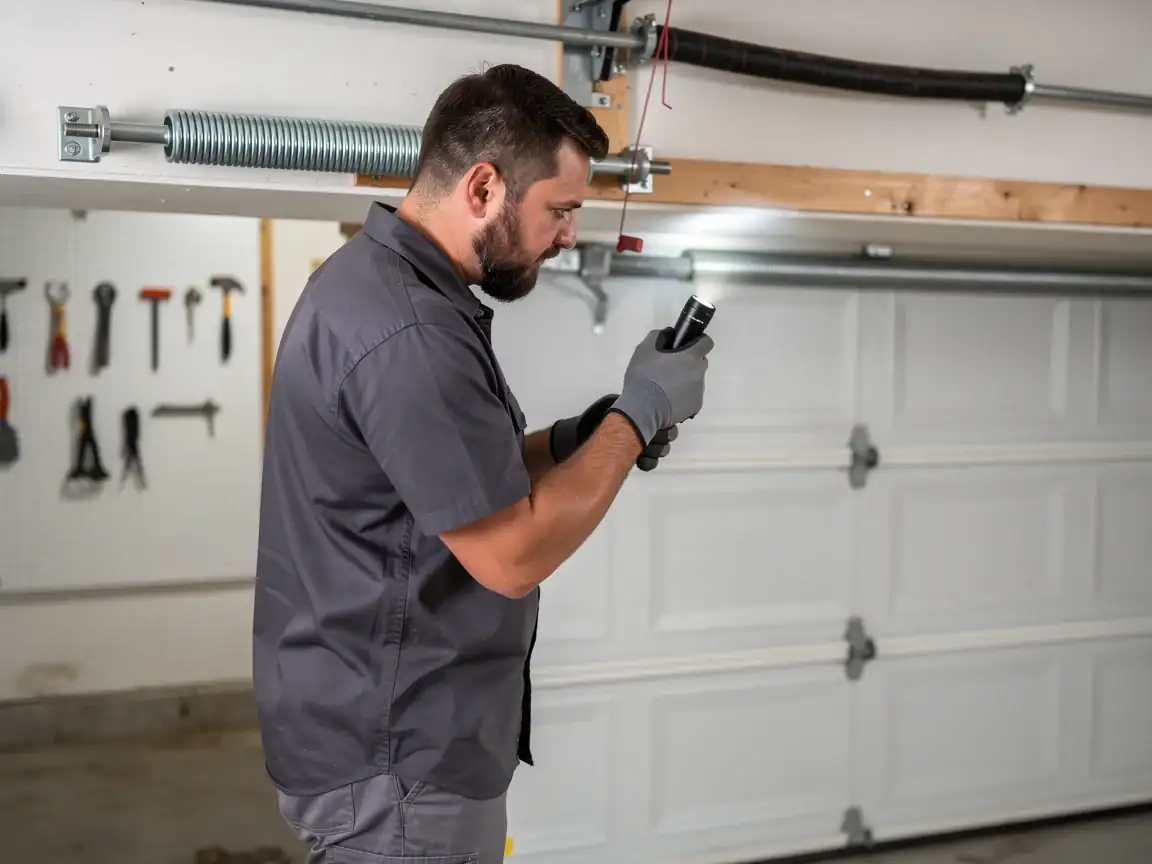
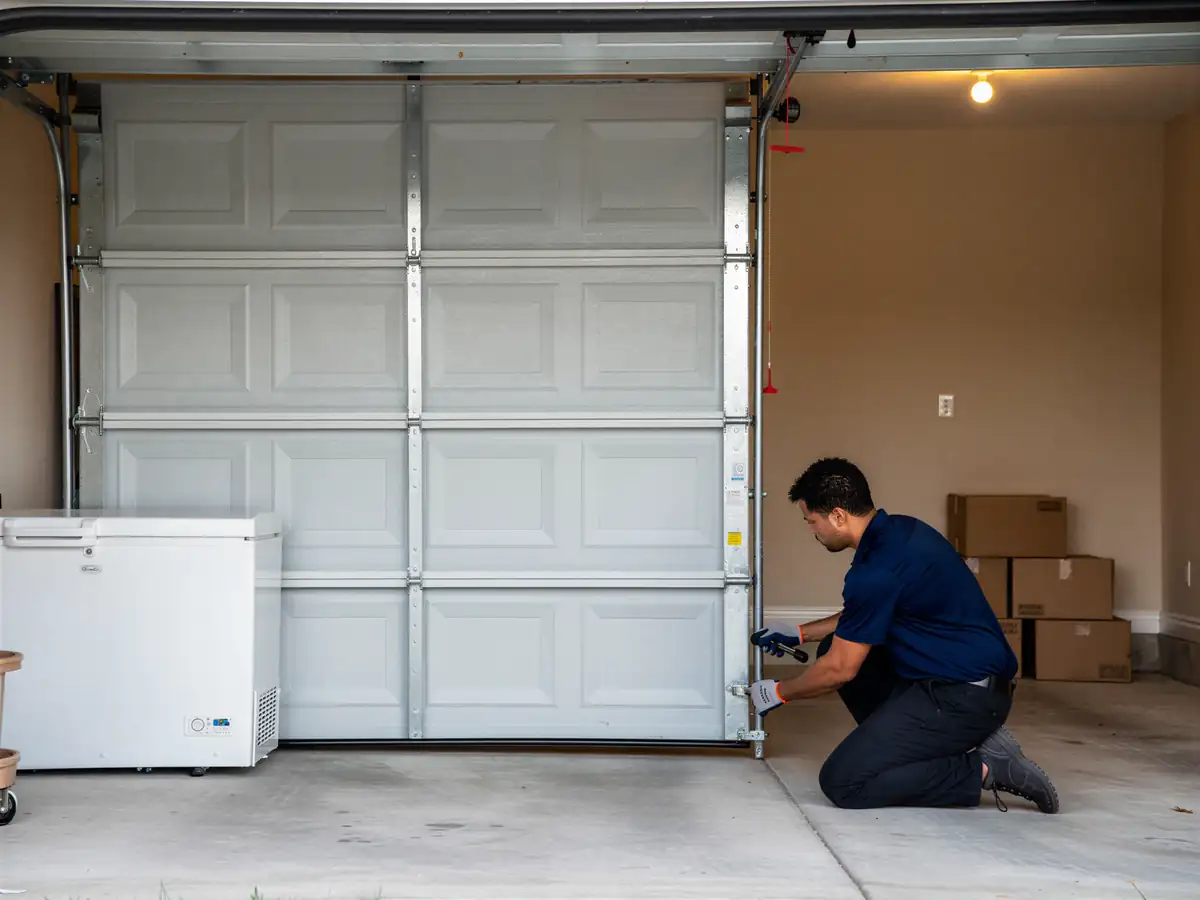
We start by rolling the door through its full travel by hand with the opener disconnected
Listening for exactly where the noise happens and checking each roller stem for play or a frozen bearing. Rollers get replaced one at a time, bracket by bracket, so the door never comes fully apart and stays supported throughout.
While we're in there we check the track alignment too
Since a worn roller sometimes causes the track to splay slightly at the spot it kept catching - no point installing a new roller into a track that's still bent. For the full rundown of how we handle roller jobs generally, there's more detail on our Hutchinson roller replacement page.