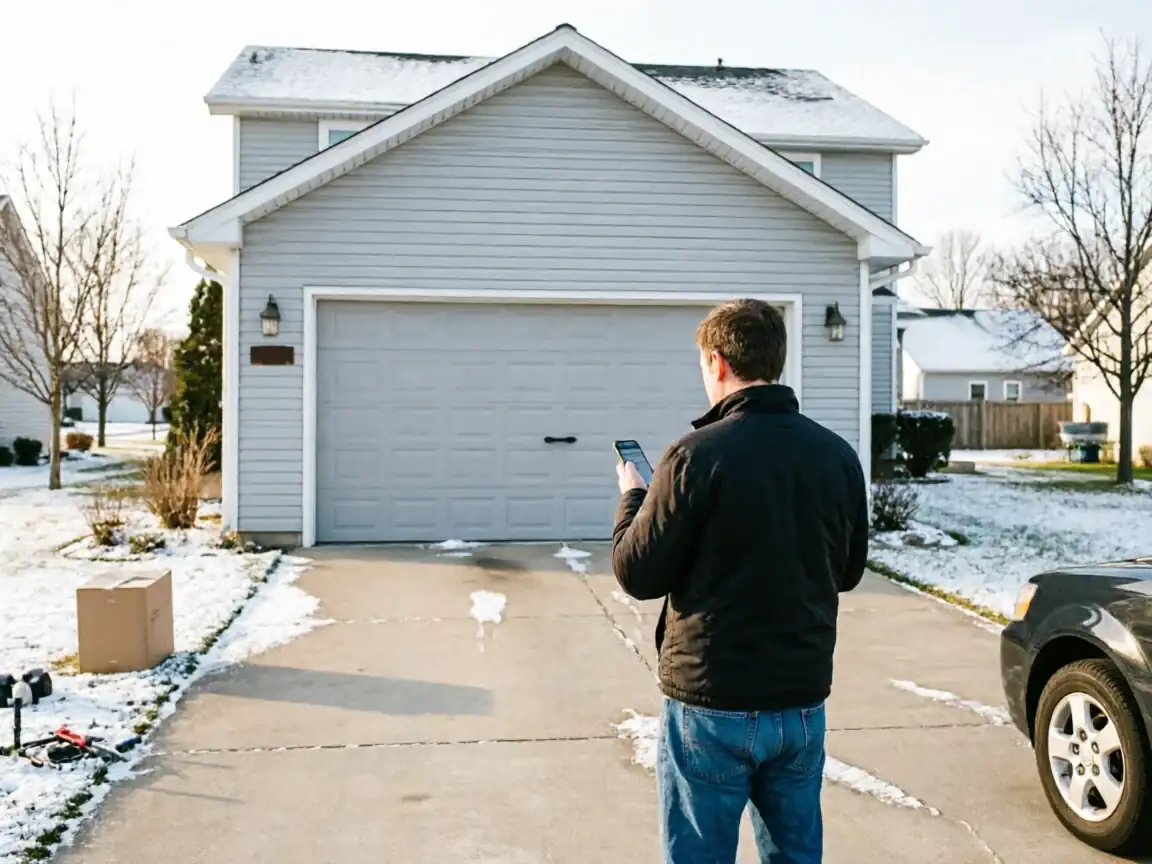
The Symptom
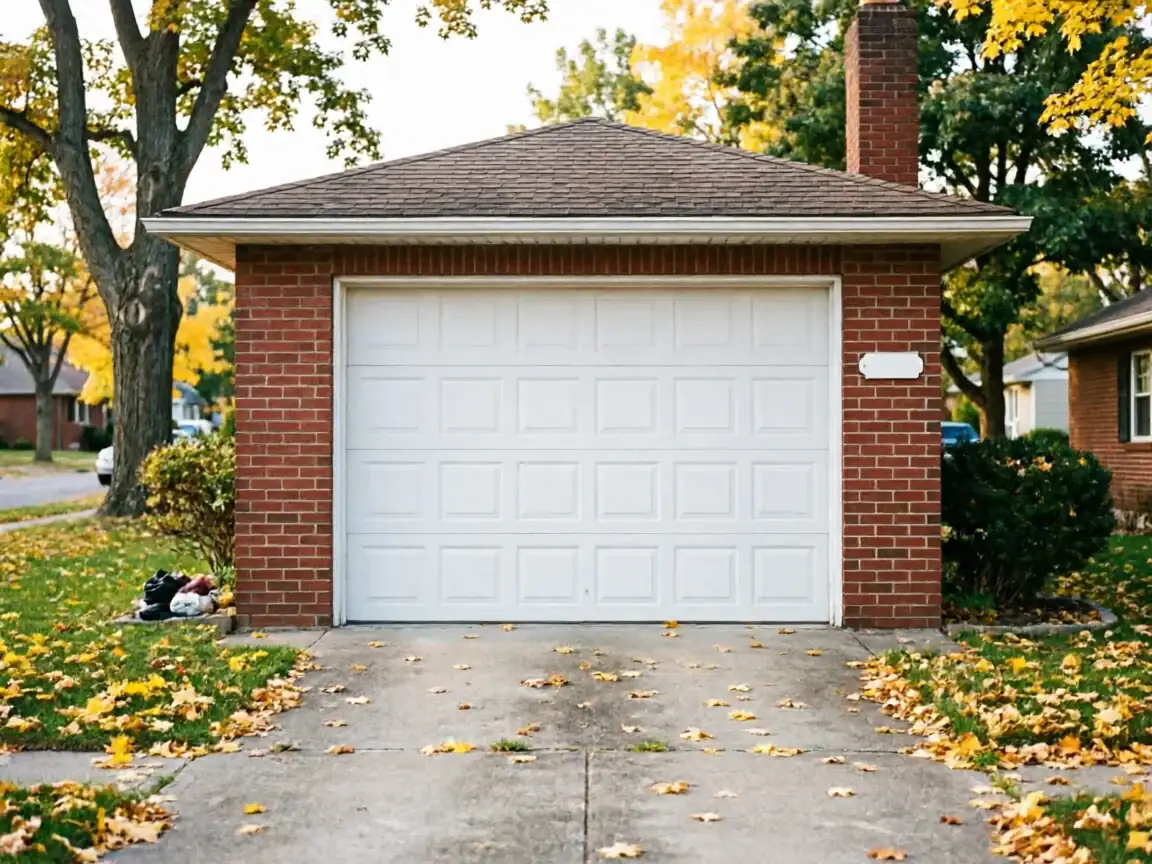
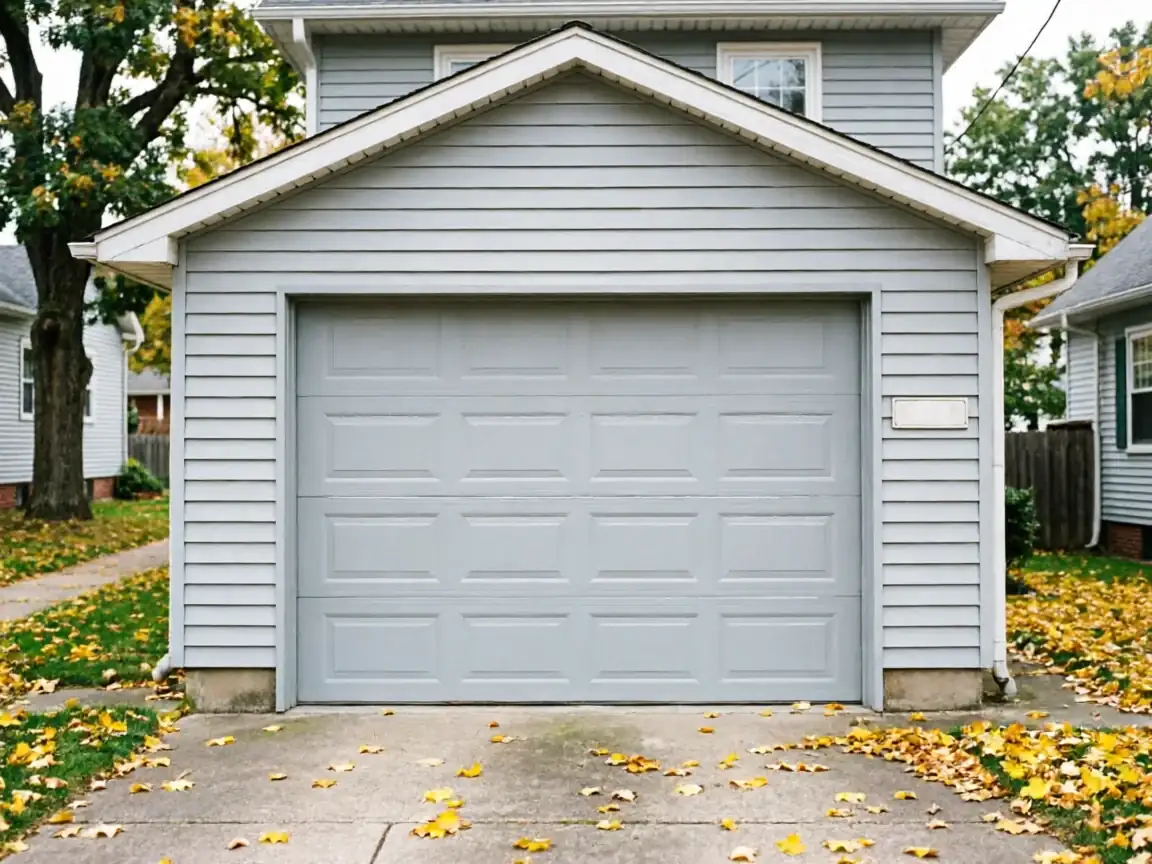
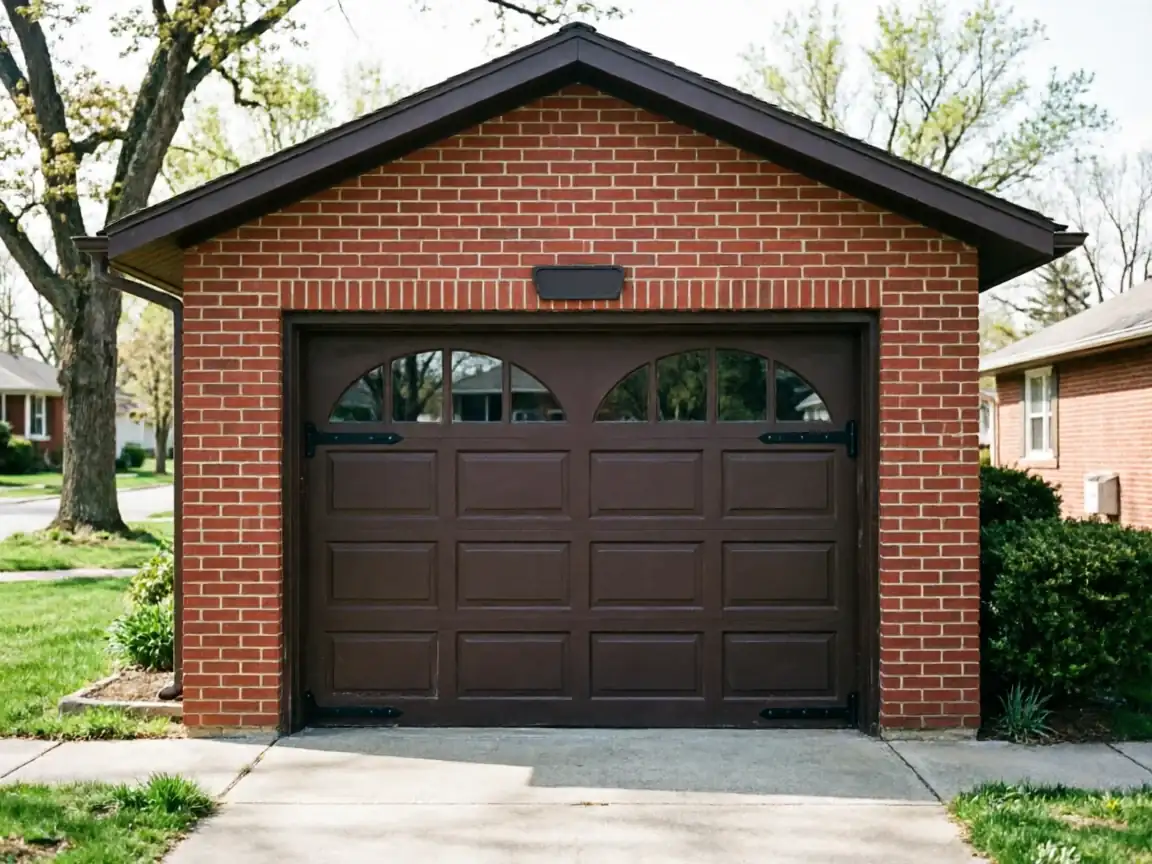
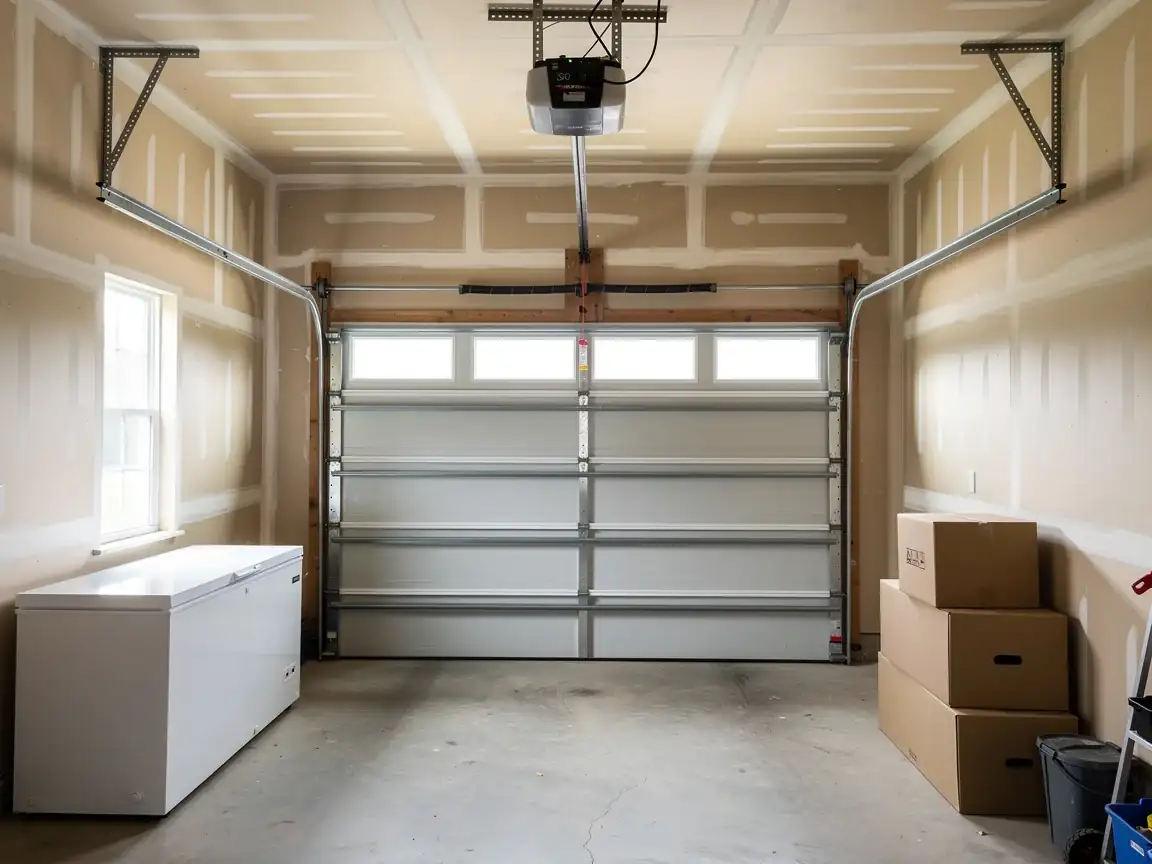
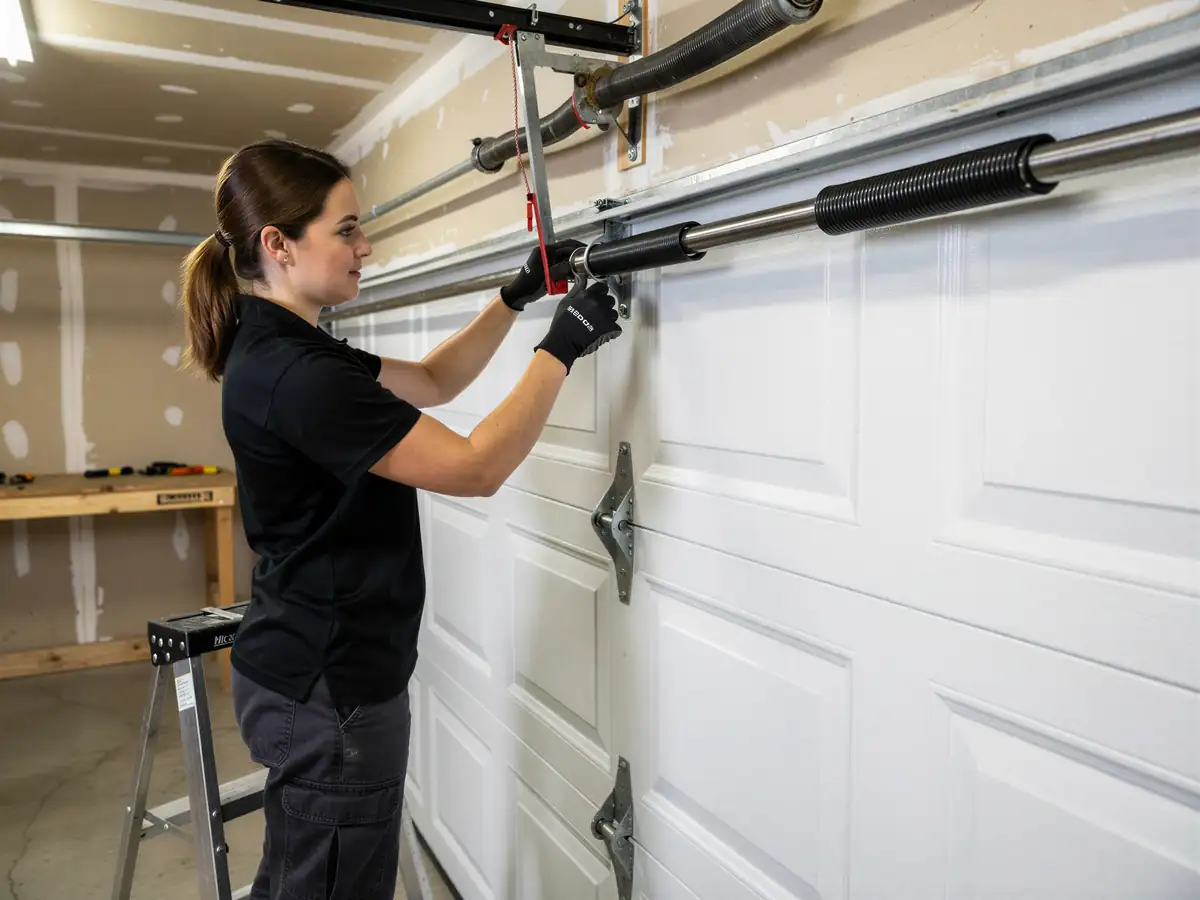
Most houses in Inman were built by 1975, right at the tail end of the wider service area's 1943-1975 run. That one number tells you more about the door in front of you than anything else. Doors going up in the late 1960s and into the mid-1970s almost always came with extension springs running along the horizontal track, not torsion springs over the header. No containment cables either - that safety requirement came later.
What that means in practice: the spring stretches and sags over decades of cold-weather cycling, the stretched coils start to gap unevenly, and one day the door won't lift past knee height, or it slams down fast on the last foot of travel because the spring has lost its tension. Pulleys crack. The thin cable that should be routed through the dead spring frays and nobody notices until it snaps.
With around 495 households in Inman, a lot of that same door style is sitting on a lot of those same driveways, aging on the same schedule. It's not a wood-door town and it's not a town full of torsion-spring doors either - it's a 1960s-70s steel sectional door town, and the fix has to match that.
What Is on the Truck
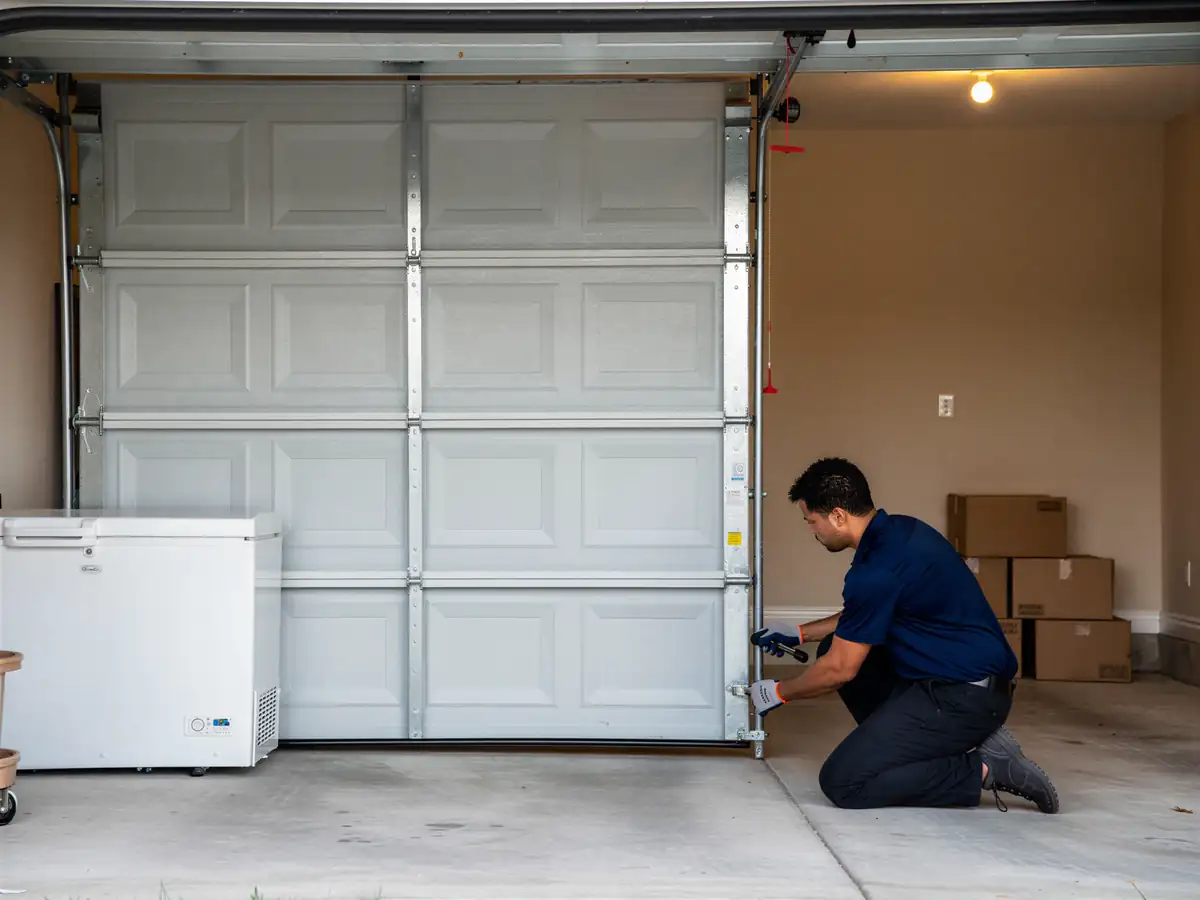
The truck carries extension springs in the sizes that match doors from that build era
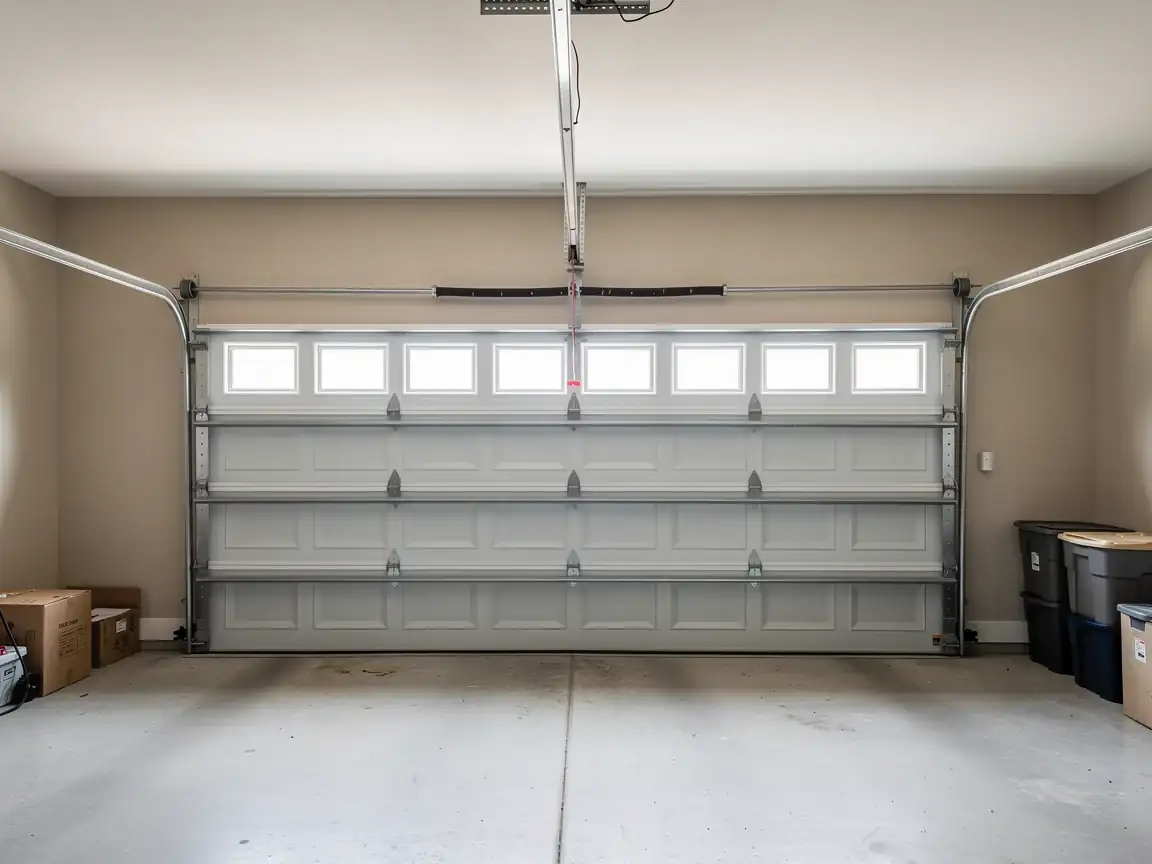
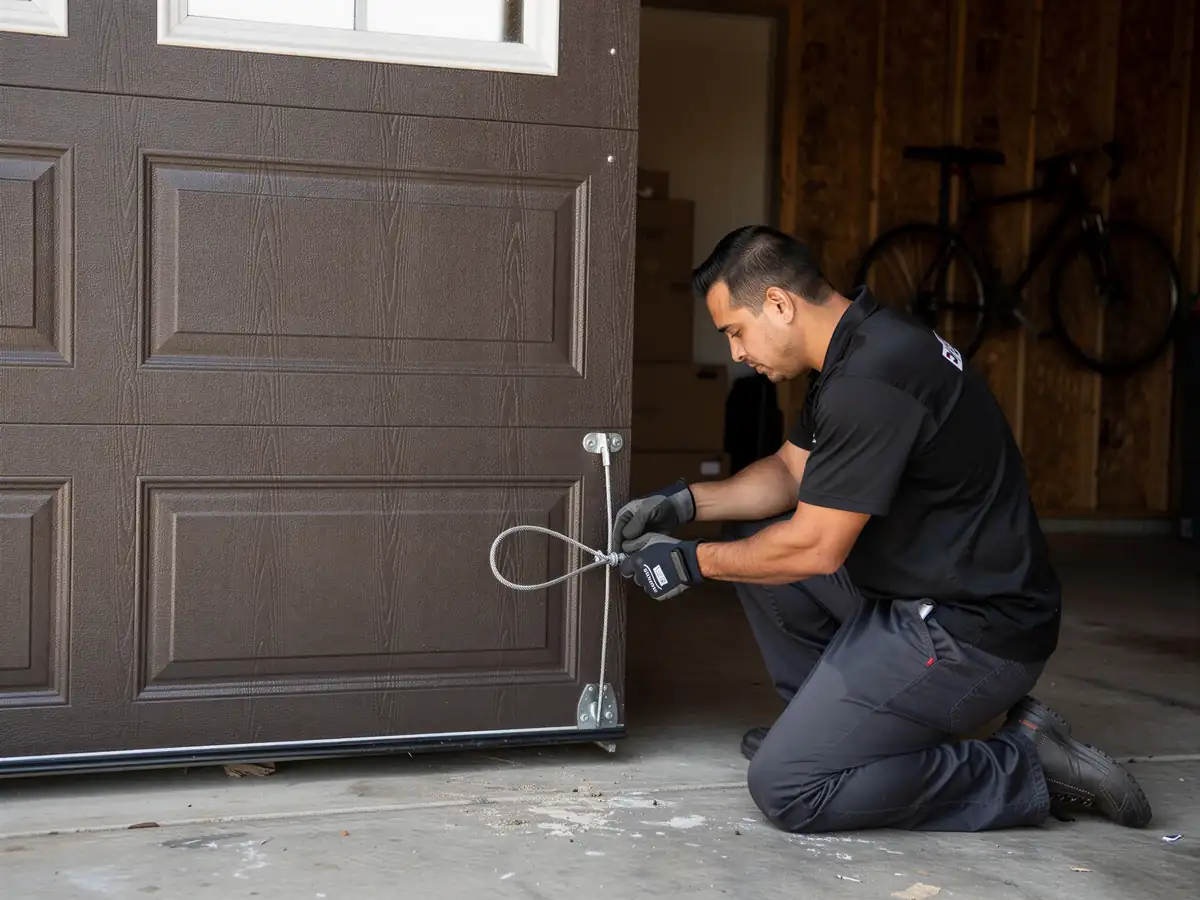
Plus the safety cables that a lot of these original installs never had. That retrofit alone stops the worst failure mode - a broken spring whipping loose instead of staying captured.
The area sits in a cold, moderate climate band, which matters for lubrication and for rollers
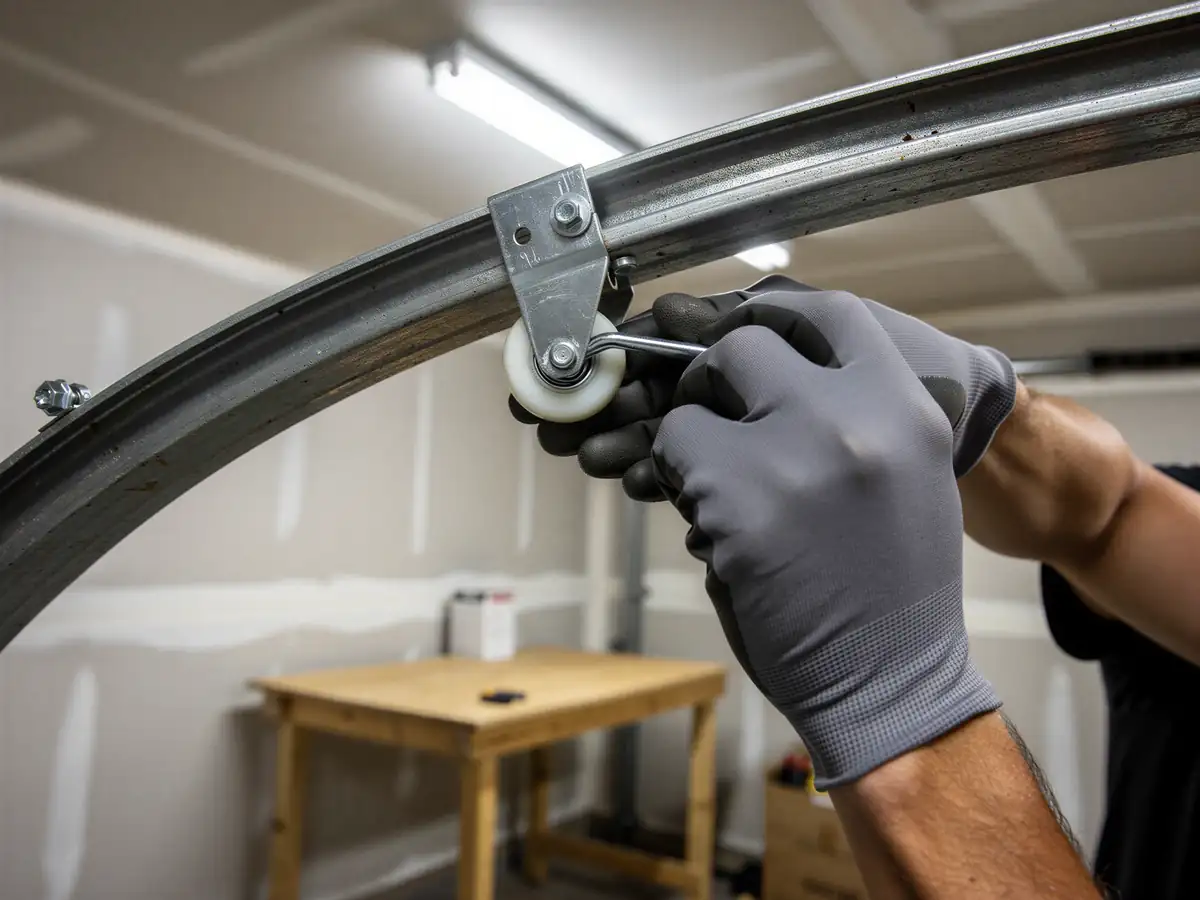
Steel rollers in older track stiffen up and bind during cold stretches, and a door that's already fighting a weak spring will fight the cold too. We carry nylon rollers as a straightforward swap where the steel ones have worn a groove into the track.
We also stock the pulleys and the galvanized cable these doors use
Since parts stores rarely carry anything built for a 50-year-old track system anymore. What we don't carry is a wood-door restoration kit - if a door out here turns out to be an older wood panel rather than steel, that's a different job and we'll say so before we start.
Can You Do This Yourself
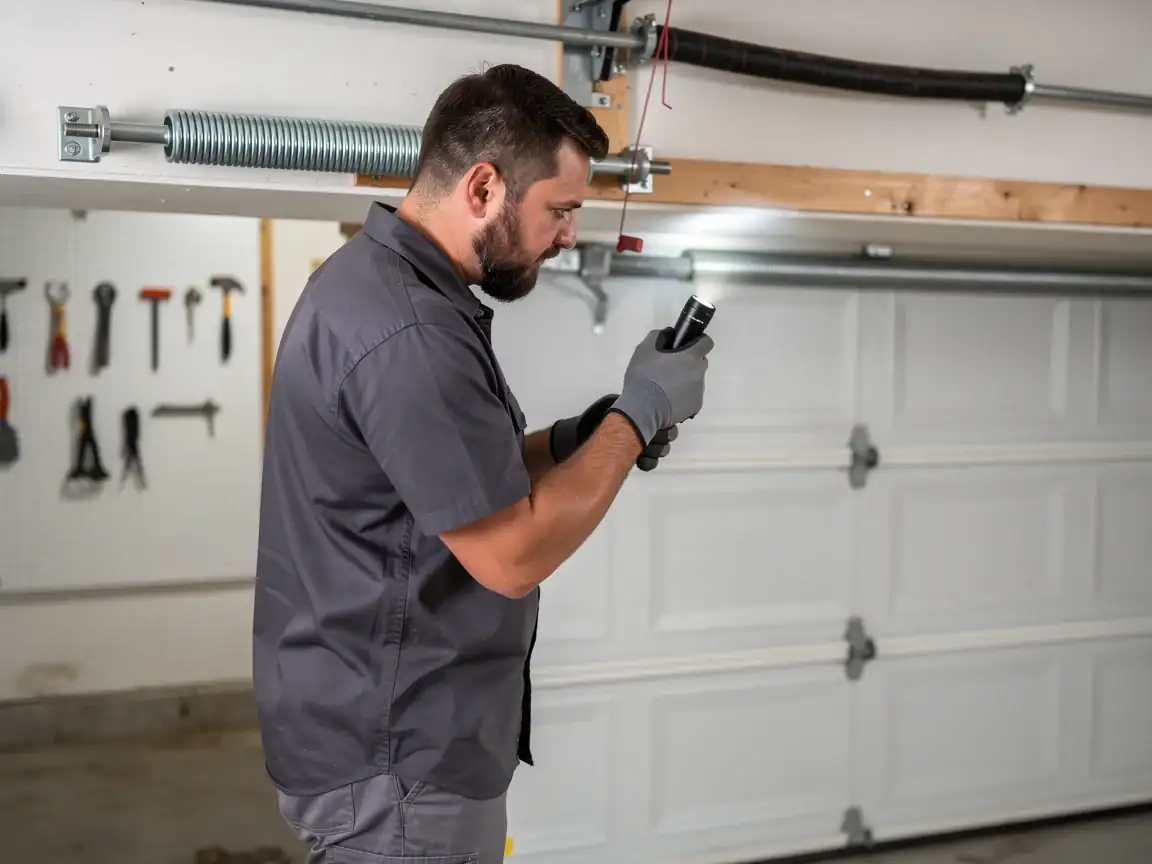
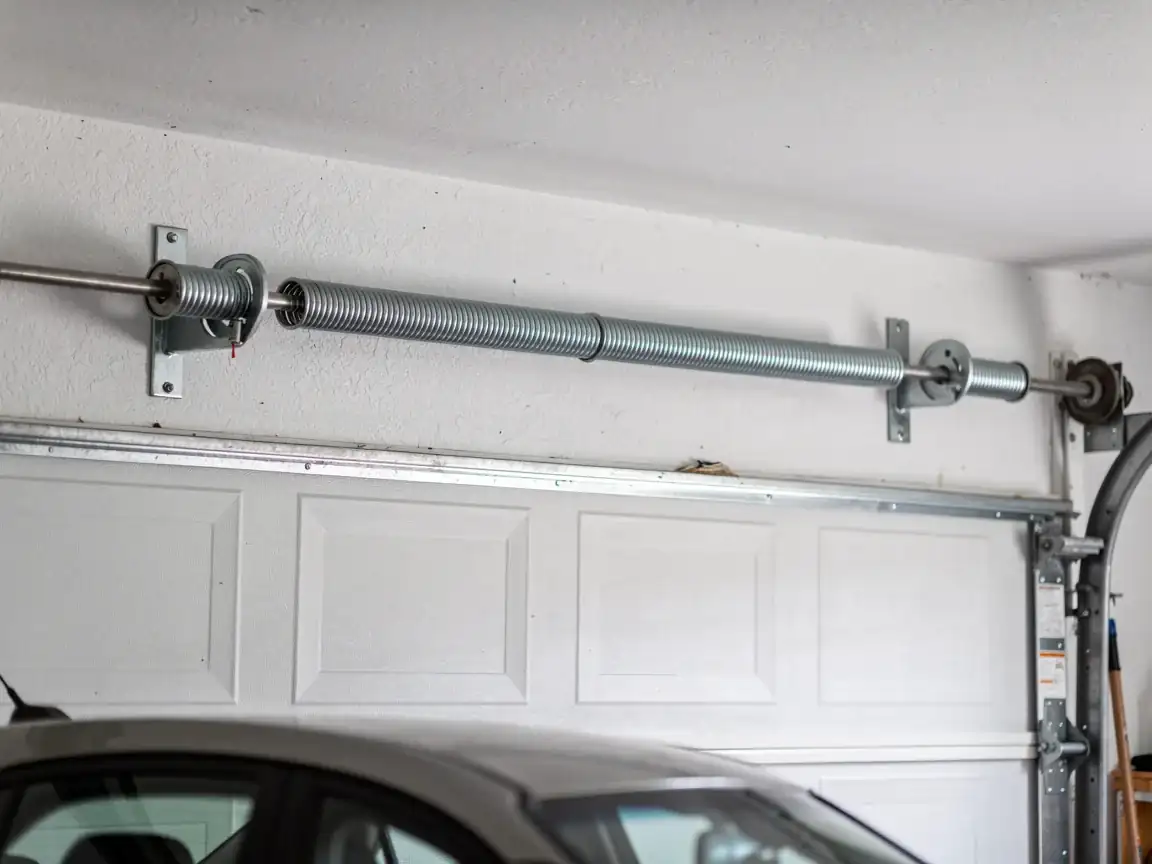
An extension spring under tension can put a cable or the spring itself across a room if it lets go while you're working on it. That's the honest reason we don't walk people through doing this one over the phone. Torsion springs get the headlines for being dangerous, but a stretched extension spring with no containment cable - which is exactly what's common on Inman's 1960s-70s doors - is its own hazard, and it's the setup most likely to be missing the safety cable retrofit altogether.
Roller replacement and track lubrication are reasonable DIY jobs if the door is otherwise balanced and moving smoothly. If the door is slamming, sagging, or won't stay up on its own, that's a spring tension problem, not a lubrication problem, and it's worth having it looked at rather than guessing.
Getting It Booked In
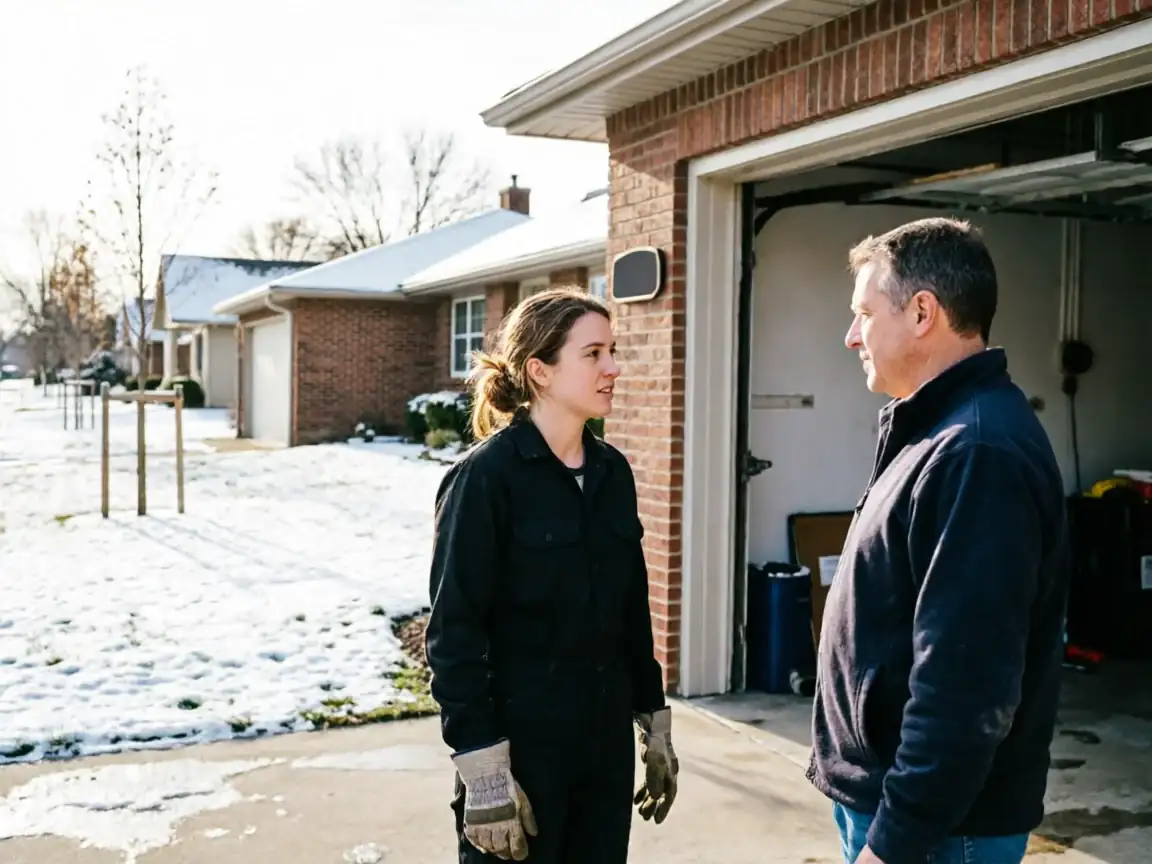
Inman is about 14 miles out from Hutchinson, and we schedule the drive rather than keeping a crew stationed locally - there's no branch office out here, just a truck that comes when a job is booked. That means giving us a call ahead works better than expecting a same-day walk-up.
When you call, the two things that speed up the visit are the door's approximate age (if you know when the house was built, that's close enough) and what it's actually doing - won't open, opens partway, makes a grinding noise, slammed shut. For a spring job specifically, knowing whether the springs are mounted horizontally along the track or over the top of the door helps us bring the right stock the first trip instead of a second one.
How We Fix It
For the extension-spring doors that dominate this part of the service area
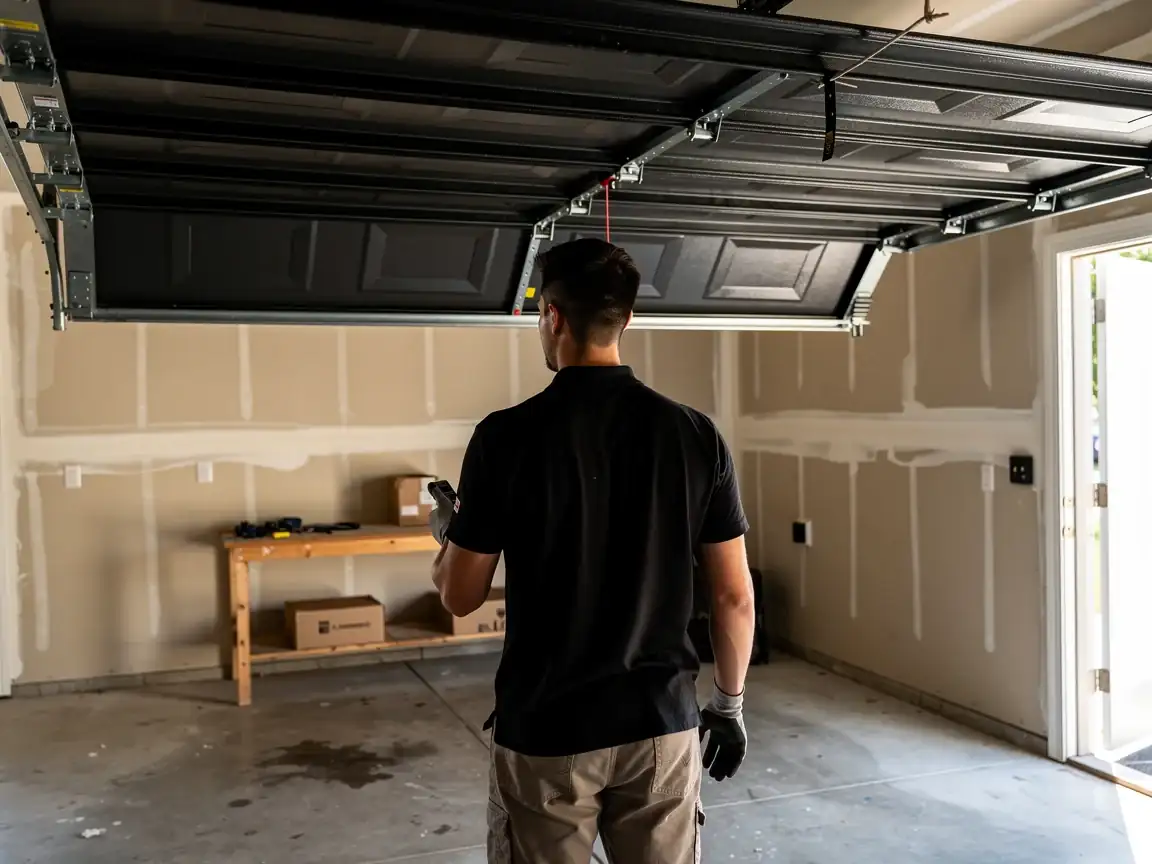
The repair is usually a full pair replacement rather than one side - springs age together, and replacing only the broken one means the other one fails within a season anyway. We add the containment cable at the same time if the door doesn't already have one.
If the door is original to a house built in the late 1960s or early 1970s
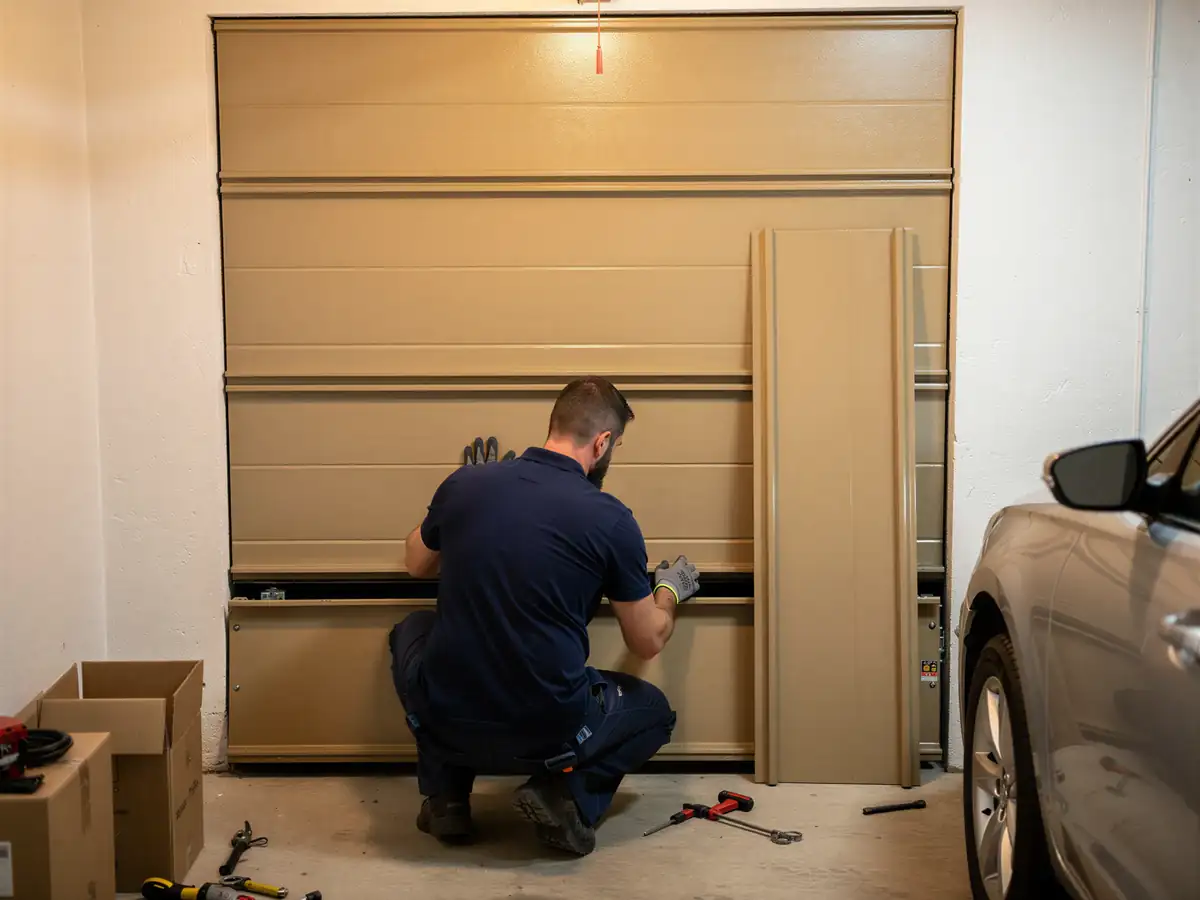
We'll tell you plainly if the track or the hardware is worn enough that patching it isn't worth the labor compared to a new door and opener. Median household income here runs around $61,083, a little under the $63,119 median across the broader service area, and that's part of why we lay out repair-versus-replace honestly instead of defaulting to the bigger job. Some doors just need springs and cable. Others are done.