Getting It Booked In
Haven sits about 13 miles out from our Hutchinson base, which changes how a roller call here actually runs compared to a job five minutes from the shop. We don't keep a crew sitting in Haven waiting on work, so when you call, we're building the drive into the day rather than squeezing in a quick stop between two Hutchinson jobs. That's not a complaint about the distance - it just means we ask a few more questions up front: how many rollers are grinding versus just one, whether the door still tracks straight, whether it's binding at the same spot every time. Good answers on the phone let us load the right roller stock before we leave the shop instead of guessing and making a second trip. For a 13-mile run, a second trip costs real time on both ends, so we'd rather nail it with the first load-out. If you're not sure what you're hearing versus what you're feeling when the door moves, that's fine - we can usually sort fact from guess in a two-minute call.
Why This Fails Locally
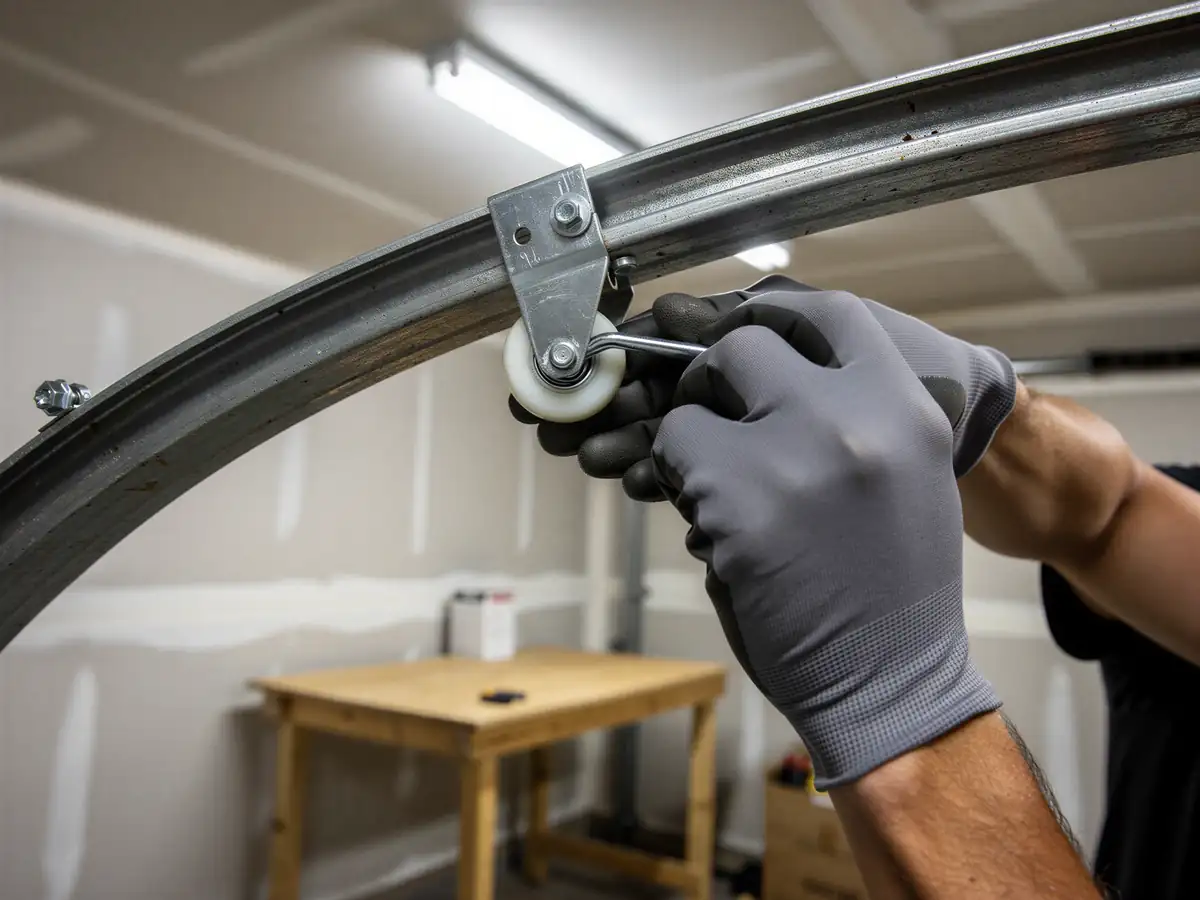
Houses in Haven are mostly from around 1972, which puts a lot of doors and track hardware from that same era still in service, or replaced once with parts that don't quite match the original spacing. That's a different repair than the newer doors going up elsewhere - the roller stems, track gauge, and hinge spacing from a 1970s install often don't take a generic big-box roller without some adjustment. We've also got a cold-moderate climate here, and steel rollers on older galvanized track contract in winter cold enough to tighten clearances that were already marginal from fifty years of wear. That combination - older track geometry plus seasonal cold - is why a roller that's been limping along for months often fails outright on the first hard freeze of the year, not in July.
Where This Job Goes Sideways
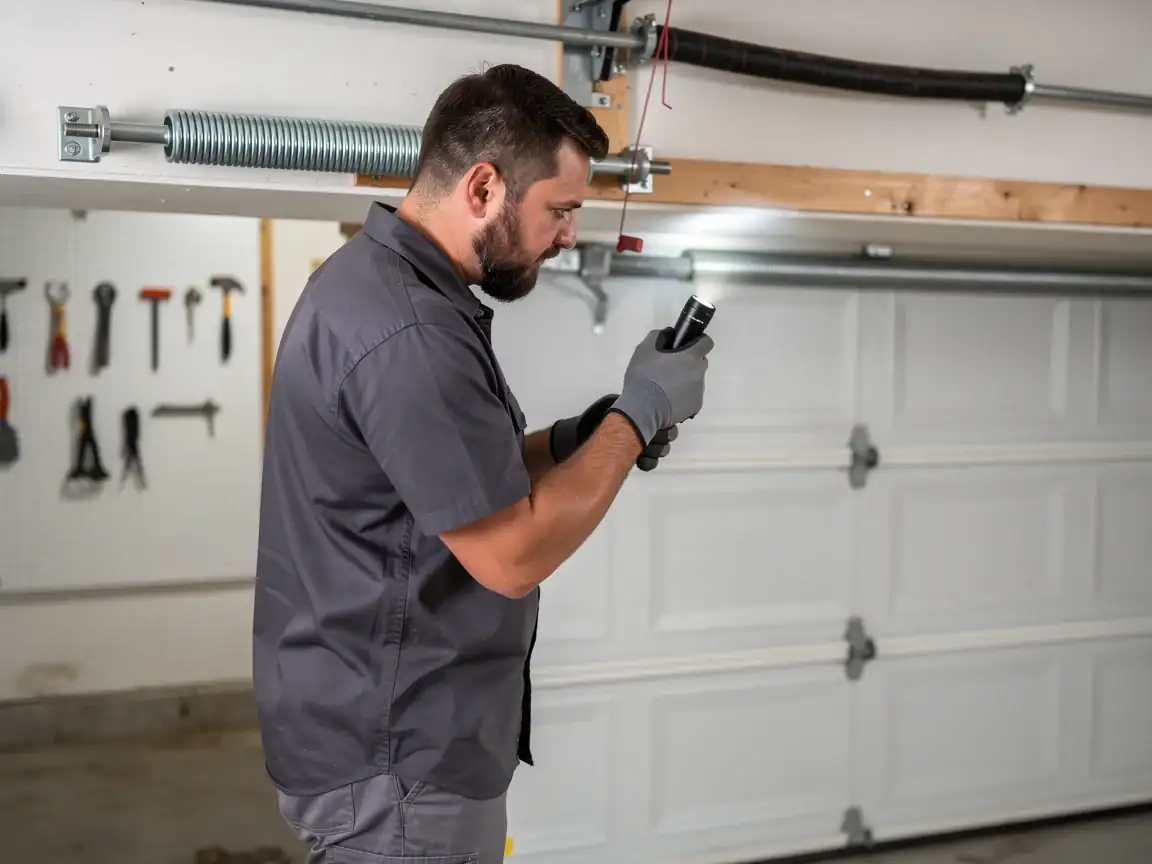
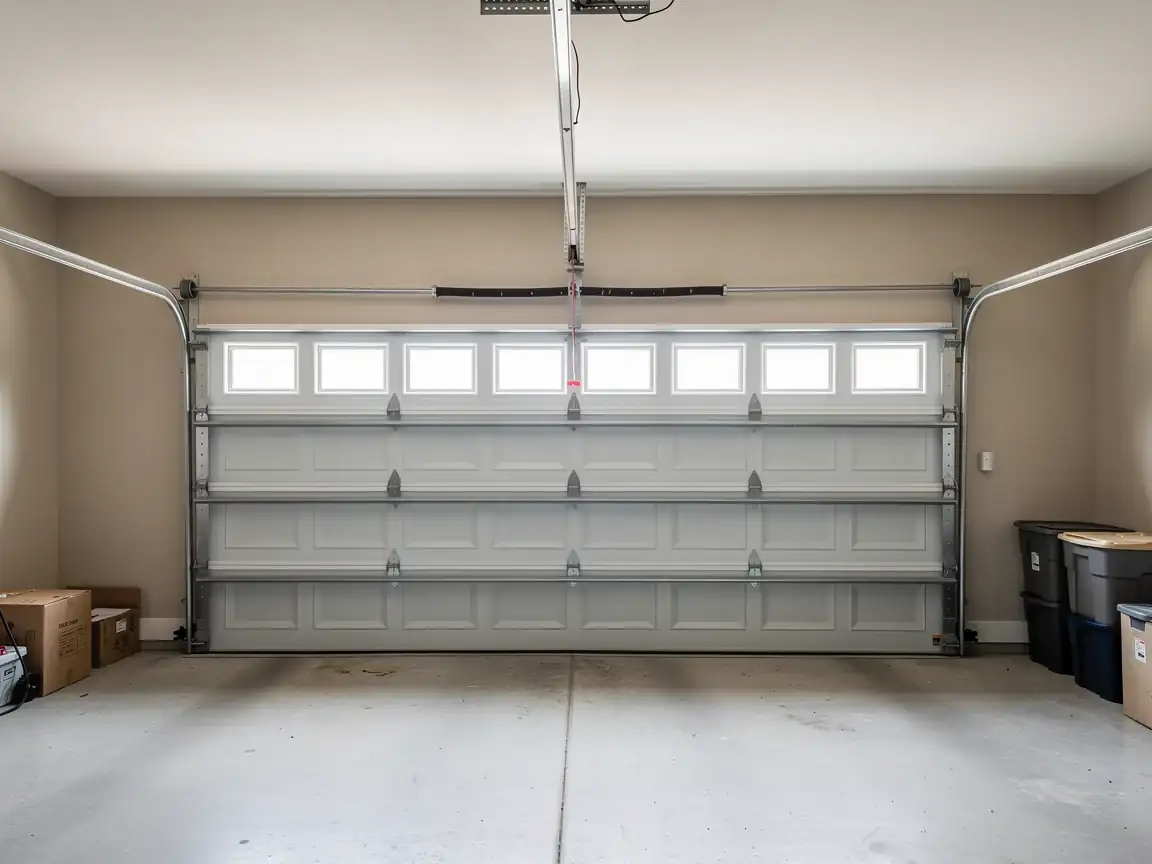
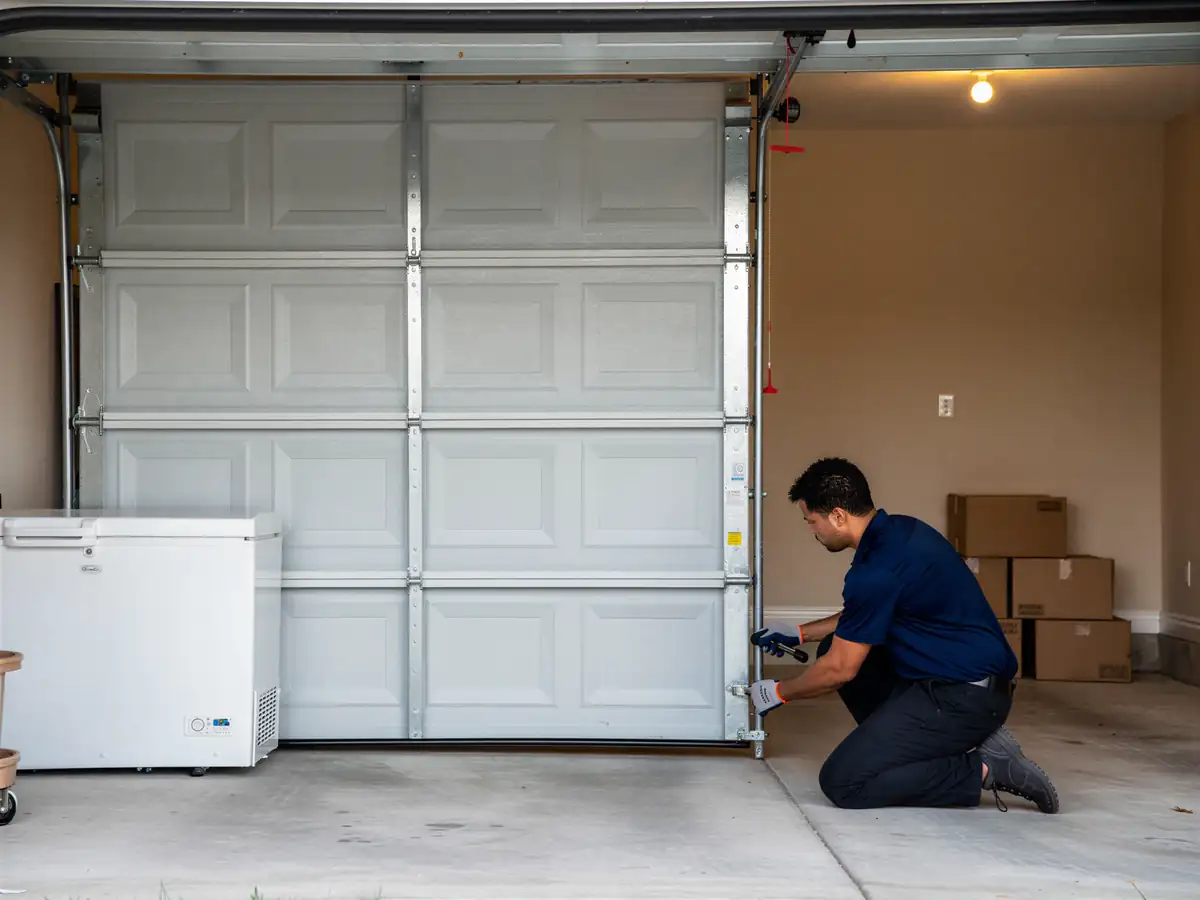
The job goes sideways when the rollers aren't the actual problem, just the symptom you can hear. If the track itself is bent or the door is out of plumb from years of a bad roller dragging on it, swapping rollers quiets the noise for a week and then it's back, worse. We check the track straightness and the hinge condition before we call it a roller job, because on a door this age there's a real chance more than one part has worn out together. We'll tell you straight if we think the track needs attention too, rather than selling you rollers and leaving the real cause in place. The other place it goes sideways: panels on doors from this era sometimes use hinge and roller combinations that aren't stocked everywhere, which is part of why we load parts before the drive rather than after we're already in Haven and find out we guessed wrong.