What Is on the Truck
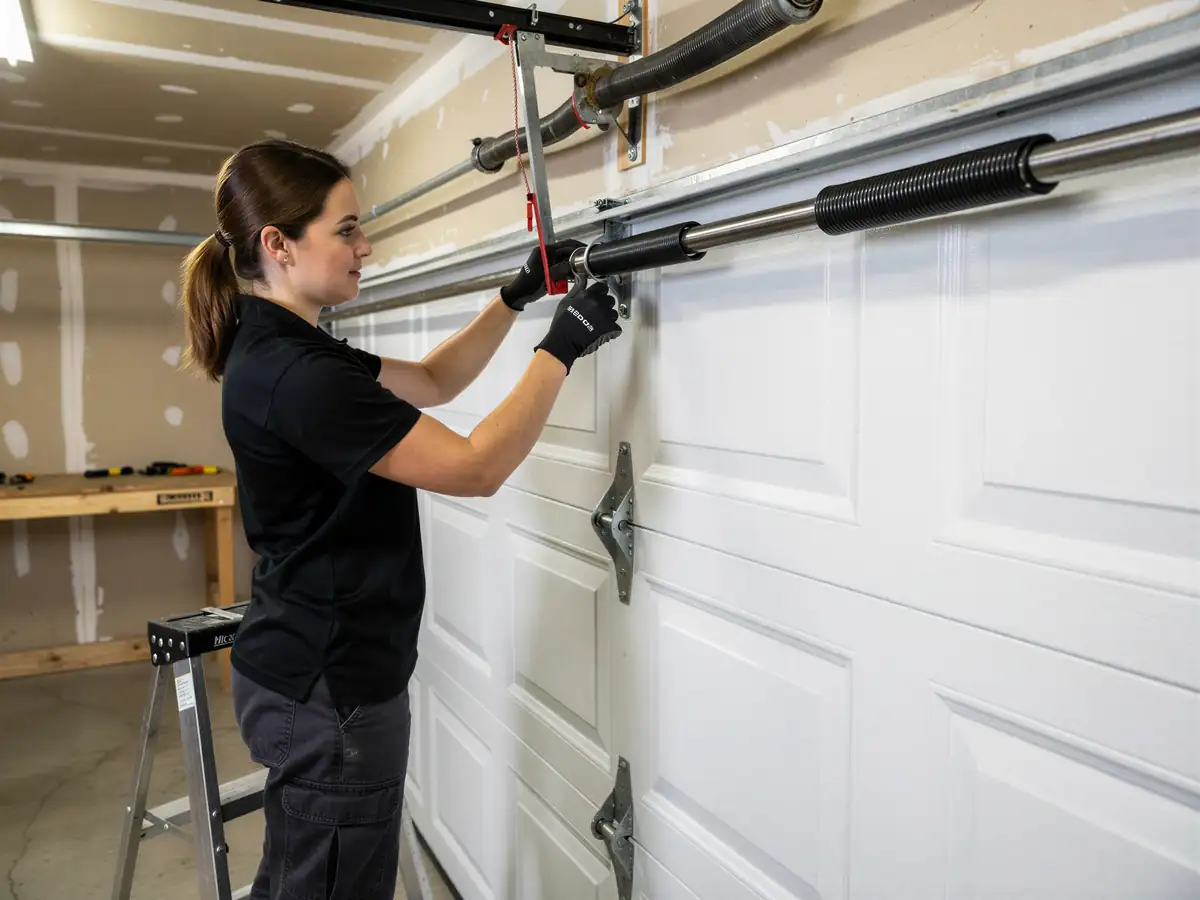
We carry torsion springs in the wind sizes that match Burrton's housing stock, not a generic assortment. Most houses here went up around 1971, which puts them at the tail end of the 1943-1975 build wave that defines this whole service area. That matters because a house from 1971 usually has a heavier steel door than the wood or light aluminum doors common in the earlier end of that range, and the spring has to be wound to carry that extra weight without over-cycling.
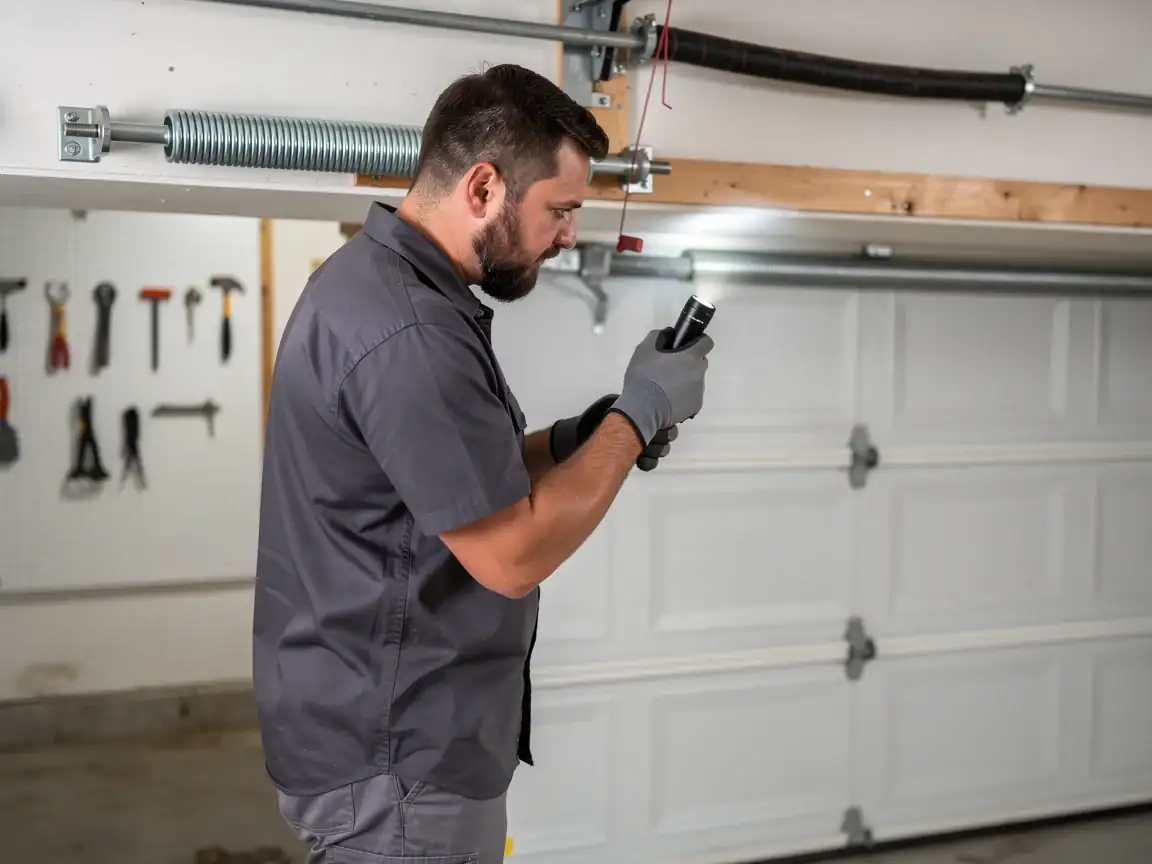
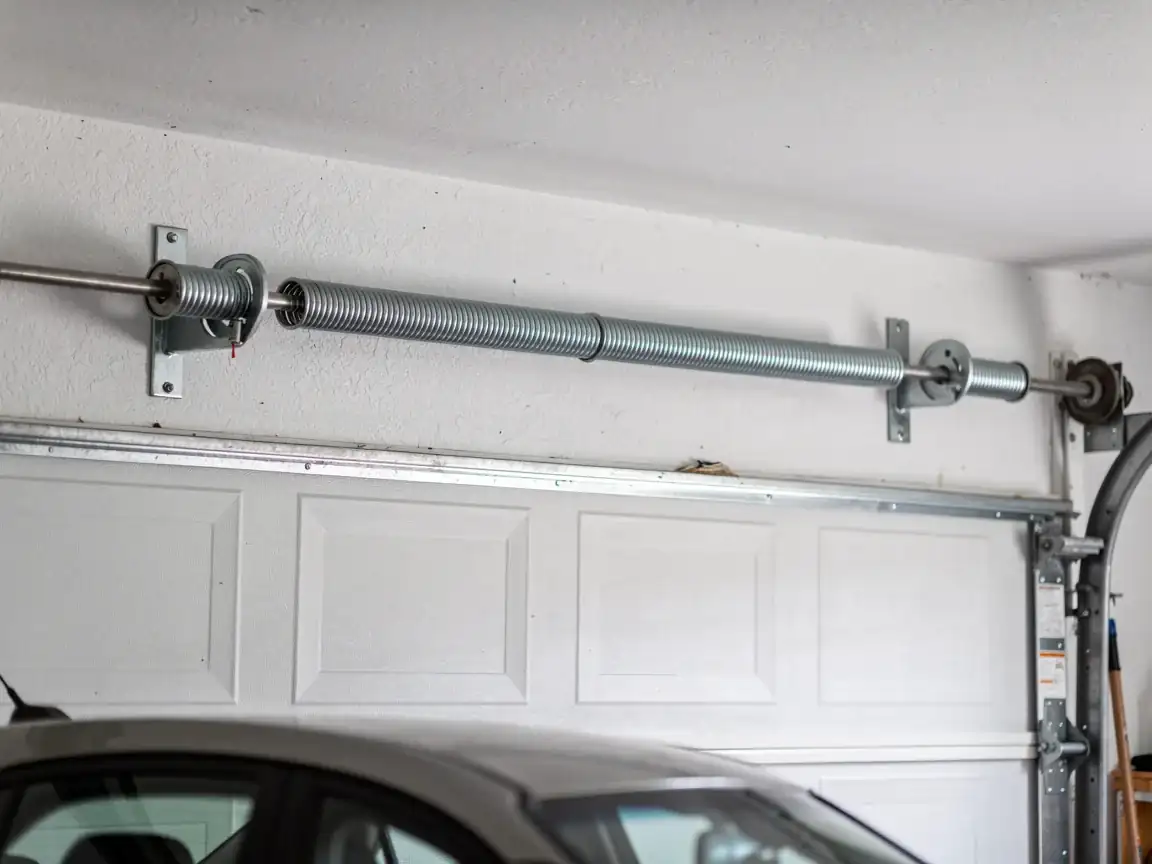
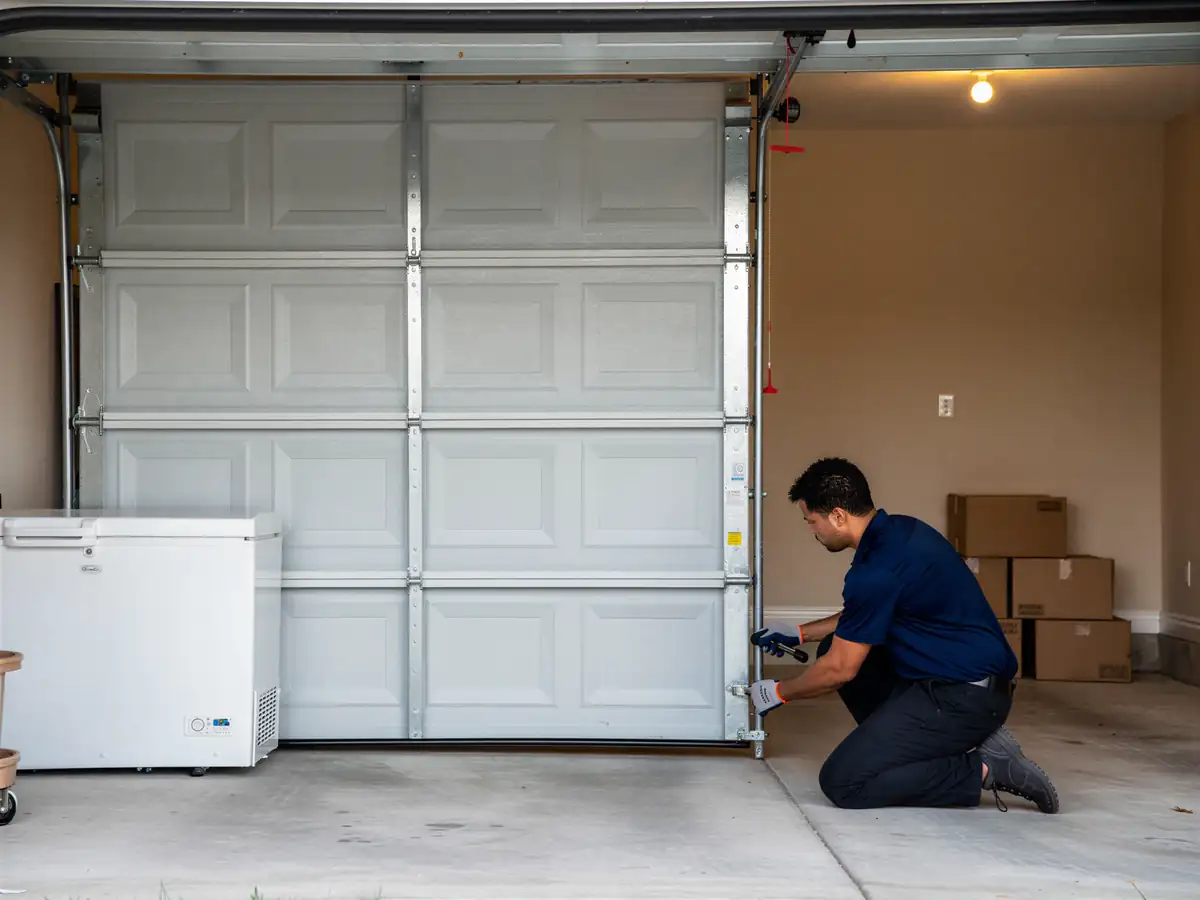
We also bring the drums, cables, and center bearing plate that go with torsion setups, since a dead spring on a 50-year-old door rarely fails alone. If the drum is scored or the bearing is seized, swapping just the spring buys you a few months before the next call. We'd rather replace what's actually worn the first time we're out there, 13 miles from the shop, than make two trips.
Can You Do This Yourself
A torsion spring under full tension can break a bone or worse if the winding bars slip
And that risk doesn't change because your house is in Burrton instead of a bigger town. If you've got a basic two-spring setup on a single door and you understand how to set the winding bars and unwind slowly, it's mechanically doable. Most homeowners don't have the bars, the vise grips, or the ten minutes of practice it takes to not get hurt doing it.
Where we'd actually tell you to leave it alone
Anything with a one-piece door on side-mount hardware, which still shows up on houses from the earlier part of that 1943-1975 window. That hardware uses extension springs under a different kind of tension, and the failure mode is different enough that guessing gets expensive fast. If your door is from the 1971-ish wave with torsion springs overhead, you're looking at a repair most people should hire out, not one that's impossible to attempt.
How Long You Are Without the Door
Because we're covering Burrton from Hutchinson, 13 miles out, the door is down for the drive time plus the job itself, not for a wait on parts that have to come from somewhere else. A straight spring swap on a torsion system is a same-visit job once we're there with the right spring size.
What stretches it out is what we find once the panel's open. If the bearing plate's rusted into the shaft or a cable's frayed near the drum, we're replacing more than we quoted on the phone, and that adds time on site. We'd rather tell you that up front than surprise you with a second trip.
The Symptom
The door that won't lift past a foot, or lifts and slams back down, is a broken torsion spring nine times out of ten on these houses. You'll usually hear it first, a loud bang from the garage, often mistaken for something falling off a shelf. After that, the opener strains, the door feels twice as heavy by hand, and the cable near the bottom bracket may look loose or kinked where it's lost its counterbalance.
On a 1971-era door, this is usually a straight spring failure rather than a track or hinge problem, because the heavier steel panels common in that build year put more strain on the spring than on anything else in the system.
Why This Fails Locally
Burrton's roughly 350 households sit mostly in that 1960s-70s construction window
And a house built in 1971 has had a torsion spring working the same cycle count for five decades if nobody's touched it. Springs are rated in cycles, not years, so a door opened twice a day for fifty years in this cold-moderate climate band has put real fatigue on steel that was never going to last forever.
- 350 households
Cold matters here too
Steel gets stiffer and more brittle as temperatures drop, and a spring already near the end of its rated life is more likely to snap on a cold morning than a mild afternoon. That's not unique to Burrton's climate, but combined with a housing stock this uniformly aged, it means a lot of these springs are due or overdue at the same time.